RV storage around Denver is a 3-way problem: hail, HOAs, and winter. Front Range hailstorms are infamous for chewing up roof vents, skylights, and awnings, many metro HOAs and city codes limit how long a trailer or motorhome can sit in a driveway, and a rig parked outside from October through April needs real winterizing. Most owners end up choosing among 3 storage tiers: outdoor lots, the cheapest and most exposed; covered canopies, which shield the roof from hail and UV; and fully indoor units, the most protection at the highest price.
There’s a 4th option worth pricing before you sign a storage contract. If you’re storing the rig because you have nowhere to keep it, and you’d still use it if you could, a monthly RV site flips the math. Applewood RV Resort in Wheat Ridge runs year-round monthly sites from $1,300, about 15 minutes from downtown Denver, where the rig stays plugged in, warm, and ready instead of mothballed. This guide walks through both routes honestly.
Indoor, Covered, and Outdoor RV Storage: The Tradeoffs
Outdoor storage is the entry tier: a fenced lot, a gravel or paved space, and your rig exposed to everything the Front Range throws at it, which along this stretch of Colorado means hail in late spring, intense high-altitude UV on roof membranes and tires year-round, and hard freezes all winter. Covered storage adds a canopy that takes the hail hit for you, the single most valuable upgrade in this region. Indoor storage protects everything but costs the most and books out fastest. Pricing varies widely by location, rig length, and waitlist, so call 2 or 3 facilities on your side of the metro and compare per-foot rates instead of headline prices. While you’re at it, ask about gate hours, insurance requirements, and whether you can plug in a battery tender between trips.
The Monthly-Site Alternative: Keep It Plugged In
Here’s the honest fine print first: an RV park is a place to stay, so monthly sites suit owners who live, work, or winter in the rig, and Applewood’s guests already include traveling nurses, remote workers, construction crews, and snowbirds doing exactly that. Monthly rates run $1,300 for electric-only, $1,425 for a full hookup back-in, and $1,550 for a full hookup pull-through, with extra vehicles at $50 per month. If your storage search is really a symptom of an HOA letter, and you’d use the rig every weekend if you could, run those numbers against indoor storage plus the campsite fees you’d pay anyway. A powered site keeps batteries topped, the furnace available on freeze nights, and the rig 15 minutes from downtown with the I-70 mountain corridor out the front gate. Call the office to talk through what works for your situation.
Winterizing an RV for Front Range Storage
Whatever route you choose, Denver winters demand prep. Overnight lows dip into the teens while sunny days melt back into the 40s, and those freeze-thaw swings are harder on plumbing and seals than steady cold. If the rig will sit unpowered, winterize the water system fully: drain the tanks and heater, blow out the lines or run antifreeze through them, and leave faucets open. Pull the batteries or put them on a tender, inflate and cover the tires against UV, and stuff vent openings against mice, which treat stored RVs as winter condos. Then check the roof seals each spring before hail season arrives in May. An hour of prep in October beats a February surprise inside a wall.
Applewood RV Resort by RJourney (Wheat Ridge)
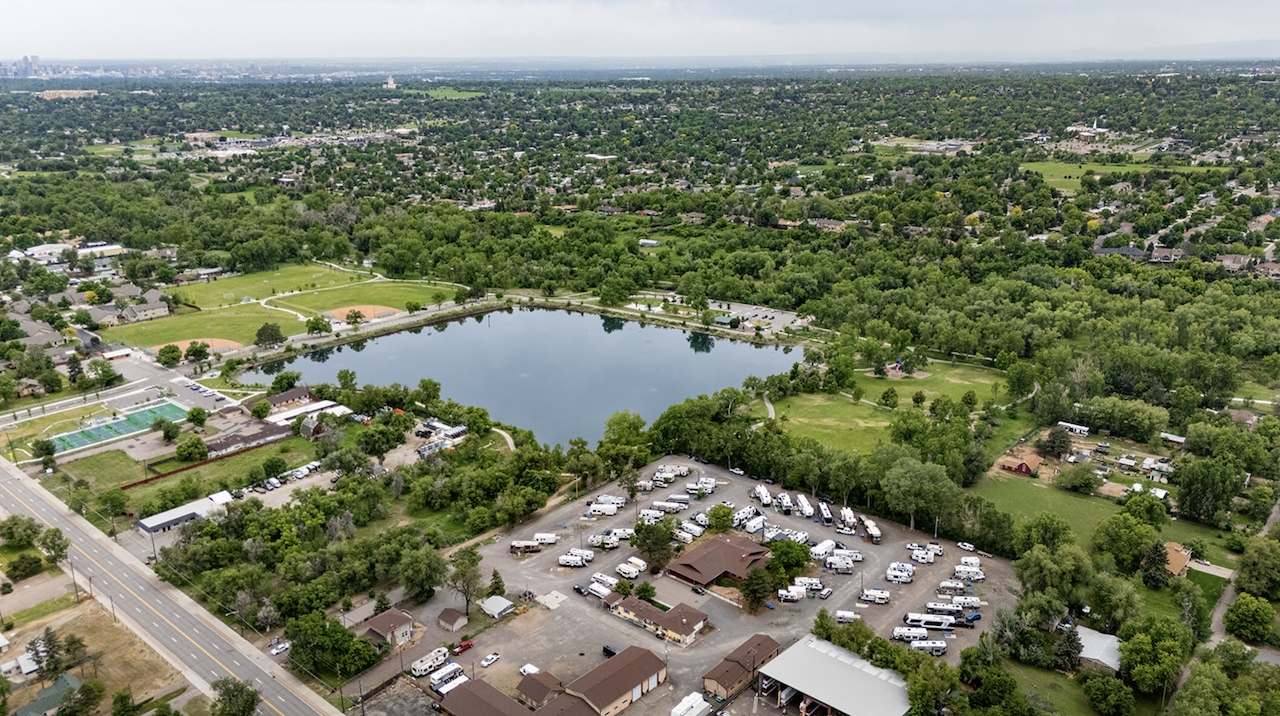
Applewood RV Resort by RJourney, at 11600 W 44th Ave in Wheat Ridge, is a centrally located Denver-metro RV park about 15 minutes from downtown and right off I-70. It is an urban, no-frills, mostly gravel park, not a destination resort, and it earns its keep on location and convenience: close to I-70, the RTD light rail, Red Rocks, and Golden, with Prospect Park and Prospect Lake right next door. The park has 76 sites, 65 full-hookup (38 pull-through and 27 back-in) and 11 electric-only, with 30- and 50-amp service. Sites are gravel and tight, so rigs run self-contained, with big-rig caution advised. Monthly rates run from $1,300 (electric-only) to $1,550 (full-hookup pull-through). As manager Melissa Soderberg puts it, it is a relaxing, centrally located base in the Denver metro.
Sites & Hookups
Applewood has 76 RV sites: 65 full-hookup (38 pull-through and 27 back-in) and 11 electric-only, with 30- and 50-amp service across 14 designated 50-amp sites and 30-amp on the rest. Pads are gravel and sites are tight, so rigs must be self-contained; there are no tent sites and no car camping, though Class B vans are fine. Big rigs should call ahead before booking, since the tight layout is the most common point guests raise. A public dump station is on-site: $20 to dump ($10 for a fresh-water fill, free tank-rinse), free for registered guests, with after-hours dumping via a cash dropbox.
What's On-Site
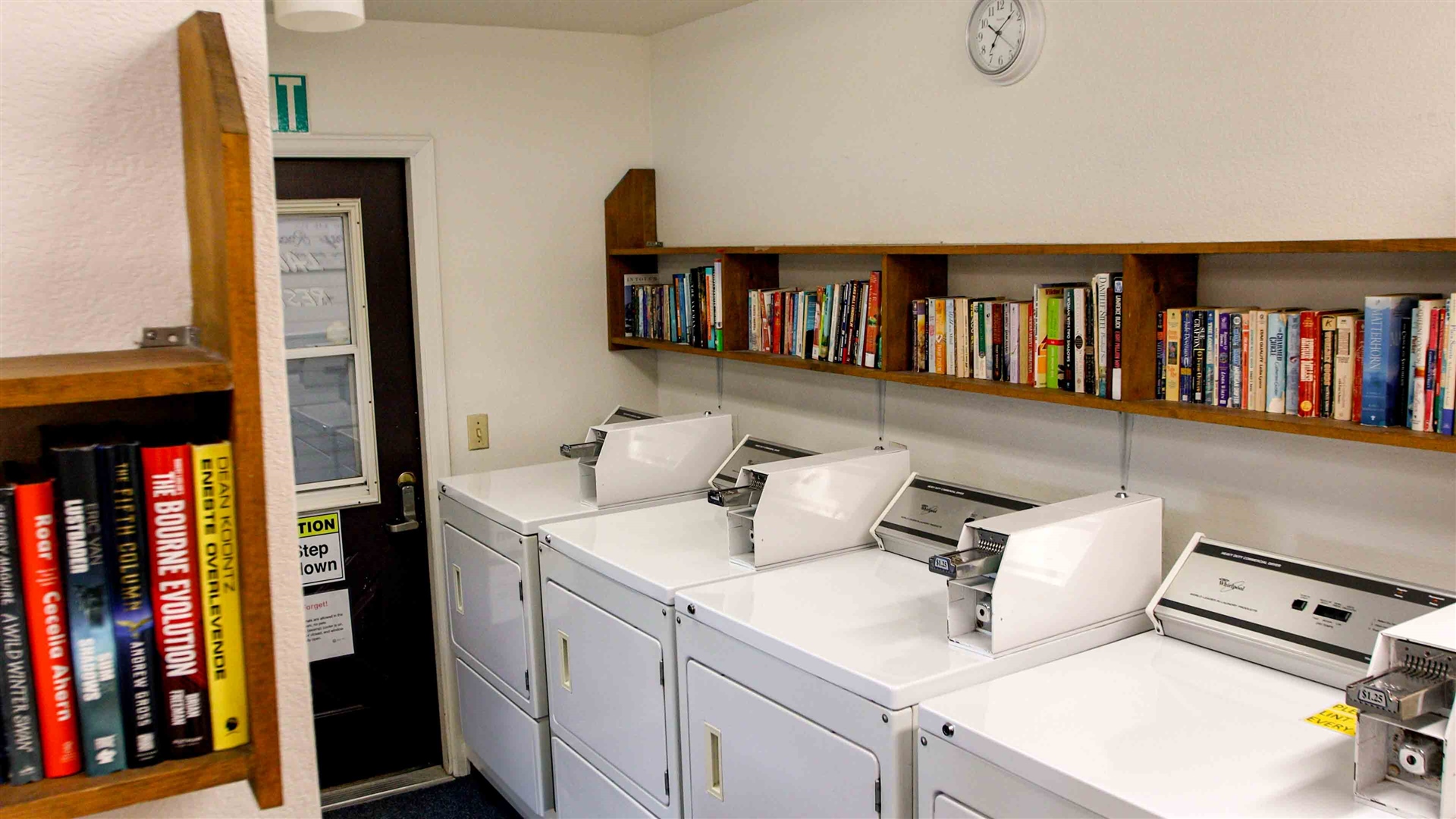
Applewood keeps it practical rather than resort-style: 24-hour coded coin laundry, a coded bathhouse with showers, a small fenced dog park, and package delivery at the office breezeway. There is no pool and no swimming on-site. The real draw next door is Prospect Park and Prospect Lake, where fishing is catch-to-keep with a license (no swimming or boating). The on-site public dump station ($20 dump, $10 fresh-water fill, free tank-rinse for guests, after-hours cash dropbox) is a genuine convenience for travelers passing through the metro. Set expectations for an urban, gravel park that serves both overnight travelers and long-term residents, and the location does the heavy lifting.
What Guests Say
Applewood is an urban, no-frills, mostly gravel park rather than a destination resort, and it serves both overnight travelers and long-term residents. What guests most consistently praise is the location: about 15 minutes from downtown Denver, close to I-70, the RTD light rail, Red Rocks, and Golden, with Prospect Park next door. Sites run tight and gravel, so come for the convenience and the dump-station access and set expectations accordingly. If you need a big-rig pull-through with room to spread out, call ahead to confirm a site that fits your rig.
Other Top Campgrounds Near Denver, CO
<p>If the storage question is really a question of where to take the rig next, these 2 state parks are the metro’s favorite shakedown trips, close enough to test everything before a longer haul.</p>
Cherry Creek State Park (Aurora)
Cherry Creek packs a surprising amount of nature into a park surrounded by suburbs, with an 880-acre reservoir popular for swimming, fishing, and sailing. The campground has paved pads, electric hookups, flush toilets, showers, and a dump station, but no full hookups. It is the closest state park campground to downtown Denver, which is both its draw and its headache: it gets crowded on summer weekends and some sites pick up highway noise from I-225. Reserve early. Visit website.
Chatfield State Park (Littleton)
Chatfield sits along the South Platte River with a 1,500-acre reservoir that draws boaters, paddleboarders, and anglers from across the metro. The campground is large and well-maintained with paved roads, flush toilets, showers, electric hookups, and a dump station, though full hookups are not available. Reservations fill fast May through September, so book months ahead for summer weekends. It is farther from the city center than Applewood, but a strong pick if you want a state park atmosphere with water access. Visit website.
Things to Do from Your Denver-Area Campground
Prospect Lake sits right next door to Applewood with catch-to-keep fishing for guests holding a Colorado license, though swimming and boating are not allowed there. For open water, the area’s state parks carry the load: Cherry Creek’s 880-acre reservoir and Chatfield’s 1,500-acre reservoir both draw boaters, paddleboarders, and anglers from across the metro, and both are within about 20 minutes of central Denver.
Red Rocks Amphitheatre and Park is about 15 minutes from Applewood and free to enter during the day, with hiking trails winding through 300-foot sandstone formations; the Trading Post Trail is a manageable 1.4-mile loop. Mount Falcon, North Table Mountain, and Lookout Mountain all sit within 30 minutes, and the Colorado Trail starts about 45 minutes southwest in Waterton Canyon. Rocky Mountain National Park is roughly 90 minutes north.
Downtown Denver is a 15-minute drive from Applewood, with the 16th Street Mall, Union Station, the Denver Art Museum, and Coors Field, and the RTD light rail connects much of the metro. Golden, 10 minutes away, is home to the Coors Brewery and free tours. I-70 also links the metro to major ski areas: Loveland is about 60 miles west, and Arapahoe Basin, Keystone, and Breckenridge are within 90 minutes, making camp-and-day-trip skiing a legitimate budget strategy.
Seasonal Guide for Camping Near Denver
Spring (March through May)
Daytime temps climb from the 50s into the 70s, but nights still dip below freezing through early April and snow is possible into May. State park campgrounds start filling in late April. Applewood is open year-round, which makes it a reliable option when state parks are still shaking off winter closures.
Summer (June through August)
Peak season. Highs regularly reach 90 to 95 degrees in July, and afternoon thunderstorms roll in most days between 2 and 5 PM. State park campgrounds book out weeks ahead. Applewood holds more flexible availability, but summer weekends still go fast, so call ahead.
Fall (September through November)
September is arguably the best camping month along the Front Range: warm days in the 70s, cool nights in the 40s, and golden aspens in the mountains. Crowds thin after Labor Day. October brings the first hard freezes, and by November you will want full hookups for your heater.
Winter (December through February)
Denver averages about 57 inches of snow a year, but its roughly 300 days of sunshine mean it melts fast. Winter camping is doable with a properly insulated rig and electric hookups. Applewood’s year-round operation makes it a solid winter base, especially for skiers who would rather pay monthly than nightly resort rates.
Practical Tips for Camping Near Denver
Storage lots vary on gate hours, and a 6 AM mountain departure doesn't work if the gate opens at 8. Ask about after-hours access, insurance requirements, and whether you can plug in a battery tender before committing to a contract.
Friday afternoons and Sunday evenings on I-70 between Denver and the mountains can add 2 to 3 hours to a 90-minute drive. Leave early, come back late, or go midweek. Applewood's spot near the I-70 exits means you are one of the first off the highway heading home.
Applewood's sites are gravel and tight, and big-rig fit is the most common thing guests raise. Confirm a pull-through that fits your length before you arrive, and ask about the 14 fifty-amp sites if you run two AC units.
Applewood's public dump station is $20 (free for registered guests), with a $10 fresh-water fill and free tank-rinse. After-hours dumping uses a cash dropbox by the office, so carry cash.
Front Range hail peaks from May through July. Walk the roof each spring, reseal anything cracked, and photograph the rig's condition; if a storm hits an outdoor lot, you'll want a clean before picture for the insurance claim.
Denver can go from 70 and sunny to a blizzard in 12 hours, and a 40-degree swing in a day is normal. Pack layers, keep the furnace ready even in spring, and do not be surprised by snow in May.
Frequently Asked Questions
How much does RV storage cost near Denver?
It varies widely by tier and rig length, so compare per-foot rates rather than advertised prices. Outdoor lots are the cheapest, covered canopy spaces cost more, and fully indoor units cost the most and often carry waitlists. Call 2 or 3 facilities on your side of the metro, and ask about gate hours, insurance requirements, and power for a battery tender before you commit.
Does Applewood RV Resort offer RV storage?
Applewood is an RV park rather than a storage yard: its monthly sites, from $1,300 for electric-only to $1,550 for a full hookup pull-through, are built for rigs being lived in or used, and its guests include traveling workers and snowbirds doing exactly that. If you’re weighing a monthly site against a storage contract, call the office and talk through what fits your situation.
Is covered RV storage worth it in Colorado?
Along the Front Range, usually yes. Hail is the regional menace, and a single late-spring storm can total roof vents, skylights, and awnings on an exposed rig. A canopy takes that hit for you and also blocks the intense high-altitude UV that ages roof membranes and tires. If indoor pricing stings, covered is the middle tier that addresses the 2 biggest local threats.
Can I live in my RV near Denver instead of storing it?
Yes, and plenty of people do. Applewood RV Resort in Wheat Ridge runs year-round with monthly sites from $1,300, about 15 minutes from downtown Denver off I-70, and its long-term guests include traveling nurses, remote workers, construction crews, and wintering snowbirds. Full hookup sites keep water and sewer running through winter, which is what makes Front Range cold months workable in a rig.
How do I winterize an RV for outdoor storage in Denver?
Drain the fresh, gray, and black tanks and the water heater, then blow out the lines or run RV antifreeze through them and leave faucets open. Pull the batteries or connect a tender, inflate and cover the tires, and block vent openings against mice. Denver’s freeze-thaw cycles stress seals, so recheck roof seams in spring before hail season starts in May.
Where can I park my RV between trips near Denver?
You’ve got 3 realistic routes: a storage lot (outdoor, covered, or indoor, priced in that order), your own property if local code and your HOA allow it, or a monthly RV site if you’d actually use the rig more with hookups under it. Many metro neighborhoods restrict driveway parking beyond a few days, which is what pushes most Denver owners into one of the first 2 options.
Book Your Stay at Applewood RV Resort
Applewood RV Resort by RJourney is a year-round RV park in Wheat Ridge, about 15 minutes from downtown Denver and right off I-70, with full-hookup and electric sites, a public dump station, a small dog park, and Prospect Park next door. Monthly rates run from $1,300 to $1,550. It is a practical, centrally located base for exploring Denver, Golden, and Red Rocks. Sites are gravel and tight, so call ahead if you run a big rig.
See all site types, rates, and live availability on the Applewood RV Resort page.
Check Availability