Utah Lake is the largest freshwater lake in the state, and most Utahns drive past it on I-15 without giving it a second thought. That is a mistake. The lake covers nearly 150 square miles between Provo and Lehi, holds walleye, white bass, channel catfish, and largemouth bass, and supports sailing, paddleboarding, jet skiing, and swimming from May through September. It is not Bear Lake and it is not Lake Powell, and it does not need to be. It is a massive, accessible, warm-water lake 45 minutes from Salt Lake City with fishing that has improved every year since the state started managing walleye and June sucker populations more aggressively.
The camping situation at the lake itself is limited. Utah Lake State Park in Provo has a 31-site campground with water and power, but it leans toward day-use boating access. For a full-service RV base, the nearest option is Roam Springville, 15 to 20 minutes south of the state park, with 223 paved full-hookup sites, a rec hall, a seasonal pool, and year-round operation. This guide covers what the lake offers, where to camp, and how to plan a trip that makes the most of a lake locals are still underrating.
Why Utah Lake Deserves a Camping Trip
The Biggest Freshwater Lake in Utah
Utah Lake covers nearly 150 square miles at full pool, stretching 24 miles long and up to 13 miles wide. It is shallow, with an average depth around 9 feet, which means it warms fast in spring and supports a warm-water fishery that deeper mountain lakes cannot match. The shallow profile also makes it one of the best sailing lakes in the state, with consistent afternoon thermals that draw sailboaters from the entire Wasatch Front.
Walleye, White Bass, and Catfish Fishing
Utah Lake’s fishery has been a real story over the past decade. State management efforts have turned it into a legitimate multi-species warm-water destination. Walleye are the headline fish, with populations growing steadily and catch rates improving; troll the flats or jig rocky points, with spring and fall prime. The white bass spring run in April and May draws anglers from across the Wasatch Front when schools move shallow. Channel catfish run 3 to 8 pounds and produce best on summer night sessions, and largemouth bass hold along the marshy edges and in Provo Bay with less pressure than the walleye. A Utah fishing license is required, and slot and catch limits vary by species, so check current regulations.
Sailing, Paddling, and Salt Lake Access
The lake’s size and consistent wind make it one of the top sailing venues in the intermountain West, with the Utah Lake Sailing Association running races and events through the summer. Paddleboarding and kayaking work best on calm mornings before the afternoon wind picks up. From the state park in Provo, it is 45 minutes north to Salt Lake City, 10 minutes to downtown Provo, and 30 minutes to the mouth of Provo Canyon, which makes the lake practical as both a weekend destination and a weekday fishing stop.
Why Roam Springville Is Our Top Pick Near Utah Lake
Roam Springville RV Resort is the rare Utah County park built less as a campground and more as housing: 223 paved full-hookup sites priced to undercut a 1-bedroom apartment, with mountain views and freeway access thrown in. For a Utah Lake trip, that infrastructure is the point. Pull off I-15 at Exit 261 and you are 10 minutes from Provo, 15 to 20 minutes from the Utah Lake State Park boat ramp, and 50 minutes from Salt Lake City. Every site is paved and full hookup, with 30- and 50-amp service and full ADA accessibility across the whole property.
GM Matthew runs the park for the people who actually use it: anglers and sailboaters who want a full season on the lake, travel nurses at Utah Valley Hospital, construction crews along the I-15 corridor, remote workers, and families in transition. The rec hall with bowling and an arcade is the amenity guests bring up most, and the seasonal pool, on-site laundry, and dust-free paved roads round out a setup tuned for months, not nights. Winter monthly rates start at $975/month plus electric, with site, water, sewer, and WiFi included. Good to know: this is a suburban I-15 park, not a lakeside campground. The Wasatch is close and the views are real, but the lake is a short drive rather than out your door. For a fishing or sailing base on Utah Lake, that tradeoff buys you a level paved pad, a hot shower, and a sewer hookup at every site.
Explore More Nearby
More RV parks and campgrounds near you:
Your Utah Lake Base: Roam Springville RV Resort
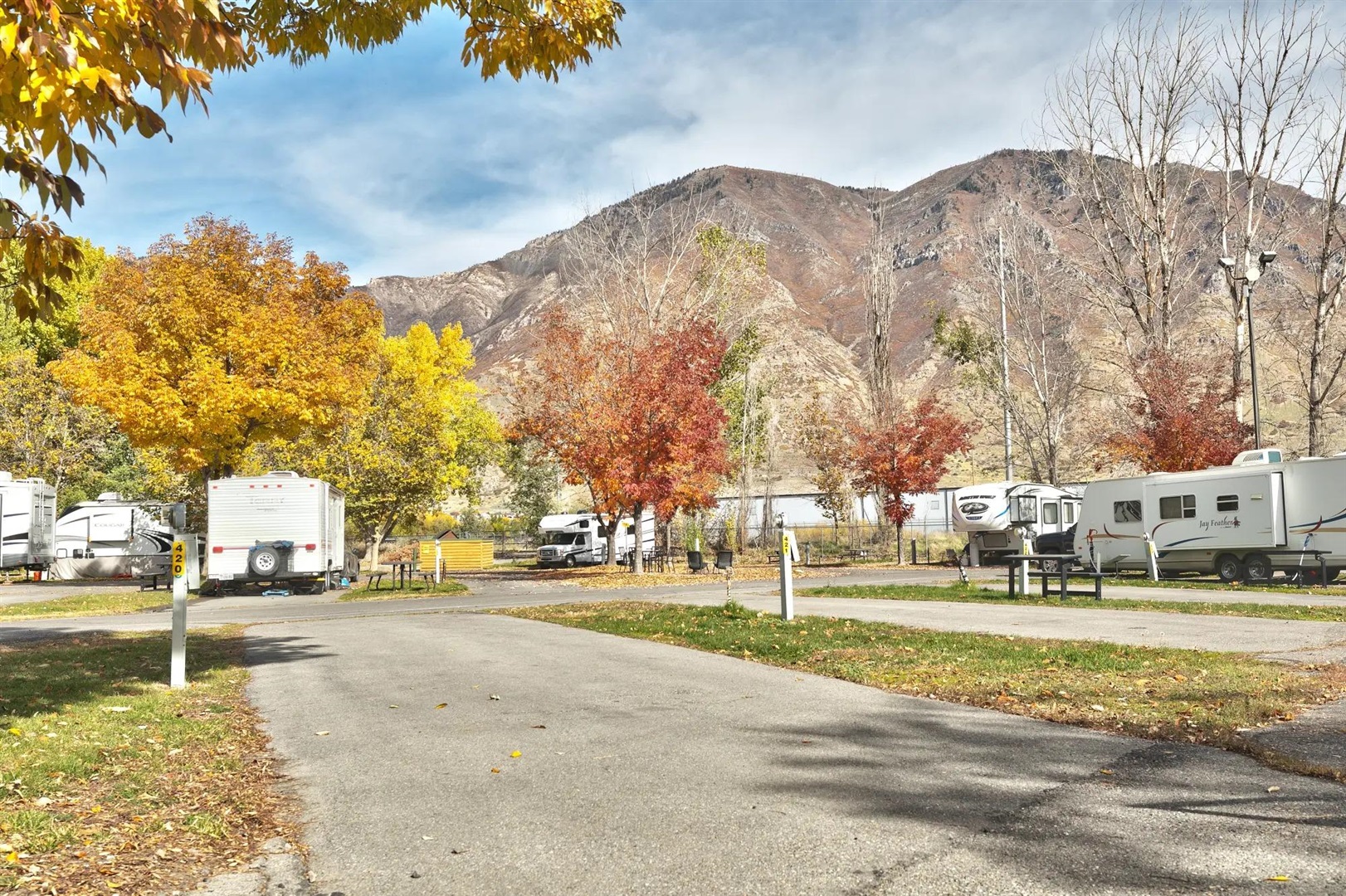
Roam Springville is a year-round, fully paved base 15 to 20 minutes from Utah Lake State Park, built for guests who want lake access without giving up full hookups and freeway convenience. The park sits right off I-15 at Exit 261, which makes it the most accessible RV park in Utah County and an easy daily run to the state park boat ramp. It is fully paved (roads and pads), open year-round, and within 10 minutes of restaurants, grocery stores, and everything the Springville-Provo corridor offers. The 15 to 20 minute drive to the launch is close enough for daily fishing trips: you launch in the morning, fish or sail through the afternoon, and come back to full hookups, a hot shower, and a level paved pad.
The park runs 223 paved full-hookup RV sites built around extended stays, with a Recreation Hall that anchors the property: bowling, arcade games, pool tables, shuffleboard, a full kitchen, and big-screen TVs. GM Matthew runs a clean, efficient operation. You are 45 minutes from Salt Lake City, 20 minutes from Provo Canyon, 10 minutes from Utah Lake, and positioned at the start of the Nebo Scenic Loop.
Sites & Hookups
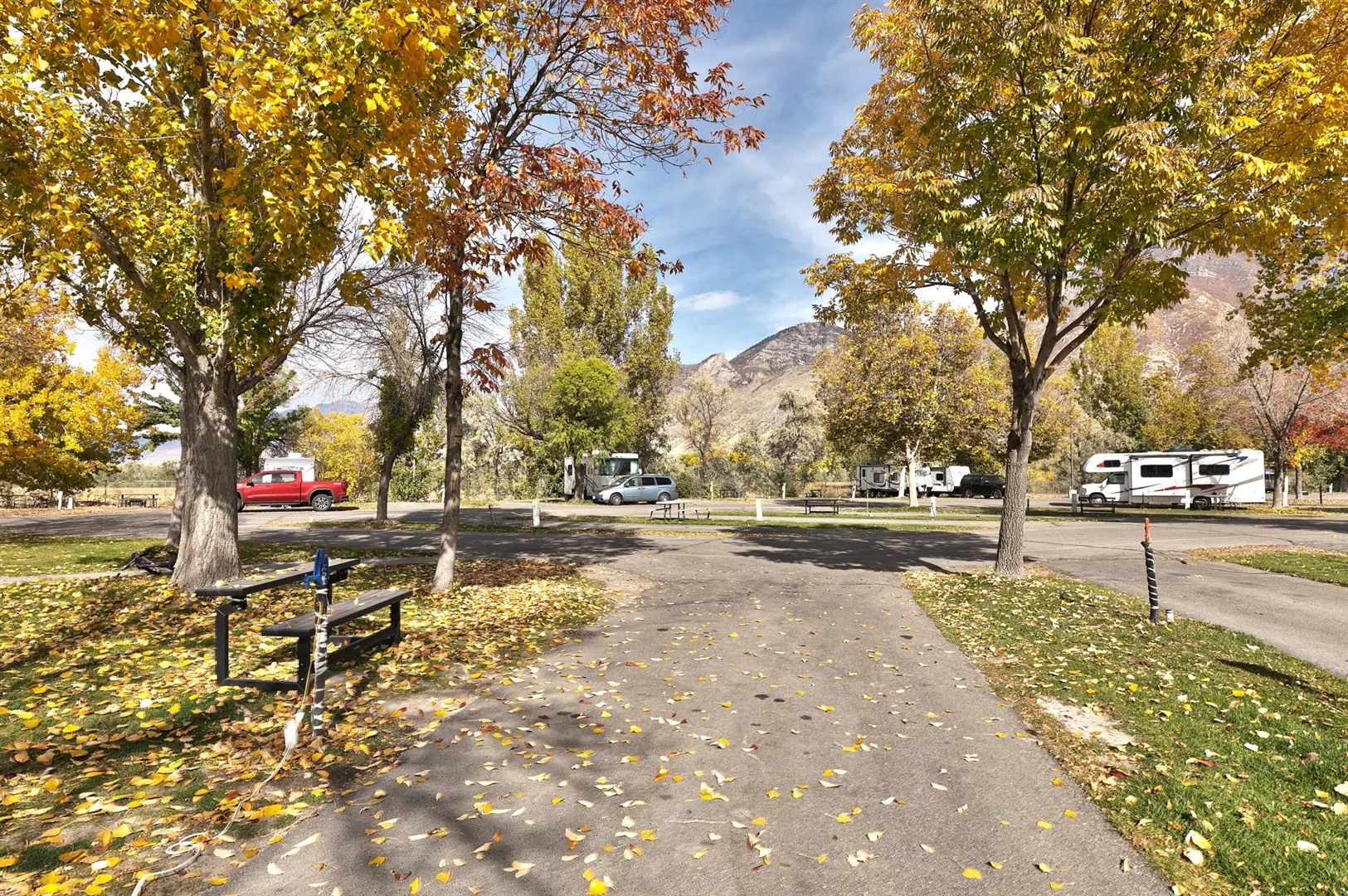
All 223 sites are paved with full hookups: water, sewer, and electric, with 30-amp and 50-amp available. The paved pads are a real upgrade over gravel for extended-stay residents: no dust tracking into the rig, no mud after rain, and a level surface that holds. Back-in and pull-through sites accommodate rigs up to 70 feet, and deluxe pull-throughs add fire pits, patio furniture, and benches. Every site gets a picnic table. Full ADA accessibility runs through the whole property, every site, pathway, and facility built to ADA standards rather than retrofitted. There are no cabins; this is an RV park built for rigs and for guests staying weeks or months. Designated tent sites are available.
What's On-Site
The amenity list is built for residents, not just vacationers, which is what makes it work as a multi-day Utah Lake base. The standout is the Recreation Hall with a 2-lane bowling alley, arcade games, pool tables, shuffleboard, a full kitchen, and big-screen TVs, which gives families and long-term guests something to do on evenings and weekends without leaving the park. A seasonal pool opens for the summer months and earns its keep after a hot day on the water. On-site laundry handles the everyday load that matters most on extended stays, and there is a camp store, a playground, a dog park, a covered pavilion with grills, and two bathhouses with showers. WiFi covers the park, and full ADA accessibility reaches every facility, pathway, and site. Paved roads and pads keep the whole property clean, level, and dust-free.
What Guests Say
What guests praise: paved sites that stay clean in all weather, hookups that work reliably, and a park that feels organized and well-maintained. The Recreation Hall with bowling gets frequent mentions from families with kids, and the clubhouse comes up again and again as the reason people choose to stay, especially in colder months. Matthew and the team get credit for keeping operations running smoothly, which matters more than any single amenity for guests staying months at a time. What to know going in: this is an RV park in a suburban I-15 corridor, not a lakeside campground. The Wasatch views are real and the mountains are close, but Utah Lake itself is a 15 to 20 minute drive, not a walk from your site. For a functional, well-built base for a fishing or sailing trip on the lake, it is one of the strongest options in the area.
Where to Camp Near Utah Lake
<p>A few other options serve campers and anglers around Utah Lake. Availability and policies change, so call ahead before making plans.</p>
Utah Lake State Park
The primary public access point for Utah Lake and the only campground directly on the water. The park has 31 RV sites with water and power hookups, a boat ramp, a marina, a swimming beach, and picnic areas. It works for a night or two of lake access, but the lack of at-site sewer and limited amenities make it impractical for extended stays. Day-use fees apply. Visit website.
Lakeside RV Campground
A family-owned, full-service park on 10 acres near the Provo River, with 120 sites, shade trees, a swimming pool, a stocked store, laundry, and propane fills. Big-rig friendly with 65-foot pull-throughs, and close enough to walk toward Utah Lake via nearby trails. A solid private alternative to the state park’s basic sites. Open year-round. Visit website.
Things to Do Near Utah Lake
Utah Lake State Park, 15 to 20 minutes from Roam Springville, is the primary on-water hub: a boat ramp, swimming beach, marina, and picnic areas, with shore fishing along several stretches. The walleye fishery is the headline draw, the white bass spring run in April and May is the year’s best surface action, and summer night sessions produce the best channel catfish. The lake’s consistent afternoon thermals make it one of the top sailing venues in the intermountain West. Day-use fees apply at the state park.
Provo Canyon, 20 minutes from Springville, is one of the most scenic canyon drives on the Wasatch Front, with the Provo River running through it for fly fishing, bike paths, and trails, and Bridal Veil Falls visible from the road. Sundance Resort, 30 minutes up the canyon, offers skiing in winter and mountain biking, hiking, and a zip line in summer. Timpanogos Cave National Monument, 35 minutes north, runs guided tours through three connected limestone caves via a 1.5-mile trail that gains about 1,065 feet; reserve through recreation.gov. The Nebo Scenic Loop starts near the park for a high-country drive south.
Downtown Provo is 10 minutes from the park, with the BYU campus, Center Street dining and shops, and the Covey Center for the Arts. Salt Lake City is 50 minutes north for full metro access: Temple Square, the Natural History Museum of Utah, Red Butte Garden, and the ski resorts of Big and Little Cottonwood Canyons. Both make easy evening or day trips from a Utah Lake base when you want a meal you did not cook yourself.
Seasonal Guide for Utah Lake Camping
Spring (March through May)
The white bass run in April and May is the fishing highlight of the year, with schools moving shallow and feeding aggressively. Walleye fishing improves as the water warms. Air temps climb from the 50s into the 70s. The lake is too cold for swimming until late May but ideal for fishing and paddling. Spring is the best window for anglers, and Roam Springville has its easiest availability before summer.
Summer (June through August)
Peak season. Water temps reach the 70s, making swimming and water sports comfortable. Catfish fishing peaks in June and July with night sessions producing the best numbers. Afternoon winds create reliable sailing conditions. Daytime air temps hit the 90s, and the seasonal pool at Roam Springville earns its keep. Book ahead for summer weekends.
Fall (September through October)
Water cools and walleye become more active, so fishing quality is strong. Air temps drop into the 60s and 70s with cool nights, crowds thin, and the Wasatch behind Springville turns gold and red. Excellent camping weather for anglers and paddlers, and parks that were booked solid in July open up.
Winter (November through February)
Utah Lake occasionally produces ice thick enough for ice fishing in severe winters, but the shallow profile makes ice unpredictable and dangerous, so conditions vary year to year. Shore fishing continues in milder stretches. Roam Springville operates year-round with winter rates at $975/month plus electric. Sundance is 30 minutes away, which shifts the focus to snow sports for the off-season.
Practical Tips for Utah Lake Camping
Utah Lake has specific rules for walleye, June sucker (endangered, must be released), and other species. Check the state's current proclamation before fishing, and carry a valid Utah fishing license.
Utah Lake gets windy, especially in the afternoon. Sailors love it; kayakers and paddleboarders should launch early and be off the water before the thermals build. The shallow depth means waves build fast.
Utah Lake is naturally turbid and is not blue and clear like Bear Lake or Lake Powell. That is normal for a warm, shallow, productive lake and does not affect the fishery or recreation.
Roam Springville sits right at Exit 261. For RVers passing through on I-15, it is a natural stopover between Salt Lake City and points south: easy on, easy off, no navigating residential streets with a big rig.
Utah Lake occasionally experiences harmful algal blooms in summer, typically in July and August. The state posts advisories when blooms are detected, so check before swimming or letting pets in the water.
Quagga mussel rules require self-certification before launching, and clean-drain-dry timelines run up to 30 days for complex boats coming from infested waters. Check the requirements before towing a boat to the lake.
Frequently Asked Questions
Can you camp at Utah Lake?
Yes. Utah Lake State Park in Provo has a 31-site campground with water and power hookups directly on the water. For full-hookup RV camping, Roam Springville is 15 to 20 minutes south with 223 paved sites, a rec hall, a seasonal pool, and year-round operation.
What fish are in Utah Lake?
Utah Lake holds walleye, white bass, channel catfish, largemouth bass, black bullhead, and carp. Walleye are the primary target for anglers and populations have been growing. The white bass spring run in April and May is a highlight. A Utah fishing license is required, and June sucker must be released.
Is Utah Lake good for fishing?
Yes. The fishery has improved significantly through state management. Walleye catch rates are up, the white bass spring run draws anglers from across the Wasatch Front, and catfish fishing is productive in summer. It is the best warm-water lake fishery in northern Utah.
What is the nearest full-service RV park to Utah Lake?
Roam Springville RV Resort at 1550 N 1750 W, Springville (I-15 Exit 261) is 15 to 20 minutes from Utah Lake State Park. The park has 223 paved full-hookup sites, is fully ADA accessible, and offers extended-stay rates starting at $975/month plus electric in winter.
Can you swim in Utah Lake?
Yes. Utah Lake State Park has a swimming beach, and water temps become comfortable from late May through September. Check for harmful algal bloom advisories before swimming, particularly in July and August, since the state posts updates when blooms are detected.
How far is Roam Springville from Utah Lake?
Roam Springville is approximately 15 to 20 minutes from Utah Lake State Park via I-15. The park sits at Exit 261 in Springville, which makes it an easy base for daily trips to the lake’s boat ramp and swimming beach.
Plan Your Utah Lake Camping Trip
Utah Lake is 150 square miles of warm water, solid fishing, and consistent wind for sailing, sitting in the shadow of the Wasatch Range and 45 minutes from Salt Lake City. It is the most underrated lake in a state full of famous ones, and the walleye are biting better every year.
Roam Springville RV Resort by RJourney puts 223 paved, full-hookup sites 15 to 20 minutes from the boat ramp, with the kind of infrastructure that makes a week-long fishing trip feel like home. See all site types, rates, and live availability on the Roam Springville RV Resort page.
Check Availability (801) 491-0700