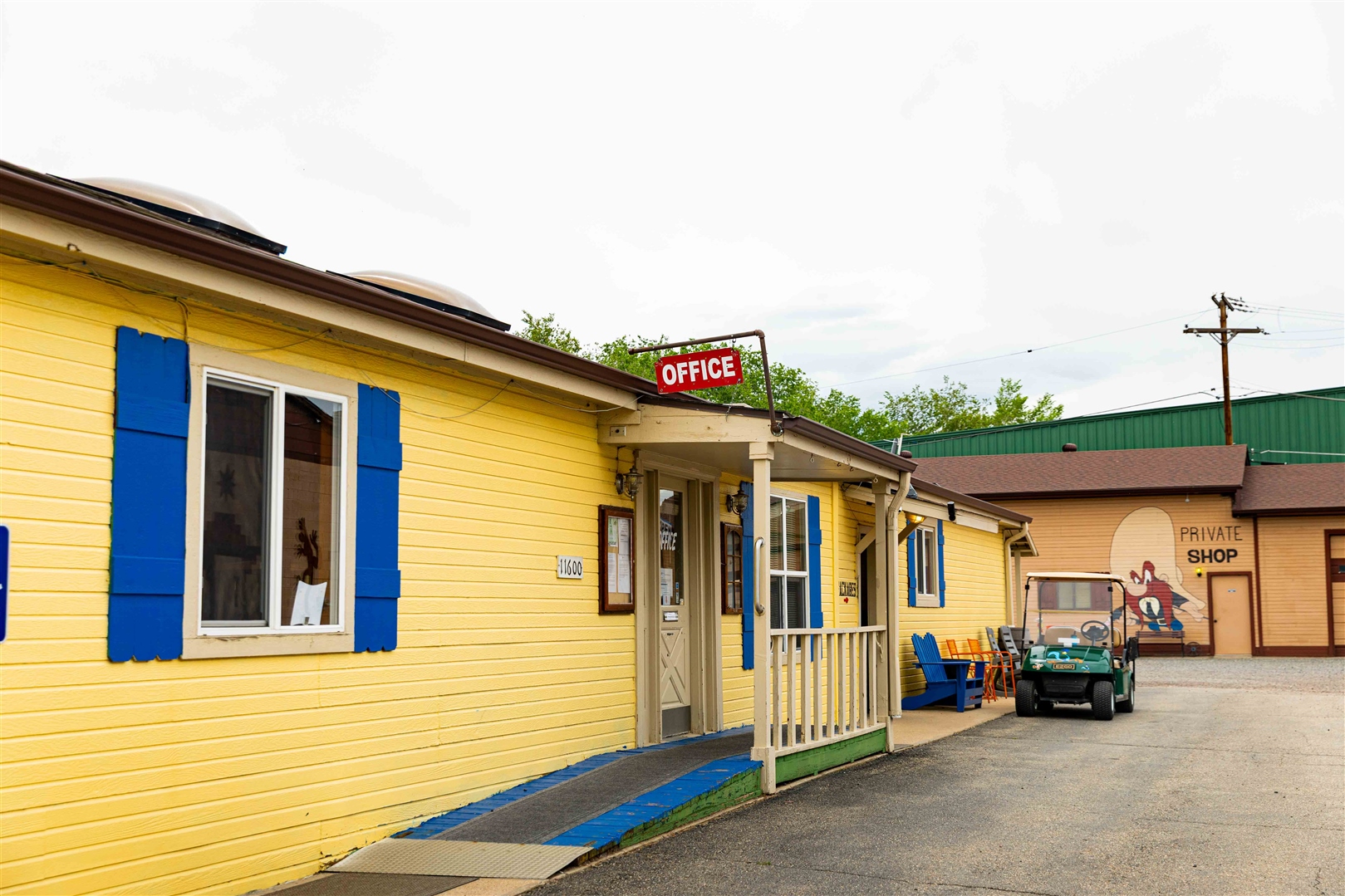
Few metro areas hand campers this much range. Denver sits at 5,280 feet where the plains give way to the Rockies, and within an hour of downtown you can pitch a tent in an aspen grove at 9,000 feet, park a camper beside a state park reservoir, or plug an RV into full hookups with the city skyline 15 minutes away. The question is not whether you can camp near Denver. It is which style of trip you are after.
This guide sorts the options by camping style. Tent and car campers get the most from the state parks and the foothills: Cherry Creek and Chatfield for reservoir camping close to town, Golden Gate Canyon for genuine mountain terrain. RV travelers who need sewer, reliable power, and a year-round base are better served by a private park, and that is where Applewood RV Park in Wheat Ridge comes in: a full-hookup, urban, convenience-first park about 15 minutes from downtown Denver, just west of the city proper. No single campground near Denver does everything, so here is how to pick the right one.
How to Choose Where to Camp Near Denver
Tent and Car Campers: Head for the State Parks
If your trip runs on a tent and a cooler, the state parks are your lane. Cherry Creek, about 9 miles from downtown, is the closest reservoir camping to the city. Chatfield, 20 miles south, adds space and a bigger lake. Golden Gate Canyon, 30 miles west between 7,600 and 10,400 feet, is where Denver camping starts to feel like real mountain territory, with walk-in tent sites at Aspen Meadow and backcountry shelters for backpackers. All three take reservations through Colorado Parks and Wildlife, and summer weekends commonly book out months ahead.
RV Travelers: Decide Between Hookups and Scenery
The state parks run electric-only sites with dump stations, which works for short stays in mild weather. The moment you need sewer at the site, two air conditioners in July, or a furnace running all winter, the math changes, and that is the slot Applewood fills: 65 full-hookup sites, 14 with 50-amp, a public dump station, and year-round operation about 15 minutes from downtown. The trade is setting. You give up trees and reservoir views for gravel pads and a metro address that no state park can match for city access.
Match the Season to the Campground
Summer belongs to everyone, but the calendar splits the options fast. Golden Gate Canyon’s high-elevation sites drop into the 20s at night by October, and mountain campgrounds wind down in late September. The state parks stay open with reduced winter services. Applewood runs 12 months with powered sites, which makes it the default for ski-season trips, late-fall color runs, and any camper who would rather not gamble on seasonal closures. Spring snow is real here through mid-May, so cold-weather gear stays in the kit longer than visitors expect.
Explore More Nearby
More RV parks and campgrounds in Colorado:
Applewood RV Park by RJourney: The Full-Hookup Option
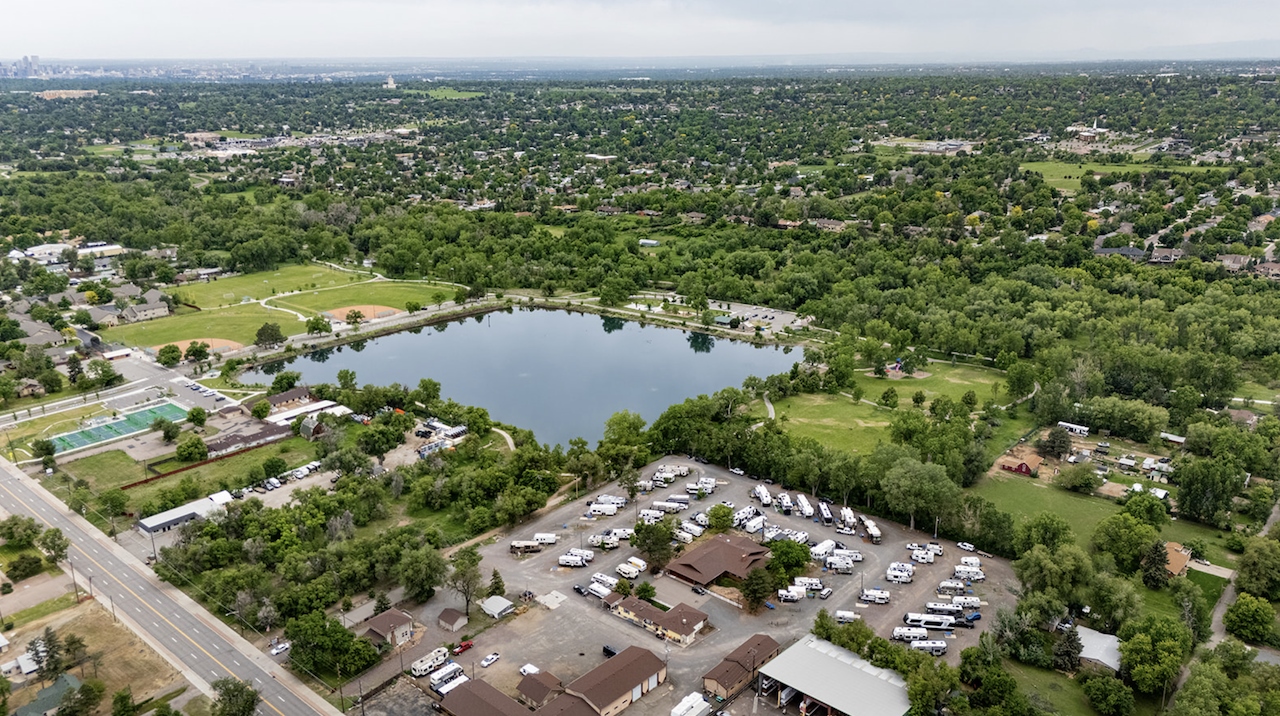
Among Denver-area camping options, Applewood RV Park by RJourney at 11600 W 44th Ave in Wheat Ridge fills the slot the state parks cannot: full hookups, year-round operation, and an urban address about 15 minutes from downtown right off I-70. It is RV-only, with 76 sites (65 full-hookup, 11 electric-only, 30- and 50-amp service) on gravel pads, no tent sites, and no car camping, though Class B vans are fine. It is a convenience-first park, not a scenic destination, and the honest pitch is exactly that: while the state parks give you reservoirs and trees with electric-only sites and seasonal pressure, Applewood gives you sewer at the site, a public dump station, a small dog park, light rail about a mile away, and monthly rates from $1,300. Manager Melissa Soderberg calls it a relaxing, centrally located base in the Denver metro, with Prospect Park right next door.
Sites & Hookups
Applewood is the RV lane of Denver-area camping: 76 sites, of which 65 are full-hookup (38 pull-through and 27 back-in) and 11 are electric-only, with 14 designated 50-amp sites and 30-amp on the rest. There are no tent sites and no car camping here, so tent campers should look to the state parks below; Class B vans are welcome. Pads are gravel and sites are tight, so rigs must be self-contained and big rigs should call ahead before booking. The on-site public dump station ($20 to dump, $10 fresh-water fill, free tank-rinse, free for registered guests, after-hours cash dropbox) is a service none of the nearby state parks match on a full-hookup basis.
What's On-Site
Where the state parks offer fire rings and reservoir beaches, Applewood offers the practical urban set: 24-hour coded coin laundry, a coded bathhouse with showers, a small fenced dog park, and package delivery at the office breezeway. There is no pool and no swimming on-site, and because the park sits inside city limits, campfires are not permitted, a real difference from camping at Chatfield or Golden Gate Canyon. What you get instead is position: Prospect Park and Prospect Lake next door (catch-to-keep fishing with a license; no swimming or boating), King Soopers and a TA truck stop nearby for resupply, and the RTD light rail about a mile away so you can ride into the city without moving the rig. Choose Applewood for convenience and infrastructure, the state parks for atmosphere.
What Guests Say
Applewood reads differently depending on what kind of camper you are. Travelers comparing it against a mountain campground notice the gravel pads, the tight sites, and the urban surroundings; travelers comparing it against finding sewer, power, and a year-round site in the Denver metro notice the location and the infrastructure. Guests most consistently point to the position: about 15 minutes from downtown, right off I-70, light rail nearby, and Prospect Park next door. The fair framing is that this is the convenience pick among Denver camping options, not the scenic one, and campers who book it on those terms get what they came for. Big rigs should call ahead to confirm a site that fits.
Best Campgrounds Near Denver for Tents and Trailers
<p>Applewood covers the full-hookup, urban-convenience end of Denver camping, and these public campgrounds cover the rest of the spectrum: reservoir tent sites near the city and true mountain camping in the foothills. Fees and availability change, and all three book heavily in summer, so reserve early through Colorado Parks and Wildlife and confirm details before you go.</p>
Cherry Creek State Park (Aurora)
The closest state park camping to downtown Denver, built around an 880-acre reservoir where campers swim, fish, and sail without leaving the suburban ring. Tent sites come with fire rings and picnic tables under cottonwood shade, and the campground has flush toilets, showers, electric hookups, and a dump station. The proximity cuts both ways: summer weekends get crowded and some sites pick up I-225 noise, so reserve early and ask about site placement. Visit website.
Chatfield State Park (Littleton)
A 1,500-acre reservoir along the South Platte that draws boaters, paddleboarders, and anglers from across the metro, with one of the most well-rounded state park campgrounds on the Front Range. Tent and trailer sites share paved roads, flush toilets, showers, electric hookups, and a dump station, and the reservoir trail system connects to the Mary Carter Greenway running toward downtown. Summer weekends book out months ahead, so reserve as soon as the window opens. Visit website.
Golden Gate Canyon State Park (Golden)
Where Denver-area camping turns into genuine mountain camping: the park spans 7,600 to 10,400 feet with aspen groves, ponderosa forest, and summer wildflower meadows. Reverend’s Ridge is the main campground with electric hookups and showers, sized for tents and smaller rigs rather than big RVs, while Aspen Meadow offers walk-in tent sites and the backcountry holds hike-in shelters. Fall aspen color in late September is exceptional, and nights drop into the 20s by October, so pack accordingly. Visit website.
What to Do While Camping Near Denver
Water is the anchor of Denver-area camping. Chatfield’s 1,500-acre reservoir and Cherry Creek’s 880-acre reservoir carry the swimming, paddling, and sailing load, both with campgrounds steps from the shoreline. Anglers can also work Clear Creek through Golden and Prospect Lake beside Applewood (catch-to-keep with a Colorado license; no swimming or boating there). Colorado requires a fishing license for anyone 16 and older, available online through Colorado Parks and Wildlife.
The foothills trail network sits within reach of every campground on this page. North Table Mountain in Golden is a flat-top mesa hike with skyline views, Mount Falcon mixes meadow trails with castle ruins, and Waterton Canyon’s flat 6-mile out-and-back doubles as the start of the Colorado Trail. Golden Gate Canyon adds 35-plus miles of its own trails through aspen and pine, and St. Mary’s Glacier rewards a short, steep climb with a year-round snowfield at 10,400 feet.
Camping near Denver means the city itself is part of the trip. Downtown is 15 minutes from Applewood and reachable by RTD light rail, with Union Station, museums, Coors Field, and a brewery scene 400 strong across the metro; Coors in Golden runs free tours. Red Rocks Amphitheatre is a 15-to-20-minute drive from the west-side campgrounds and free to hike during the day. In winter, the I-70 corridor turns any of these campgrounds into a ski base, with Loveland about an hour west and Breckenridge inside 90 minutes.
When to Camp Near Denver
Spring (March through May)
Front Range spring punishes the unprepared tent camper: Denver’s heaviest snowstorms historically land in March and April, and a 70-degree week can end in a blizzard. Tent trips are best held until mid-May unless your gear is rated for it. The reward for early-season campers is empty trailheads and wildflowers in the foothills by late April. RVers have the easier spring since powered sites at Applewood run year-round regardless of what the sky does.
Summer (June through August)
Everything opens and everyone shows up. Reservoir campgrounds at Cherry Creek and Chatfield book out months ahead for weekends, and Golden Gate Canyon’s tent loops fill close behind. Days run 85 to 95 with low humidity, and afternoon thunderstorms arrive most days between 2 and 5 PM, with lightning a genuine hazard above treeline. Midweek camping is dramatically easier to book across every option, public or private.
Fall (September through October)
The locals’ season. Crowds thin after Labor Day, daytime temps settle into the 60s and 70s, and Golden Gate Canyon’s aspen groves peak gold in late September, arguably the best tent camping window of the year. The catch is elevation: nights at the mountain campgrounds drop into the 20s and 30s by October, and high-country campgrounds start closing in late September while the metro options keep running.
Winter (December through February)
Winter sorts campers by equipment. Tent camping is possible for experienced cold-weather campers with 4-season gear, but for most people winter camping near Denver means an RV with a furnace and powered hookups, and Applewood’s year-round operation makes it the practical base. Denver’s roughly 300 days of annual sunshine melt snow fast in town, and the I-70 ski areas turn a heated campsite into a budget alternative to resort lodging.
Practical Tips for Camping Near Denver
Chatfield, Cherry Creek, and Golden Gate Canyon commonly book out 6 months ahead for summer weekends through Colorado Parks and Wildlife. Private parks like Applewood hold more last-minute availability, but confirm open sites before rolling in.
Summer fire bans are common along the Front Range and strictly enforced, and they can extend to state parks. Applewood sits inside city limits, so campfires are not permitted there at all; check current restrictions for any public-land site before planning a campfire night.
Golden Gate Canyon and the foothills are black bear country April through November; use the bear boxes and never leave food out. Chatfield and Cherry Creek sit below the typical bear zone, where raccoons are the bigger food thieves.
Denver is at 5,280 feet and Golden Gate Canyon's campgrounds reach above 9,000. Drink more water than feels necessary, expect alcohol to hit harder, and give yourself a day or two at city elevation before tackling high trailheads.
Front Range gusts can flatten a casually pitched tent, and weather can swing 40 degrees in a day. Bring extra stakes, a ground tarp, and a rain fly even on a clear forecast, and keep a cold-weather layer in the kit into June.
Applewood has 14 fifty-amp sites among its 76, and rigs running two AC units in July want one. Sites are gravel and tight, so big rigs should also confirm a pull-through that fits before arrival.
Frequently Asked Questions
Where can I camp near Denver, Colorado?
The Denver area offers camping across the spectrum within about 30 miles of downtown. Cherry Creek State Park (9 miles) and Chatfield State Park (20 miles) have tent and electric RV sites beside large reservoirs, Golden Gate Canyon State Park (30 miles west) has mountain tent sites and backcountry shelters, and Applewood RV Park in Wheat Ridge provides full-hookup RV sites about 15 minutes from downtown.
Where is the best tent camping near Denver?
Golden Gate Canyon State Park is the strongest tent option for a mountain setting, with walk-in sites at Aspen Meadow, electric sites at Reverend’s Ridge, and backcountry shelters between 7,600 and 10,400 feet. For reservoir camping closer to the city, Cherry Creek and Chatfield State Parks both offer tent sites with fire rings, showers, and water access. Applewood is RV-only and does not take tents.
Which campground near Denver has full hookups?
The state park campgrounds near Denver run electric-only sites, so for full hookups (water, sewer, and electric at the site) the option is a private park. Applewood RV Park in Wheat Ridge has 65 full-hookup sites among its 76, with 30- and 50-amp service and an on-site dump station, about 15 minutes from downtown Denver.
Can you camp near Denver in winter?
Yes, with the right setup. Applewood RV Park operates year-round with powered sites that keep a furnace running, making it the practical winter base, especially for ski trips up the I-70 corridor. State parks have reduced winter services, and tent camping in winter is realistic only for experienced cold-weather campers with 4-season gear.
Do campgrounds near Denver allow campfires?
It depends on where you camp and when. State parks like Chatfield, Cherry Creek, and Golden Gate Canyon have fire rings at sites, but summer fire bans are common along the Front Range and strictly enforced, so always check current restrictions. Applewood sits inside city limits and does not permit campfires at all.
How far ahead should I book a Denver-area campsite?
For state park campgrounds in summer, book as soon as the Colorado Parks and Wildlife window opens, typically 6 months out, because weekend sites at Chatfield, Cherry Creek, and Golden Gate Canyon sell out fast. Applewood and other private parks usually hold more short-notice availability, though summer weekends and monthly sites still fill.
Make Applewood Your Denver Camping Base
If your camping trip near Denver runs on an RV, Applewood RV Park by RJourney is the full-hookup, year-round option in the mix: 76 sites in Wheat Ridge about 15 minutes from downtown, right off I-70, with sewer and 30/50-amp power at the site, an on-site dump station, a small dog park, and Prospect Park next door. It trades reservoir views for urban convenience, monthly rates from $1,300, and a location the state park campgrounds cannot match for city access. Sites are gravel and tight, so call ahead if you run a big rig.
See all site types, rates, and live availability on the Applewood RV Park page.
Check Availability