RV camping near Denver is less about the campground and more about what you can reach from it. Park your rig once in the metro and I-70 hands you the whole Front Range: Clear Creek Canyon in 10 minutes, Red Rocks in 20, ski country and alpine trailheads inside 90. The right base camp is the one that gets you on the highway fast and plugs you in when you get back.
That is the case for Applewood RV Park in Wheat Ridge, just west of Denver proper, about 15 minutes from downtown right off I-70. This page walks through what an RV stay here actually looks like: the hookups, the 76 sites, the on-site dump station and dog park, and how the location works as a launch pad for mountain day trips. Applewood is an urban, convenience-first park, not a destination resort, and that honesty is the point. Come for the position and the practical setup, set expectations for gravel pads and tight sites, and let the location do the heavy lifting.
Why Applewood Works as an RV Base Near Denver
On the Highway in Minutes
The whole point of RV camping near Denver is range, and range starts with how fast you reach the on-ramp. From Applewood you are on I-70 in minutes, into Clear Creek Canyon in about 10, and at Red Rocks in 20. Idaho Springs, Georgetown, and the Loveland Pass overlooks all sit within an hour or so west. Leave the rig plugged in at camp, take the tow vehicle, and you can chase a different kind of day, mountains, brewery district, or fishing, without breaking camp.
Set Up for Self-Contained Rigs
Applewood is built for RVers who arrive ready to run self-contained. Of the 76 sites, 65 are full-hookup and 11 are electric-only, with 14 fifty-amp sites for rigs pulling two AC units. There are no tent or car-camping sites, though Class B vans fit fine. Pads are gravel and tight, which is the most common thing guests flag, so big rigs should call ahead to lock in a pull-through that fits. The trade for the no-frills layout is a metro address and a dump station on-site, both hard to match at a mountain campground.
A Year-Round Plug-In
Applewood operates 12 months a year, which matters more for RV travelers than it sounds. Mountain campgrounds close in late September, but a heated, full-hookup base in the metro keeps you camping through ski season and fall color without seasonal-closure roulette. Monthly rates from $1,300 make it work for an extended stay, and the year-round power means your furnace and water lines stay live through a Front Range cold snap.
Explore More Nearby
More RV parks and campgrounds in Colorado:
Applewood RV Park by RJourney (Wheat Ridge)
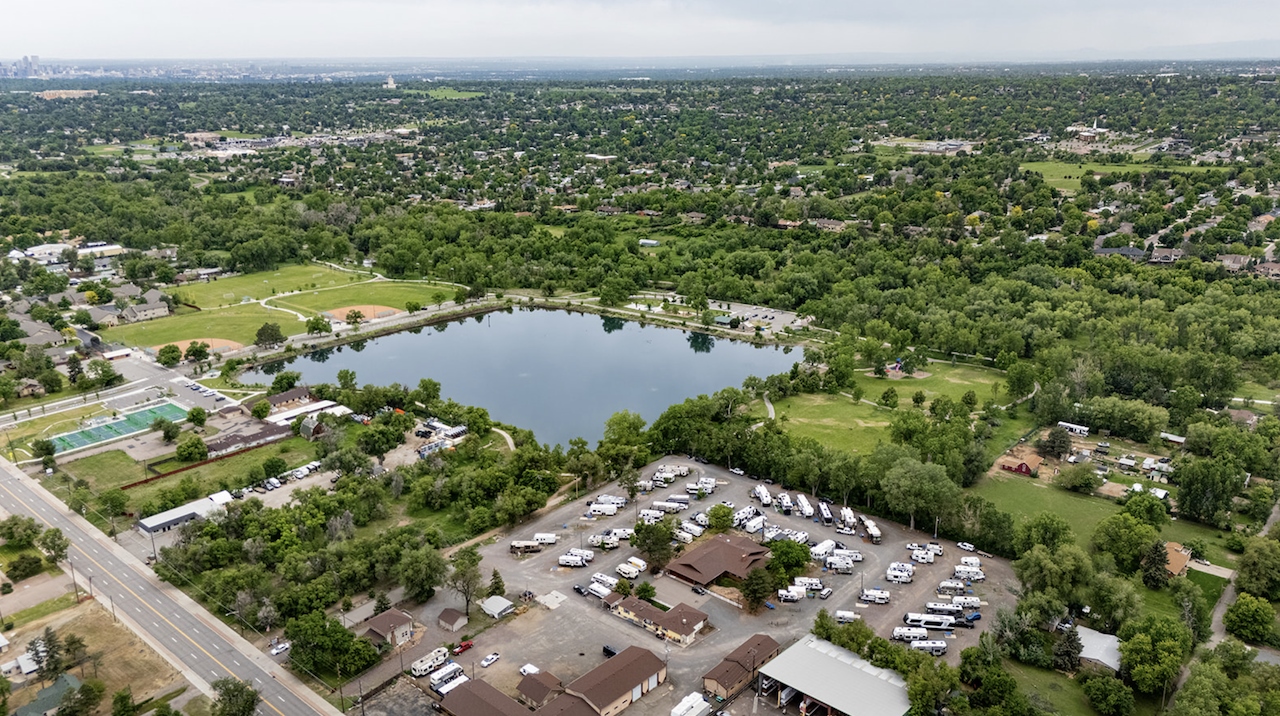
Applewood RV Park by RJourney sits at 11600 W 44th Ave in Wheat Ridge, about 15 minutes from downtown Denver and right off I-70. For RV travelers, the draw is simple: 76 sites with 30- and 50-amp service, 65 of them full-hookup, plus an on-site dump station and a small fenced dog park, all in a location that puts Red Rocks, Golden, and the I-70 mountain corridor within easy reach. It is an urban, mostly gravel park rather than a destination resort. Pads are gravel and sites run tight, so rigs need to be self-contained and big rigs should call ahead. The trade for the no-frills setup is position and price: monthly rates run from $1,300, and the RTD light rail roughly a mile away lets you leave the truck at camp and ride into the city. As manager Melissa Soderberg puts it, it is a relaxing, centrally located base in the Denver metro.
Sites & Hookups
Applewood runs 76 RV sites: 65 full-hookup (38 pull-through and 27 back-in) and 11 electric-only, with 30- and 50-amp service across 14 designated 50-amp sites and 30-amp on the rest. If you run two AC units, ask for one of the 50-amp sites when you book. Pads are gravel and sites are tight, so rigs must be self-contained; there are no tent sites and no car camping, though Class B vans are fine. The tight layout is the most common thing guests raise, so big rigs should call ahead to confirm a site that fits the length before arriving. A public dump station is on-site: $20 to dump, $10 for a fresh-water fill, free tank-rinse, and free for registered guests, with after-hours access via a cash dropbox.
What's On-Site
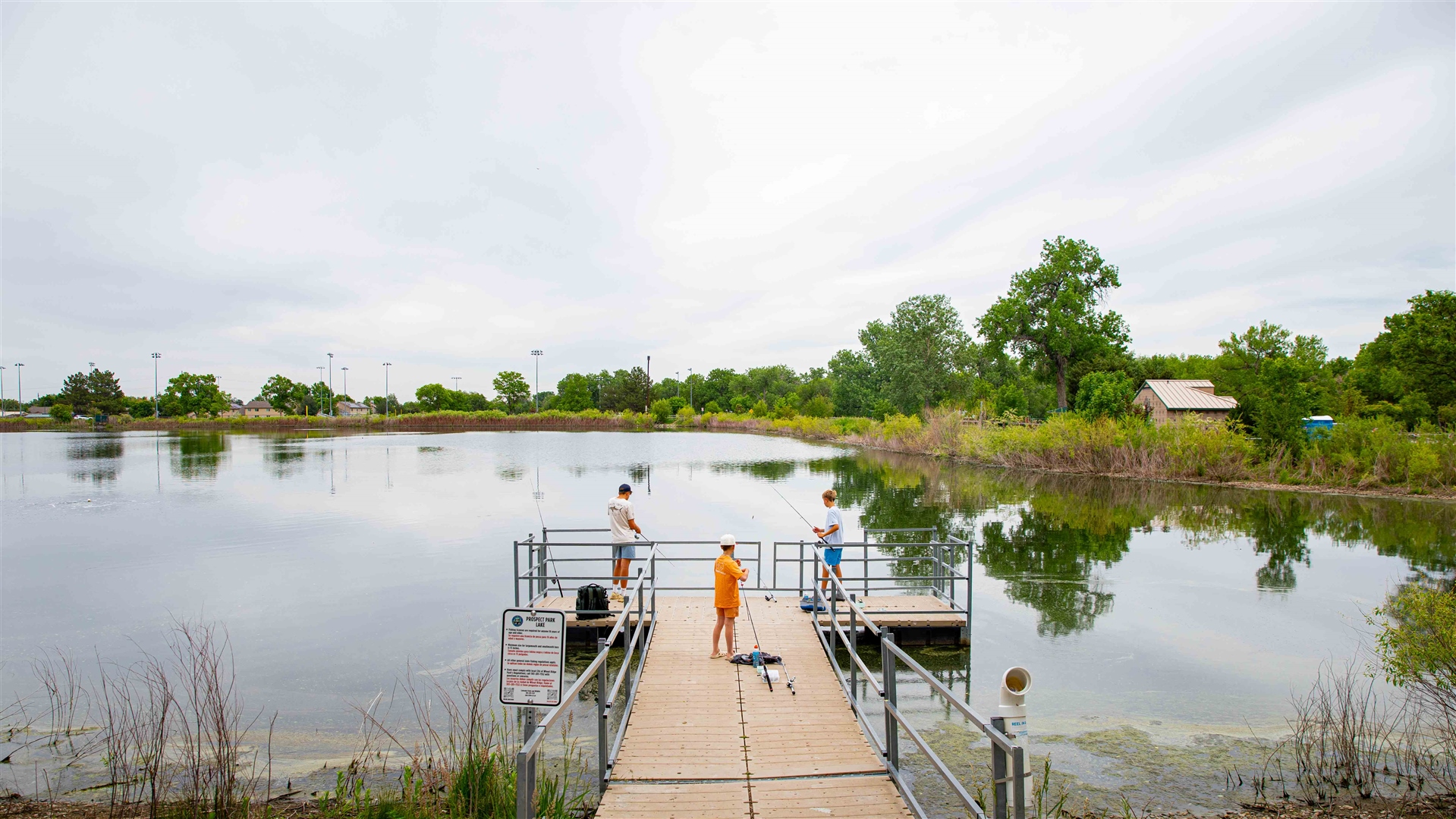
The on-site setup at Applewood is built for self-contained RV travelers, not poolside lounging. You get 24-hour coded coin laundry, a coded bathhouse with showers, a small fenced dog park for the travel days when your dog needs to burn energy, and package delivery at the office breezeway. There is no pool and no swimming on-site. The most useful amenity for RVers passing through the metro is the public dump station ($20 dump, $10 fresh-water fill, free tank-rinse for guests, after-hours cash dropbox), which means you can empty and refill without a detour. Next door, Prospect Park and Prospect Lake give you a walking loop and catch-to-keep fishing with a Colorado license (no swimming or boating). Set expectations for a practical, gravel park, and the location earns the stay.
What Guests Say
Applewood is an urban, convenience-first RV park rather than a destination resort, and that frames what guests come away with. The consistent praise is the location and the practical access: about 15 minutes from downtown Denver, right off I-70, with the dump station, full hookups, and the dog park doing exactly what an RV traveler needs them to. Sites run tight and gravel, so the honest advice is to come for the position and the convenience and set expectations accordingly. If you run a big rig and need a pull-through with room to maneuver, call ahead to confirm a site that fits before you arrive.
Other RV Parks and Campgrounds Near Denver, CO
<p>Applewood is the convenience-first pick for RVers who want a metro base with full hookups and a dump station, but the area’s state parks trade that proximity for reservoirs and electric hookups in a more natural setting. Availability and fees change and these parks fill fast in summer, so reserve early and confirm policies before you go.</p>
Cherry Creek State Park (Aurora)
Cherry Creek wraps an 880-acre reservoir popular for fishing, swimming, and sailing, with paved RV pads, electric hookups, showers, and a dump station, but no full hookups or sewer at the site. It is the closest state park campground to downtown Denver, which means it gets crowded on summer weekends and some sites pick up I-225 noise. For RVers it works as a reservoir-side base if you can run on electric and dump on the way out. Visit website.
Chatfield State Park (Littleton)
Chatfield runs along the South Platte with a 1,500-acre reservoir for boating and fishing, and a large, well-kept campground with paved roads, showers, electric hookups, and a dump station, though no full hookups. It is farther from the city than Applewood and books out May through September, so reserve months ahead for summer weekends. A strong choice for RVers wanting space and water access over metro convenience. Visit website.
Day Trips From Your Denver RV Base
Prospect Lake sits right next door to Applewood with catch-to-keep fishing for guests holding a Colorado license, though swimming and boating are not allowed. For open water within day-trip range, Chatfield’s 1,500-acre reservoir and Cherry Creek’s 880-acre reservoir both draw boaters and anglers, and the Blue River below Dillon Reservoir, about 75 minutes west on I-70, is gold-medal trout water worth the drive.
I-70 westbound is the reason RVers base in this part of the metro. Clear Creek Canyon opens up about 10 minutes from camp, and from there the day trips stack up: Idaho Springs and Indian Hot Springs at 30 minutes, the Victorian mining town of Georgetown and its loop railroad at 45, and the Loveland Pass overlooks at the Continental Divide inside an hour and a quarter. Closer in, North Table Mountain, Lookout Mountain, and St. Mary’s Glacier all make half-day hikes from the rig.
Red Rocks Amphitheatre is 20 minutes from Applewood and worth the trip even with no show on the calendar, with hiking trails winding through 300-foot sandstone formations. Golden, 15 minutes out, has the Coors Brewery and free tours, and the RTD W Line runs through Wheat Ridge so you can ride into the city and leave the truck parked. For ski day trips, Loveland is about 60 minutes west and Arapahoe Basin, Keystone, and Breckenridge fall inside 90, making camp-and-day-trip skiing a real budget strategy.
Seasonal Guide for RV Camping Near Denver
Spring (March through May)
Spring on the Front Range is unpredictable: 70-degree afternoons can flip to a foot of snow inside two days, and Denver’s heaviest storms historically land in March and April. Keep heat tape on exposed water lines and an insulated hose through mid-May. The upside is thinner crowds and easier availability while the mountain campgrounds are still closed, and Applewood’s year-round power keeps you camping through the swings.
Summer (June through August)
Peak season for RV travel. Highs run 85 to 95 in July with low humidity, and afternoon thunderstorms roll through most days between 2 and 5 PM, so plan mountain hikes to summit by noon. State park campgrounds book out weeks ahead; Applewood holds more flexible availability but summer weekends still fill, so call ahead and ask about a 50-amp site if you run two AC units.
Fall (September through October)
The best stretch of the year for RV camping near Denver: warm days in the 70s, cool nights, and gold aspens in the high country by late September. Crowds thin after Labor Day and I-70 moves at normal speed before ski season. Mountain campgrounds start closing in late September, so a metro base like Applewood keeps your fall-color trips solid without chasing open sites.
Winter (November through February)
Cold but sunny, with roughly 300 days of sunshine a year and snow that melts fast. Winter RV camping here means ski-season access without mountain-campground logistics: camp warm in the metro and day-trip the slopes. Run heat tape on water lines, an insulated hose, and skirting for longer stays. Applewood’s year-round operation makes it a reliable winter base, especially for skiers who would rather pay monthly than nightly.
Practical Tips for RV Camping Near Denver
Denver sits at 5,280 feet and Wheat Ridge a bit higher. Coming from sea level, drink extra water, take day one easy, and acclimate 48 hours before a 14er. Your engine will also feel the altitude on the I-70 grades, so expect less power on the climbs.
Westbound I-70 backs up Saturday and Sunday mornings during ski season and summer weekends, adding 1 to 3 hours to a 60-minute drive. Leave before 7 AM or after 10, and head home before 1 PM or after 7. Applewood's spot near the I-70 exits puts you among the first off the highway coming back.
Applewood's sites are gravel and tight, and big-rig fit is the most common thing guests raise. Confirm a pull-through that fits your length before you arrive, and ask about the 14 fifty-amp sites if you run two AC units.
The on-site public dump station is $20 (free for registered guests), with a $10 fresh-water fill and free tank-rinse. After-hours dumping uses a cash dropbox by the office, so carry cash if you arrive late.
Applewood does not sell propane on-site, but several dealers operate within about 10 minutes in Wheat Ridge and Lakewood. King Soopers and a TA truck stop are nearby for resupply, and Camping World in Wheat Ridge handles RV-specific parts.
Denver can go from 70 and sunny to a hailstorm in an afternoon, and a 40-degree swing in a day is normal. Keep the awning retracted when you leave the site, carry layers for mountain day trips, and keep the furnace ready even in spring.
Frequently Asked Questions
What hookups are available for RV camping at Applewood near Denver?
Applewood has 76 sites with 30- and 50-amp service: 65 full-hookup (38 pull-through and 27 back-in) and 11 electric-only, with 14 designated 50-amp sites for rigs running two AC units. There is also an on-site public dump station. Sites are gravel and tight, so big rigs should call ahead to confirm a pull-through that fits.
Is there a dump station for RVs near Denver?
Yes. Applewood has an on-site public dump station, free for registered guests and $20 for the public, with a $10 fresh-water fill and free tank-rinse. After-hours dumping uses a cash dropbox by the office, which makes it a practical stop for RVers passing through the Denver metro.
Can I RV camp near Denver year-round?
Yes. Applewood operates 12 months a year with electric and full-hookup sites that keep your furnace and water lines running through winter. Mountain campgrounds close in late September, so a year-round metro base lets you camp through ski season and fall color without seasonal-closure gaps.
How far is Applewood from Denver and the I-70 mountains?
Applewood is in Wheat Ridge, about 15 minutes from downtown Denver right off I-70. Clear Creek Canyon opens up about 10 minutes from camp, Red Rocks is 20 minutes, and the I-70 ski areas (Loveland, Arapahoe Basin, Keystone, Breckenridge) sit within 60 to 90 minutes, making it a fast launch point for mountain day trips.
Is Applewood RV Park big-rig friendly?
Applewood has pull-through sites, but pads are gravel and sites run tight, which is the most common point guests raise. Big rigs should call ahead to confirm a site that fits the length before arriving. Class B vans fit fine, and there are no tent or car-camping sites, so rigs need to be self-contained.
Is Applewood RV Park in Denver or Wheat Ridge?
Applewood is in Wheat Ridge, just west of Denver proper, about 15 minutes from downtown right off I-70. It is centrally located in the Denver metro with quick access to the RTD light rail, Red Rocks, and Golden, which is why it works as an RV base for exploring the city and the Front Range.
Book Your RV Site at Applewood Near Denver
Applewood RV Park by RJourney is a year-round RV park in Wheat Ridge, about 15 minutes from downtown Denver and right off I-70. You get full-hookup and electric sites with 30- and 50-amp service, an on-site dump station, a small dog park, and Prospect Park next door, all positioned for fast access to Red Rocks, Golden, and the I-70 mountain corridor. Monthly rates run from $1,300. Sites are gravel and tight, so call ahead if you run a big rig.
See all site types, rates, and live availability on the Applewood RV Park page.
Check Availability