
There’s nothing quite like the moment you pull out of your driveway for the very first time in an RV, the open road ahead, your home rolling right behind you, and a world of campgrounds, national parks, and hidden gems waiting to be discovered. But let’s be honest: that excitement can come with a healthy dose of anxiety. How do you back into a campsite? What happens if you run out of water? Did you remember to retract the awning?
Take a deep breath. Every seasoned RVer was once a beginner, and with the right RV travel tips, your maiden voyage can be smooth, safe, and downright unforgettable. This comprehensive guide covers everything first-time campers need to know—from pre-trip preparation to campground etiquette—so you can spend less time worrying and more time making memories.
RV camping sits at the sweet spot between traditional tent camping and hotel travel. An RV gives you the freedom to explore nature without sacrificing the comfort of a bed, a kitchen, and a bathroom. Whether you’re a family of five looking for an affordable vacation or a couple craving a digital detox under the stars, RV travel offers unmatched flexibility.
You can wake up to mountain views in Colorado near Cortez RV Resort, fall asleep to the sound of lake waves at Canary Beach Resort in Minnesota, or spend a weekend fishing at Grand Lake O’ the Cherokees in Oklahoma—all without packing and unpacking suitcases at every stop.
The single most important piece of RV travel advice for beginners is deceptively simple: practice before your first real trip. That means:
First-timers often underestimate how much supplementary gear an RV requires beyond what comes standard. A quality RV starter kit — such as the Camco RV Starter Kit or Valterra RV Basic Starter Kit — covers the basics for around $75 to $150 and typically includes a sewer hose, water pressure regulator, water filter, and electrical adapters.
Beyond the basics, make sure you pack:
Here’s a critical RV travel tip many beginners overlook: standard car GPS apps can route you down roads that are dangerous or impassable for an RV. Low bridges, narrow mountain passes, and weight-restricted roads are genuine hazards.
Instead, use RV-specific navigation tools:
Always download offline maps before entering remote areas, particularly if you plan to camp in national forests or desert regions where cell service is unreliable.
For your very first trip, resist the urge to go fully off-grid. Start at a full-hookup campground within a few hours of home so you can learn the ropes with a safety net. Full hookups mean you’ll have water, sewer, and electric connections right at your site — no need to worry about conserving tank capacity while you’re still learning.
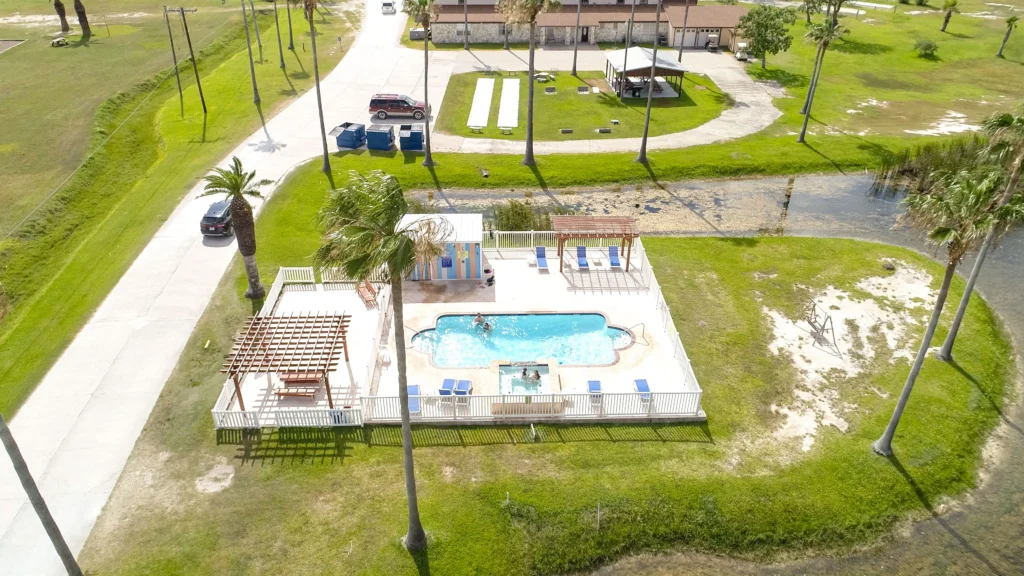
RJourney parks across the country are designed with exactly this kind of welcoming, stress-free experience in mind. Consider options like Splash Magic RV Resort in Pennsylvania for a family-friendly first outing, Sunburst RV Resort in Florida for warm-weather comfort, or Elkhart RV Resort in Indiana — the RV capital of the world — for an experience steeped in RV culture.
The golden rule of RV driving is to give yourself more time and more space than you think you need. More time to brake, more space between vehicles, more room on turns, and more patience at every stage.
Practical driving tips include:
Experienced RVers swear by this ritual: before you move your RV, walk completely around it in one direction, then walk around it again in the opposite direction. Check that:
Forgetting to disconnect your sewer hose before pulling away is a rite of passage no one wants to experience. The walk-around takes two minutes and can prevent thousands of dollars in damage.
When you arrive at your campsite, follow this sequence:
RV parks are tight-knit communities, and a little courtesy goes a long way:
RV travel can be budget-friendly, but only with intentional planning. Here are proven strategies:
The RV industry continues to evolve rapidly. By 2026, many campgrounds are expected to add EV charging stations to accommodate electric tow vehicles and hybrid RVs. Hybrid parks that blend traditional RV sites with glamping tents and tiny houses are growing in popularity, and technology like keyless RV entry and Starlink satellite internet is making off-grid camping more accessible than ever.
Lithium batteries and advanced solar setups are also becoming mainstream, allowing RVers to stay off-grid for days or even weeks with full power. If you’re investing in an RV for the long haul, consider future-proofing your setup with solar-ready panels and lithium battery upgrades.
The best advice for first-time RV campers is to start simple: choose a full-hookup campground close to home, practice driving and setting up before your trip, and pack an RV starter kit with essential accessories. Gradually build your skills and confidence before attempting longer trips or off-grid camping. Testing all your RV systems at home before departure prevents most common first-trip problems.
For your very first trip, aim for a campground no more than 2–3 hours from home. This keeps driving stress manageable and gives you a safety net if you forget something or encounter unexpected issues. As you gain experience, you can comfortably extend to 200–300 mile travel days, though most experienced RVers recommend capping daily driving at 4–5 hours.
The most common beginner mistakes include forgetting to retract slides or disconnect hookups before driving, not checking bridge and tunnel clearances, overpacking (which affects fuel efficiency and handling), and failing to make campground reservations during peak season. National park campgrounds often fill up 3 to 6 months in advance, so planning ahead is essential.
Yes. Standard auto insurance typically does not cover RV-specific risks. A dedicated RV insurance policy should cover collision, liability, personal belongings inside the RV, and full-timer coverage if you live in your RV. Make sure your policy covers you in all states — and in Canada or Mexico if you plan international trips. Higher deductibles can lower premiums for drivers with clean records.
Spring (April–May) and fall (September–October) are widely considered the best seasons for RV travel, offering mild weather, lower campground costs, and fewer crowds. Avoid summer in desert regions like the Mojave (extreme heat) and be aware that popular mountain and coastal destinations book up quickly from June through August.

Every expert was once a beginner, and the RV community is one of the most welcoming you’ll ever find. With solid preparation, the right gear, and a willingness to learn as you go, your first RV trip can be the start of a lifelong adventure. If you are ready to plan your first getaway, choose a full-hookup park that makes arrival and setup easy while you build confidence behind the wheel. Ready to book your first campsite? Explore RJourney’s family of RV parks and resorts across the country — from the mountains of Utah at Bryce Canyon RV Resort to the shores of Texas at Rockport RV Resort. Book direct, pack your essentials, and start your RV story today.