Finding the ideal RV park can make or break your camping adventure. Whether you’re a weekend warrior escaping the city or a full-time RVer crossing the country, knowing how to choose an RV park that matches your needs transforms a good trip into an unforgettable experience. Embracing RV life and the adventure of rving means finding places that fit your lifestyle and travel goals. With over 16,000 RV parks and campgrounds across the United States, the options can feel overwhelming, but they don’t have to be.
This comprehensive guide walks you through everything you need to consider when selecting your next home away from home, from essential hookup requirements to amenities that elevate your stay from ordinary to extraordinary. You’ll discover the variety of campsites available, each offering unique opportunities for fun, relaxation, and connecting with nature.
Quick Facts: RV Park Selection at a Glance
- Hookup Type: Determines comfort level and self-sufficiency needs
- Most Sites: At RV parks, most sites offer full hookups for water, electricity, and sewer
- Site Size: Must accommodate your RV length plus slideouts
- Location: Affects access to attractions, services, and experiences
- Amenities: Impacts daily convenience and overall enjoyment
- Most RV Parks: Most RV parks provide full hookups for water, electricity, and sewer
- Price Range: Varies from $25/night (basic) to $100+/night (resort-style)
- Booking Window: Popular parks fill 6+ months in advance during peak season
Understanding Your RV Park Options
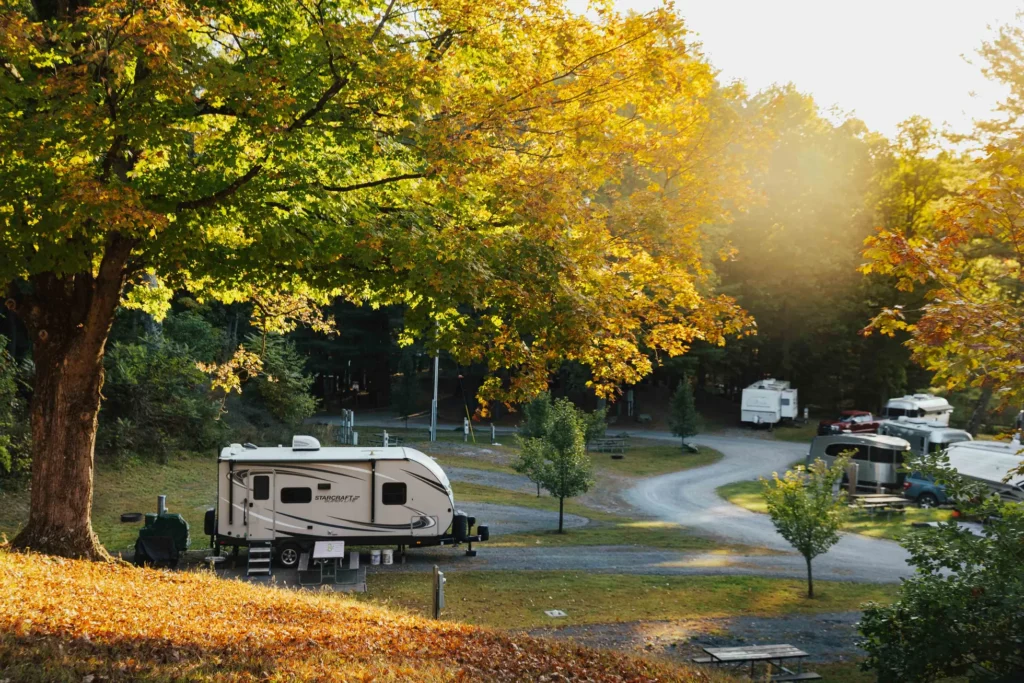
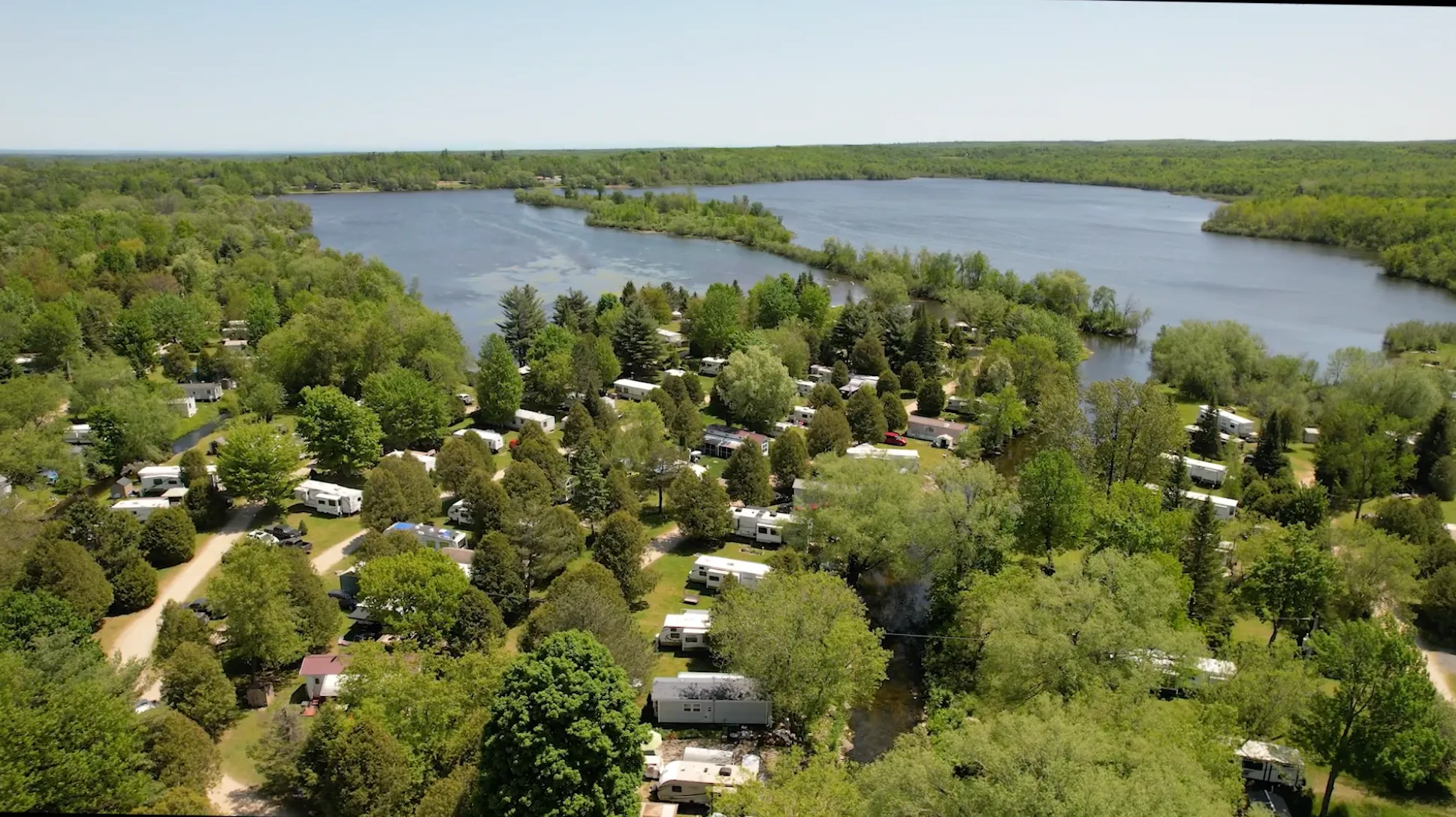
Before diving into how to choose an RV park, it’s essential to understand what types of camping facilities exist. RV campgrounds are a distinct type of facility, typically offering a more rustic camping experience in natural settings. RV campgrounds are designed to provide a more rustic experience, often with less reliable amenities compared to RV parks. The American camping landscape offers everything from rustic boondocking sites to luxury resort-style destinations with waterparks and clubhouses. Long term RV parks are also available, catering to travelers seeking extended stays with amenities and accommodations suitable for long-term living.
Types of RV Camping Facilities
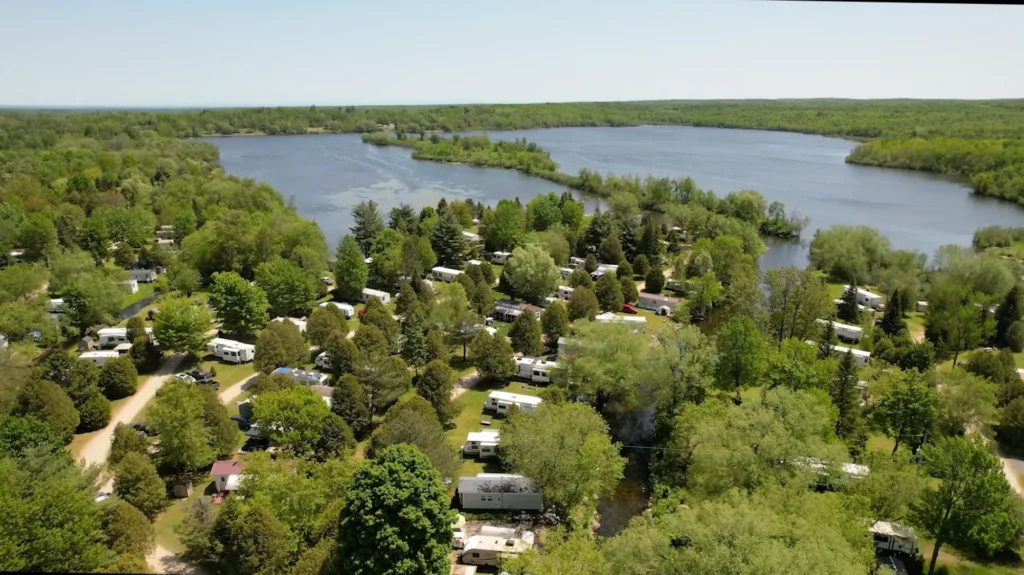
Full-Service RV Resorts represent the top tier of RV camping, offering comprehensive amenities including pools, fitness centers, organized activities, and restaurant-quality dining options. These destinations, like award-winning luxury rv resorts recognized by platforms such as Campspot, often feature full hookups with 50-amp service, concrete pads, and resort-style programming. Luxury RV Resorts offer hotel-like amenities such as pools and spas, and are designed to provide the most comfort, entertainment, and luxury compared to RV parks and campgrounds. If you’re traveling in a luxury rv or seeking a luxury rv resort experience, these high-end destinations often include premium features like scenic lake views, fireplaces, and extensive recreational facilities.
Standard RV Parks provide reliable hookups and basic amenities such as restrooms, showers, and laundry facilities. These parks balance comfort with affordability, making them ideal for travelers who spend most of their time exploring rather than relaxing at camp.
State and National Park Campgrounds offer unparalleled access to natural wonders but typically provide limited hookups or none at all. These sites prioritize the outdoor experience over convenience amenities.
Private Campgrounds run the gamut from basic to luxurious, often located near popular attractions or in scenic settings that public lands can’t match.
Quotable Insight: “The right RV park isn’t about finding the most amenities—it’s about finding the amenities that match how you actually travel and what experiences you’re seeking.”
Step 1: Define Your Travel Goals and Priorities
The first step in learning how to choose an RV park is honest self-reflection about your travel style and planning for your RV trip. Your ideal campsite depends entirely on what you want from your RV experience, including whether an extended stay is part of your travel goals.
Questions to Ask Yourself
What’s the primary purpose of this trip?
- Adventure and exploration (proximity to attractions matters most)
- Relaxation and downtime (on-site amenities take priority)
- Work and travel (reliable Wi-Fi and quiet hours are essential)
- Family bonding (kid-friendly facilities and activities shine)
What fun things or activities do you want to do on your camping trip?Consider what local attractions, entertainment options, or on-site amenities are important for making your camping trip enjoyable and memorable.
How much time will you spend at the campsite?Travelers who use their RV as a basecamp for daily adventures have different needs than those who want to enjoy resort-style relaxation. If you’re leaving at sunrise and returning after sunset, paying premium prices for amenities you won’t use doesn’t make sense.
What’s your budget per night?RV park prices vary dramatically based on location, season, and amenities:
- Budget camping: $25-$45/night (basic hookups, minimal amenities)
- Mid-range parks: $45-$75/night (full hookups, standard amenities)
- Premium resorts: $75-$150+/night (resort amenities, prime locations)
Quotable Insight: “Budget-conscious RV travelers should consider that a park 30 minutes from attractions at $40/night often provides better value than a park five minutes away at $90/night.”
Step 2: Know Your RV’s Specifications
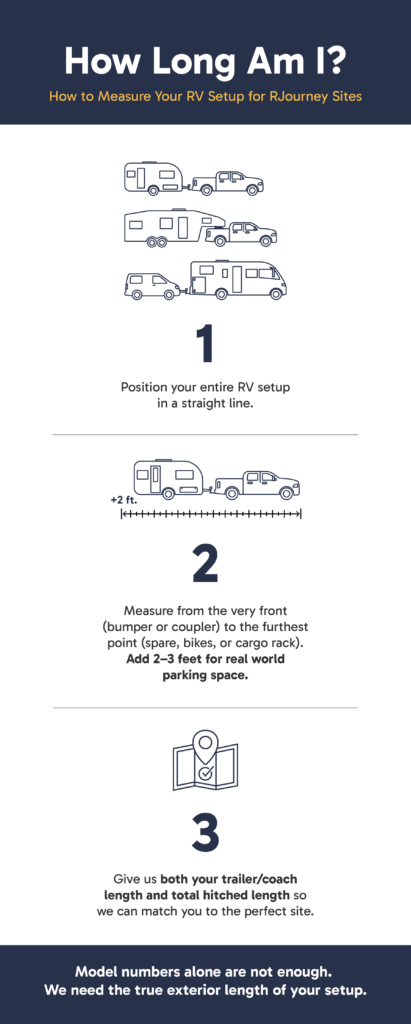
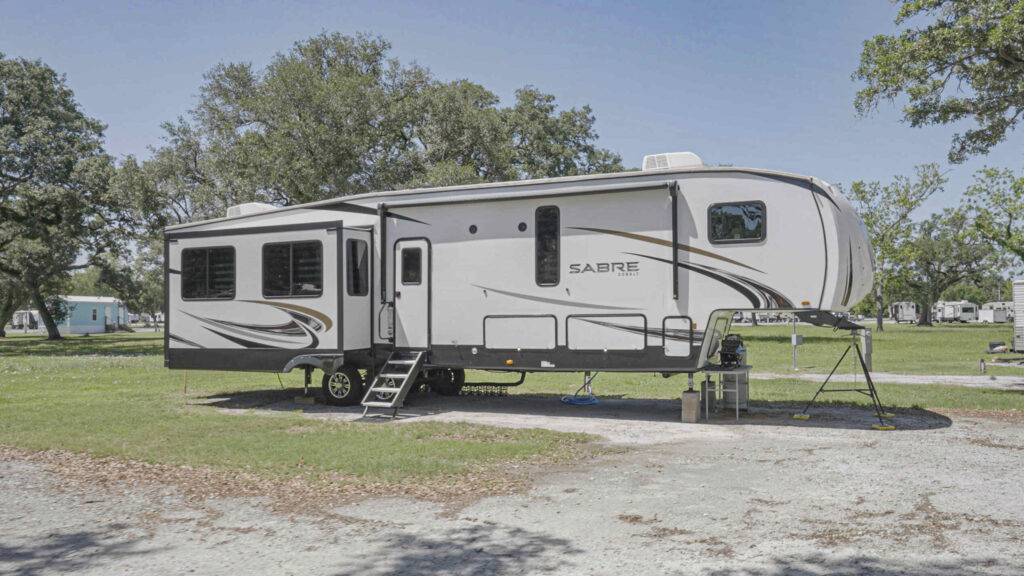
One of the most common mistakes new RV travelers make is booking sites that physically cannot accommodate their rig, especially if you have a big rig or an RV with slide outs. Understanding your RV’s specifications prevents arrival-day disasters.
Critical Measurements to Know
- Total Length: Determines if you fit in the site (include tow vehicle if applicable)
- Height: Affects access under bridges, trees, and covered areas
- Width with Slideouts: Ensures adequate space when fully extended
- Electrical Requirements: 30-amp vs. 50-amp service affects what you can run
- Fresh/Gray/Black Tank Capacity: Determines how long you can go between dumps
Level sites are important for easy parking and stability, helping to prevent issues caused by uneven terrain.
Understanding Hookup Options
Full Hookups (FHU) include electricity, water, and sewer hookups at your site. This configuration offers maximum convenience, allowing you to use your RV exactly as you would at home. Most RV parks provide full hookups for water, electricity, and sewers.
Partial Hookups typically provide electricity and water only. You’ll need to use dump stations for waste disposal, which most parks provide.
Dry Camping/Boondocking means no hookups at all. You’re entirely self-sufficient, relying on batteries, solar power, and your holding tanks.
Electric service comes in two primary configurations: 30-amp service adequately powers most travel trailers and smaller motorhomes, while 50-amp service is essential for larger Class A motorhomes and fifth wheels running multiple air conditioners.
Quotable Insight: “Always book an RV site rated for at least 10 feet longer than your total rig length to ensure comfortable maneuvering and adequate outdoor living space.”
Step 3: Evaluate Location and Accessibility
Location encompasses more than just proximity to attractions—it affects your entire camping experience, from road conditions reaching the park to what services are nearby, such as grocery stores, gas stations, and other essential amenities. For longer stays, having gas stations close by can be especially convenient. Additionally, check Google Maps to see the spacing between RV sites and the park’s proximity to highways or railways, as these factors can impact noise levels and privacy.
Proximity Considerations
Distance to Attractions
Consider how far you’re willing to drive each day. A park 45 minutes from your primary destination means 90 minutes of daily driving, which adds up quickly over a week-long stay. However, parks closer to attractions often charge premium prices.
Access to Services
Stock up before arriving at remote campgrounds. Knowing the distance to grocery stores (look for major retailers like Walmart Supercenters for one-stop shopping), fuel stations, medical facilities, and nearby restaurants provides peace of mind. Easy access to local restaurants can enhance your stay by offering convenient dining options after a long day of exploring.
Road Conditions
Some RV parks require navigating narrow roads, steep grades, or tight turns. Parks like Cortez RV Resort in Colorado offer easy highway access, making arrival and departure stress-free regardless of your rig’s size.
Regional Considerations Across the USA
Southwest Desert Parks offer stunning scenery but require awareness of extreme temperatures. Spring (March-May) and Fall (September-November) offer ideal conditions, with daytime temperatures of 60-80°F, while summer temperatures can exceed 105°F.
Mountain Destinations in states like Utah and Colorado deliver breathtaking views but may have elevation-related challenges. Bryce Canyon RV Resort and Cedar City RV Resort position you perfectly for exploring Utah’s famous national parks.
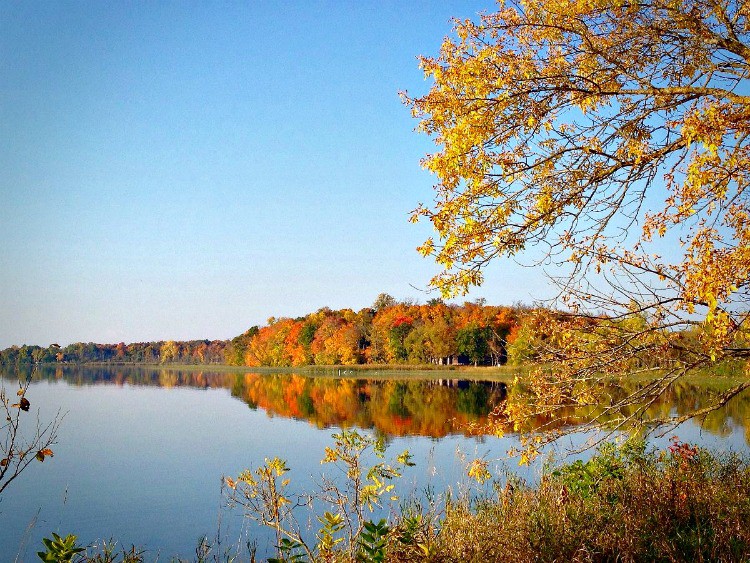
Lakefront Properties throughout the Midwest and Northeast provide water-based recreation. Parks like Canary Beach Resort in Minnesota and The Point at Lake Hartwell in South Carolina combine camping with fishing, swimming, and boating.
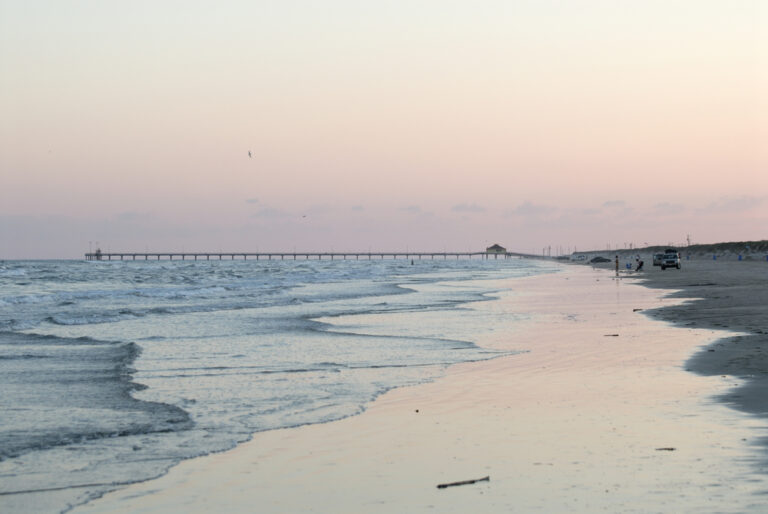
Coastal Locations in states like Texas, Louisiana, and Florida offer beachside camping experiences. Many resorts feature a beach area as a desirable amenity for swimming and relaxation. Rockport RV Resort provides easy access to Gulf Coast attractions and fishing.
State parks are also excellent regional options, known for their affordability and accessibility. They often offer free or low-cost camping, making them ideal for outdoor recreation, hiking, and enjoying natural scenery.
Quotable Insight: “The best RV park location balances accessibility to attractions with the peace and natural beauty you came to experience in the first place.”
Step 4: Assess Essential Amenities
Amenities transform a parking spot into a camping experience. The right amenities are essential for a comfortable stay, ensuring you have both the essentials and added conveniences that enhance your trip. Understanding which amenities genuinely improve your stay versus which ones you’ll never use prevents overpaying for unnecessary features.
Must-Have Amenities for Most RVers
On-Site Management
A staffed office provides security, assistance with issues, and local knowledge. Parks with 24-hour emergency contacts offer peace of mind, especially for extended stays.
Clean, Well-Maintained Restrooms
Even with a fully equipped RV bathroom, campground facilities provide a backup and convenience. Look for recent reviews mentioning cleanliness and maintenance.
Laundry Facilities
Extended travelers consider on-site laundry essential. Modern facilities increasingly offer card-operated machines rather than requiring coins—a significant convenience factor.
Reliable Dump Stations
Even with full hookup sites, properly maintained dump stations with potable water rinse hoses make departure easier.
Nice-to-Have Amenities Worth Considering
Swimming Pools and Recreation
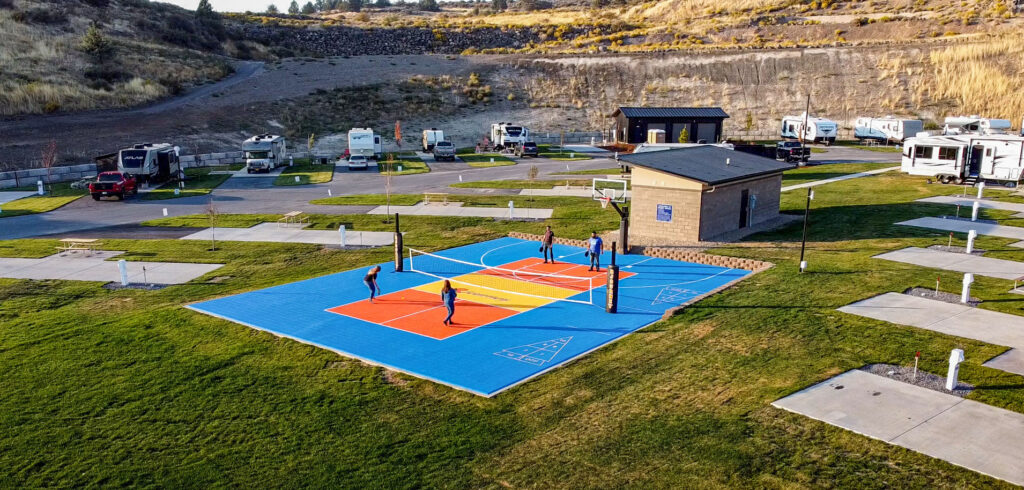
Family travelers often prioritize pools, playgrounds, and organized activities. Resort-style parks like Splash Magic RV Resort in Pennsylvania feature waterpark-style amenities that keep kids entertained for hours. Nice-to-have amenities that can enhance your stay include a dog park, game room, splash pad, fire pit, fishing pier, lake views, ice cream socials, equipment to rent (such as bicycles, boats, or kayaks), and live music events. RV parks that offer swimming pools and fishing opportunities are a true delight for people of all ages.
Wi-Fi and Connectivity
Remote workers need reliable internet. However, campground Wi-Fi rarely supports video conferencing or streaming. Serious digital nomads should verify cell service coverage (Verizon and AT&T typically offer the best rural coverage) or invest in satellite internet like Starlink.
Pet-Friendly Features
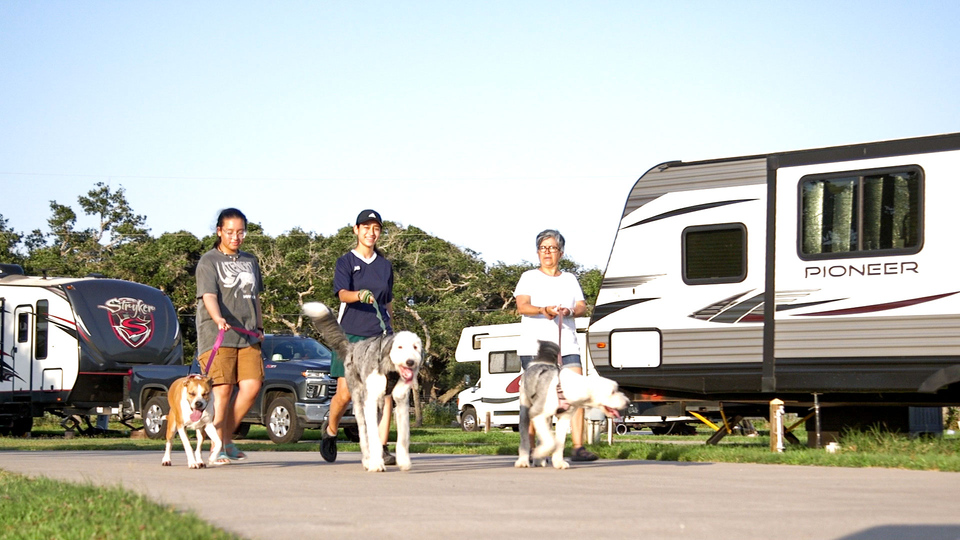
Traveling with pets requires designated dog parks, walking trails, and clear pet policies. Most RJourney parks welcome furry family members with dedicated exercise areas.
Club Houses and Community Spaces
Social travelers appreciate common areas for meeting fellow campers. Parks like Elkhart RV Resort in Indiana offer gathering spaces that foster community connections.
Amenity Red Flags
- No recent photos or virtual tours available
- Reviews consistently mentioning maintenance issues
- Policies that seem overly restrictive or unclear
- No response to questions or review comments from management
Step 5: Research Reviews and Reputation
In the age of online reviews, other campers’ experiences provide invaluable insight into what you can actually expect. However, reading reviews effectively requires strategy.
How to Evaluate RV Park Reviews
Look for Patterns, Not Outliers
A single negative review among hundreds of positive ones likely reflects an isolated incident or an unreasonable guest. However, repeated complaints about the same issues (poor Wi-Fi, rude staff, noise problems) indicate systemic problems.
Consider the Reviewer’s Perspective
A full-timer’s priorities differ from a weekend camper’s. Reviews from travelers similar to you carry more weight than those from campers with completely different needs.
Check Review Dates
Parks change over time; new management, renovated facilities, or declining maintenance all affect the experience. Prioritize reviews from the past 12 months.
Read Management Responses
How a park responds to criticism reveals their commitment to guest satisfaction. Defensive responses or lack of engagement suggests potential service issues.
Reliable Review Sources
- Campspot and Reserve America (booking platforms with verified stay reviews)
- Google Reviews (broad reach, diverse perspectives)
- RV-specific forums and Facebook groups (detailed, experience-focused feedback)
- Good Sam and AAA ratings (standardized inspection criteria)
Quotable Insight: “A park with 4.2 stars and thoughtful management responses to criticism often provides a better experience than a 4.8-star park where management ignores all feedback.”
Step 6: Consider Timing and Reservations
When you travel matters almost as much as where you travel. Seasonal variations affect availability, pricing, and overall experience. It’s important to plan ahead and make reservations early, especially for popular RV parks, as spots can fill up quickly.
When booking, always ask about the campground’s refund policy in case your plans change. Additionally, inquire about any extra fees aside from the advertised daily rate to avoid surprises.
Peak vs. Off-Peak Considerations
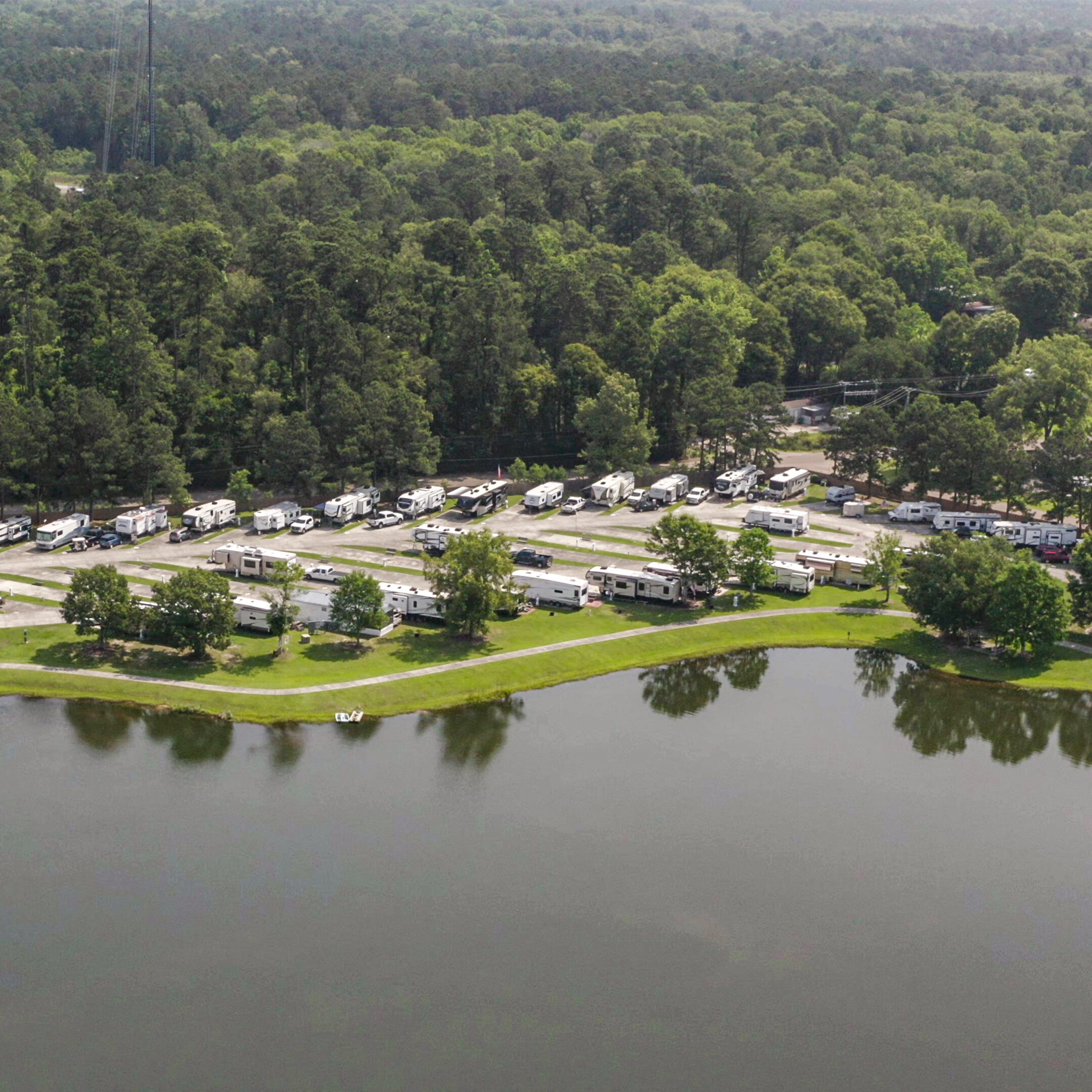
- Peak (Summer, Holidays)
- Advantages: Best weather, all amenities open, full programming
- Disadvantages: Higher prices, crowded conditions, requires advance booking
- Shoulder (Spring, Fall)
- Advantages: Moderate crowds, pleasant weather, better availability
- Disadvantages: Some amenities may close, reduced programming
- Off-Peak (Winter)
- Advantages: Lowest prices, maximum availability, uncrowded
- Disadvantages: Limited amenities, potential weather challenges, some parks close
Booking Strategies
Book Early for Popular Destinations
Award-winning parks and those near major attractions fill quickly. Top-rated campgrounds regularly book out 6+ months in advance during peak season. Properties near national parks or during special events may require even earlier reservations.
Be Flexible for Better Rates
Midweek stays often cost less than weekends. Arriving Sunday and departing Thursday can provide significant savings while avoiding weekend crowds.
Consider Membership Programs
Frequent RV travelers benefit from membership programs like Good Sam, Passport America, or specific campground loyalty programs that offer discounts ranging from 10-50%.
Understand Cancellation Policies
Plans change. Before booking, understand the park’s cancellation and refund policies. Many parks require 48-72 hour notice for full refunds, while others have stricter policies during peak seasons.
Step 7: Evaluate Safety and Security
Your peace of mind matters as much as your comfort. Safe RV parks share common characteristics worth evaluating before booking.
Security Features to Look For
- Gated access with key cards or codes
- On-site staff during evening hours
- Well-lit common areas and pathways
- Security cameras in parking and common areas
- Clear emergency procedures posted or communicated at check-in
Site-Specific Safety
- Level, stable pads (concrete or compacted gravel)
- Adequate spacing between sites for fire safety
- Clear evacuation routes and emergency contact information
- Proper drainage to prevent flooding during storms
“The safest RV parks combine physical security measures with active management presence and a community of respectful fellow campers.”
Regional Spotlights: Finding the Right Park Across America
Mountain West Adventures
The Mountain West offers some of America’s most dramatic scenery. Wyoming’s Cheyenne RV Resort and Laramie RV Resort provide gateways to Rocky Mountain adventures, while Pine Bluffs RV Park offers a peaceful stop along I-80.
Southern Comfort
Southern hospitality extends to RV parks throughout the region. Louisiana’s Lake Charles RV Resort and Lakeside RV Resort combine Cajun culture with comfortable camping. Tennessee’s Clarksville RV Resort positions you perfectly between Nashville’s music scene and outdoor recreation.
Midwest Charm
The Heartland’s RV parks offer genuine hospitality and access to underrated destinations. Missouri’s Perryville RV Resort and Pin Oak RV Resort showcase the Midwest’s natural beauty, while Oklahoma’s Grand Lake O’ the Cherokees provides exceptional lakefront camping.
Northeast Escapes
The Northeast packs tremendous variety into a compact region. New York offers multiple options including Blue Haven Campground, Fair Point Marina, Interlake RV Resort, Shady Shores Campground, and camping areas in New York. Pennsylvania’s James Creek RV Resort provides a peaceful Appalachian retreat.
Common Mistakes to Avoid When Choosing an RV Park
Even experienced RVers occasionally make booking mistakes. Learning from others’ errors saves you money, time, and frustration.
Top 10 RV Park Selection Mistakes
- Booking based solely on price without considering value
- Ignoring site size requirements and arriving at an inadequate space
- Assuming all full hookups are equal (amperage and water pressure vary)
- Not checking recent reviews and relying on outdated information
- Overlooking location logistics like grocery access and fuel availability
- Failing to verify pet policies including breed or size restrictions
- Booking non-refundable stays without backup plans
- Trusting professional photos exclusively without verifying with guest photos
- Ignoring check-in/check-out times that may not match your travel schedule
- Not calling ahead to confirm reservations and ask specific questions
“The most expensive RV park mistake isn’t paying too much for a site—it’s arriving at a park that doesn’t meet your basic needs and having to find alternatives last-minute.”
The Ultimate RV Park Selection Checklist
Before booking your next RV park, run through this comprehensive checklist:
Pre-Booking Verification
- Site length accommodates your rig plus 10 feet
- Electrical service matches your requirements (30-amp or 50-amp)
- Hookup type meets your needs (full, partial, or dry camping)
- Location works for your planned activities
- Price falls within your budget
- Reviews from the past year are predominantly positive
- Pet policies align with your needs (if applicable)
- Cancellation policy is acceptable
- Wi-Fi/cell service meets your connectivity needs
- Check-in/check-out times work with your schedule
Questions to Ask When Calling
- “Can you accommodate a [length] RV with [number] slideouts?”
- “What is the water pressure and electric reliability like?”
- “Are sites pull-through or back-in?”
- “What amenities are currently operational?”
- “Is there a quiet time policy?”
- “How far is the nearest grocery store/fuel station?”


Frequently Asked Questions About Choosing RV Parks
How far in advance should I book an RV park?
For popular destinations during peak season, book 3-6 months in advance. Award-winning parks and those near national parks or major attractions may require even earlier reservations. Off-season travel offers more flexibility, with many parks accepting bookings just days or weeks ahead. Always have backup options identified in case your first choice is unavailable.
What’s the difference between an RV park and an RV resort?
RV resorts typically offer premium amenities beyond basic camping necessities. While standard RV parks provide hookups, restrooms, and perhaps laundry facilities, resorts add features like swimming pools, fitness centers, organized activities, clubhouses, and on-site dining. Resorts generally charge higher nightly rates but deliver a more comprehensive experience for travelers who spend significant time at their campsite.
Should I prioritize amenities or location when choosing an RV park?
The answer depends on your travel style. If you plan to explore all day and only return to sleep, location near attractions trumps on-site amenities. If relaxation is your goal, or you’re traveling with children who need entertainment, prioritize parks with pools, playgrounds, and activities. Many successful trips involve mixing both approaches: spending some nights at convenient but basic parks near attractions and other nights at resort-style destinations for rest and recreation.
How do I know if an RV park is safe?
Safe RV parks typically feature gated access, on-site management, good lighting, and positive reviews mentioning security. Read recent reviews specifically looking for mentions of theft, noise issues, or uncomfortable situations. Parks with active management that responds to guest concerns generally maintain safer environments. Trust your instincts—if something feels off during the booking process, consider alternatives.
What hookups do I really need?
Your hookup needs depend on your RV’s capabilities and your comfort requirements. Full hookups (electric, water, sewer) offer maximum convenience and allow unlimited use of RV systems. If your RV has adequate holding tank capacity and you’re comfortable with conservation-minded water and electric use, partial hookups (electric and water only) provide significant savings while maintaining comfort. Dry camping (no hookups) works best for RVs equipped with solar power, larger battery banks, and generous holding tanks.
Your Next Adventure Awaits
Learning how to choose an RV park effectively transforms your travel experience from stressful to seamless. The perfect RV park exists for every traveler—it just requires knowing what you need, researching your options, and booking with confidence.
Whether you’re seeking a resort-style retreat with all the amenities or a simple basecamp for outdoor adventures, the key lies in matching park features to your actual travel needs. Use this guide as your roadmap, and you’ll consistently find RV parks that exceed your expectations.
Ready to put these tips into action? Embrace the open road and prepare for your next journey—explore RJourney’s nationwide network of RV parks and resorts to find your next perfect camping destination. With properties spanning from coast to coast, your ideal RV park is waiting—book your stay today and discover why choosing the right park makes all the difference.
Last updated: 2026. RV park features, prices, and availability subject to change. Always verify current information directly with parks before booking.
Conclusion
Choosing the right RV park comes down to matching your travel goals, rig requirements, and comfort preferences with the reality on the ground: site size, hookups, location logistics, and the amenities you will actually use. Start by defining whether you want adventure access, quiet downtime, or reliable connectivity, then verify your length, slide-out clearance, and power needs before booking. Use recent reviews to confirm cleanliness, maintenance, and management responsiveness, and book early when traveling in peak season near major attractions. When you are ready to plan your next stop, explore RJourney’s nationwide network of RV parks and resorts and reserve a site that fits your journey with confidence.