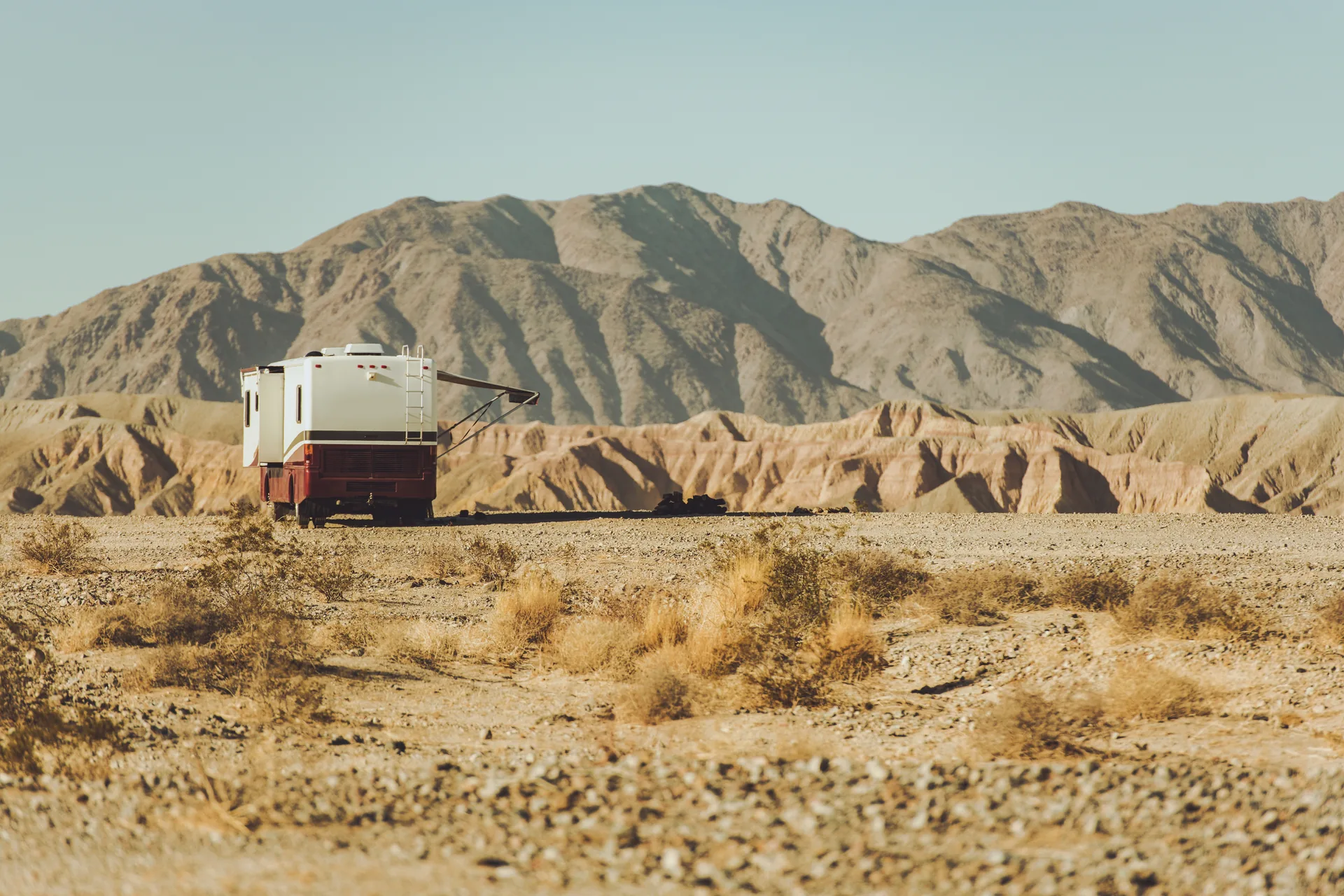
You kill the engine and the quiet lands on you like weather. No hookup post. No neighbor 12 feet away running a window unit. The nearest town is 40 minutes back the way you came, and the only light tonight will be the one you brought.
That’s boondocking. Free camping, off the grid, no hookups, usually on public land you already own as a taxpayer. It’s the cheapest and often the most beautiful way to use an RV, and it scares people off for exactly one reason: nobody hands you a power cord or a water spigot. You’re the utility company now.
This guide gets you from curious to capable. Where it’s legal, how to keep your lights and water going, how to stay safe, and how to plan a first trip that doesn’t end with a tow truck.
What boondocking actually is
Boondocking is camping with no hookups: no shore power, no city water, no sewer connection. Most of the time it’s free, and most of the time it’s on public land managed by the Bureau of Land Management or the Forest Service. You bring your own power, carry your own water, and pack out your own waste.
The word comes from “the boondocks,” which American soldiers carried home from the Philippines. It’s from the Tagalog bundók, meaning mountain. A hundred years later it means a patch of desert in Utah where nobody can hear your generator.
Boondocking vs. dry camping vs. dispersed camping
These get tangled, so here’s the clean version.
Dry camping is any camping without hookups, including a Walmart lot, a casino, or a rally field. No hookups, but you might be on pavement with a streetlight overhead.
Dispersed camping is the Forest Service and BLM term for camping outside a developed campground on public land. Same idea as boondocking, just the government’s word for it.
Boondocking is the catch-all RVers actually say. If you’re free, off-grid, and self-contained, you’re boondocking, whatever the sign at the trailhead calls it.
Where you can legally boondock
The short answer: most BLM land and most national forests let you camp for free for up to 14 days. Those two agencies manage roughly 440 million acres between them, and a big share of it is open to dispersed camping.
Here’s what’s almost always fair game: BLM land across the West, national forests (look for the brown Forest Service signs), and some state Wildlife Management Areas. The standard rule is a 14-day stay limit in any 30-day window, then you move at least a few miles down the road.
Here’s what isn’t: city streets, private land without the owner’s blessing, most developed trailhead parking, and any spot posted “no overnight camping.” When in doubt, it’s posted or it’s not allowed.
How to find boondocking sites
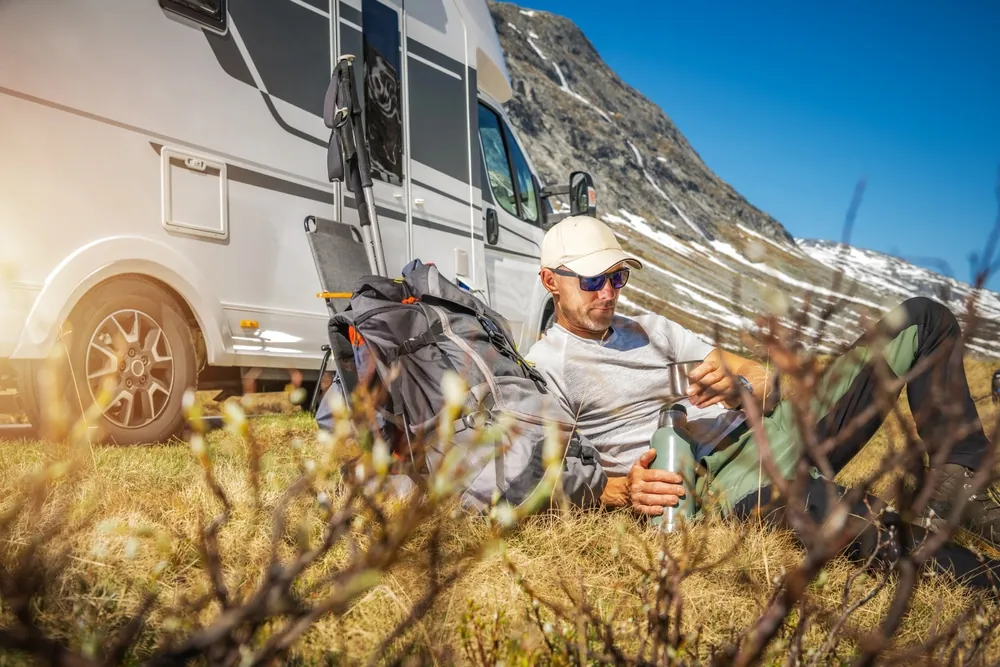
Three tools do most of the work. Campendium and iOverlander are crowd-sourced maps where other campers drop pins, photos, and notes on real sites (including whether your rig will actually fit). FreeRoam layers public-land boundaries over the map so you can see what’s BLM, what’s forest, and what’s private. For national forests, pull the Motor Vehicle Use Map (the MVUM) for that district. It shows which roads allow camping and how far off the road you’re permitted to park.
Scout in daylight, read the recent reviews, and have a backup pin 20 minutes away. A great site with one road in can fill up by 4 p.m. on a Friday.
The 4 systems you have to manage
Off-grid means 4 resources and 4 limits. Run any one of them to zero and the trip’s over. Manage all 4 and you can stay out for a week or more.
Power
Your house batteries run everything when there’s no pedestal to plug into: lights, water pump, fridge control board, furnace fan. On a stock pair of lead-acid batteries, a careful camper gets 1 to 3 days before needing a recharge. Add solar or swap to lithium and you can stretch that indefinitely in good sun.
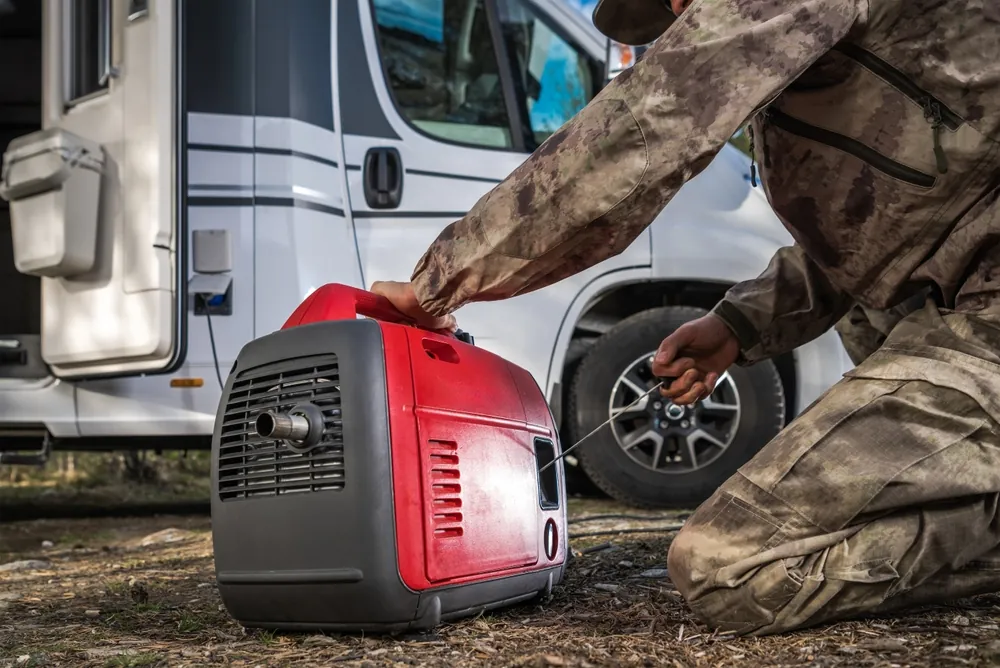
The surprise for most beginners is what actually drains the bank. It isn’t the LED lights. It’s the furnace fan running all night and the residual draw from the fridge and propane detector. A 100-watt to 200-watt solar setup covers a frugal camper’s daily use in summer. A small inverter generator is the backup for cloudy stretches and anyone running a CPAP.
Fresh water
Your fresh tank is the clock on the whole trip. A typical RV carries 40 to 60 gallons. A frugal solo camper can stretch that close to a week. A family of 4 taking normal showers will drain it in 2 to 3 days.
Conservation is just habits: navy showers (water on, water off, water on), a dishpan instead of a running tap, and a few 5-gallon jugs in the truck so you can top off in town without breaking camp. Know your number before you go. Fill the tank, camp at home for a weekend, and see how far it gets you.
Waste
You’ve got 2 tanks filling while the fresh tank empties: gray (sinks and shower) and black (toilet). Gray fills faster than people expect, usually before black, because every dish and every shower goes into it.
The rule that never bends: you never dump either tank on the ground. Not gray, not “it’s just dishwater.” You hold it until a dump station, and you plan your trip around where the next one is.
Connectivity and safety gear
Cell signal off-grid is a coin flip. A booster helps at the edges of coverage, and satellite internet has made remote work genuinely doable from a forest road. Check a coverage map before you commit if you need to be reachable.
The non-negotiable gear: a working carbon monoxide detector (test it before every trip), a real first-aid kit, a fire extinguisher you can reach without thinking, and a plan you’ve told someone. Text a friend your coordinates and your expected return. It costs nothing and it’s the single best safety move you’ll make.
Is boondocking safe?
Yes, for the vast majority of campers, with the same common sense you’d use anywhere. The real risks off-grid are weather, wildlife, and getting stuck, not other people.
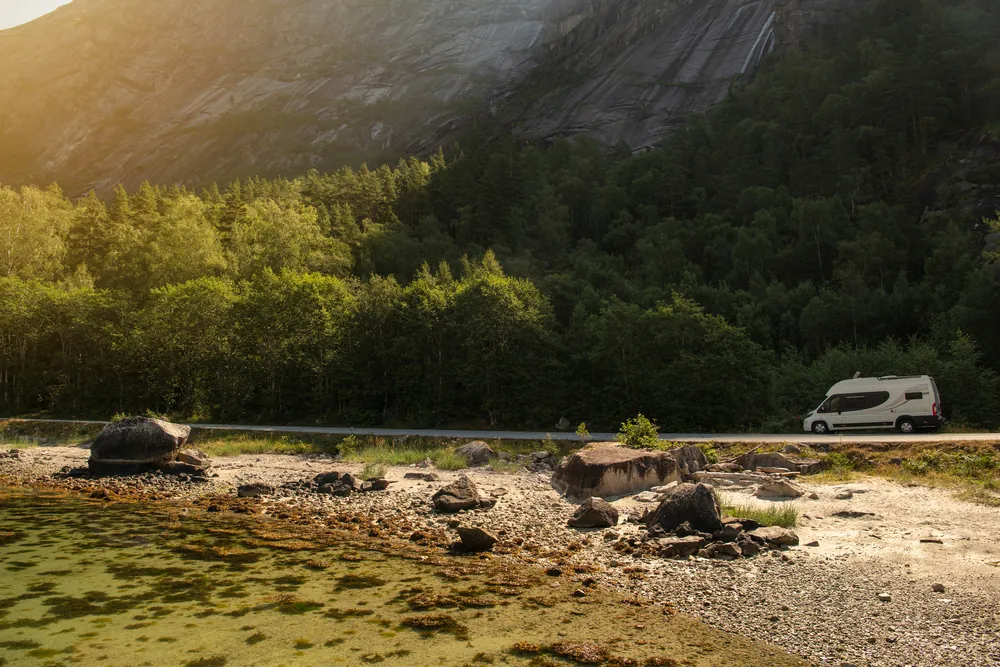
Arrive in daylight so you can read the site: level ground, firm surface, no dead branches over the roof, and a clear way out if weather rolls in. Trust your gut. If a spot feels wrong, the next pin is 20 minutes away and there’s no prize for staying. Keep your rig levelers and a basic recovery board on hand for soft ground, and check the forecast for flash-flood risk before you drop into any wash or low draw.
Your first boondocking trip
Start small and close. Don’t make your first night 50 miles down a rutted forest road. Pick a well-reviewed site within 30 minutes of a town, go for one or 2 nights, and arrive with your fresh tank full, your waste tanks empty, and your batteries topped off.
Run a quick shakedown first. Our RV Maintenance Checklist (it comes with a downloadable PDF) walks the pre-trip basics so you find the soft spots in your driveway, not in the dark. If this is your first big RV outing in general, the Beginner’s Guide to Your First RV Road Trip covers the wider on-ramp.
Then plan the reset. A boondocking trip is a loop, not a one-way: a wild stretch, a stop to dump and refill and recharge, then the next wild stretch. Where you reset matters as much as where you roam.
Boondock wild, reset at RJourney
RJourney parks aren’t boondocking sites, and we won’t pretend they are. They’re the reset between the wild stretches. Full hookups to refill fresh and dump gray and black, shore power to bring the batteries back from the dead, hot showers, laundry, and one night where the furnace runs all it wants and you don’t do the battery math.
We’ve got parks sitting next to some of the best public-land camping in the country. Here are 3 loops to build around.
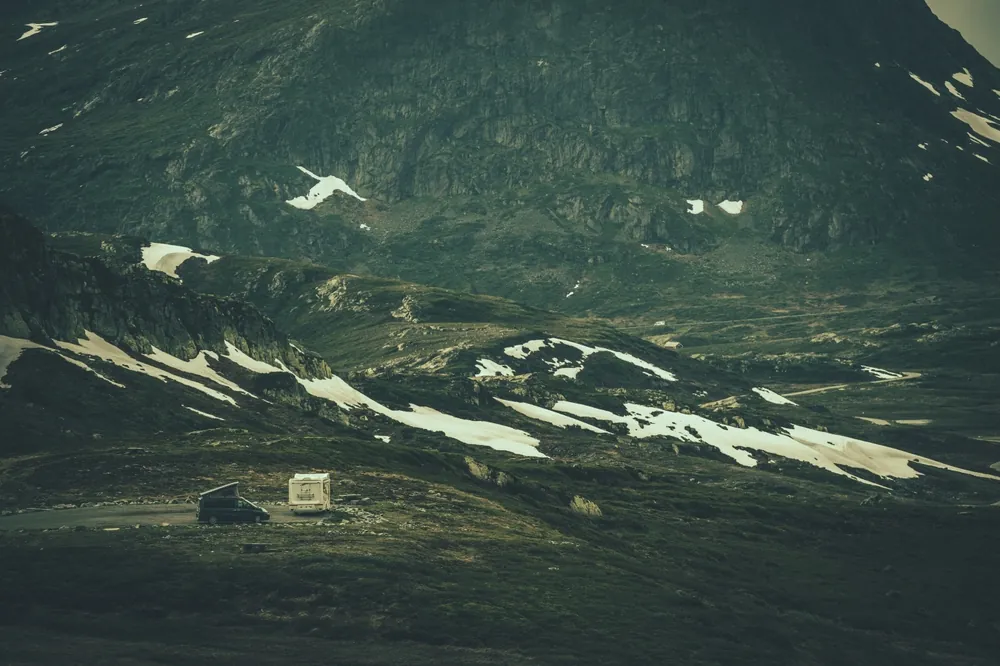
Western loop. This is boondocking’s heartland: BLM desert, red rock, and high-country national forest. Anchor a Utah run at Bryce Canyon RV Resort, Cedar City RV Resort, or Dixie Forest RV Resort, all within reach of Grand Staircase and Dixie National Forest dispersed sites. Swing toward Page and Lake Powell country and reset at Roam Horseshoe Bend. Working the Four Corners and San Juan country, use Cortez RV Park or Dolores River RV Campground. Heading up to the Snowy Range and Medicine Bow, Laramie RV Resort is your basecamp.
North Central loop. Northwoods forest camping, lakes, and quiet. Reset in Wisconsin at Pearl Lake RV Campground, Baraboo RV Resort, or Coconut Cove RV Resort, then push north toward the Chequamegon-Nicolet National Forest. Working your way through Indiana, Elkhart RV Resort and Muncie RV Resort give you a hookup night between stretches.
Southern loop. Piney woods, bayou country, and Gulf coast. In Texas, Lake Conroe RV Campground sits near Sam Houston National Forest, with Rockport RV Resort down on the coast and Sugar Valley RV Resort inland. Across the line, Lake Charles RV Resort and Lakeside RV Campground anchor a Louisiana run toward the Kisatchie National Forest.
Boondock as far out as your tanks allow. When the fresh runs low and the gray runs high, we’re already down the road.
Check availability at the park nearest your route.
Frequently asked questions
What is boondocking? Boondocking is free RV camping with no hookups, usually on public land managed by the BLM or Forest Service. You supply your own power, water, and waste storage and camp self-contained, often for up to 14 days at a stretch.
Is boondocking legal? Yes, on most BLM land and in most national forests, where dispersed camping is allowed for free up to a 14-day limit. It’s not legal on private land without permission, on most city streets, or anywhere posted against overnight camping.
Is boondocking safe? For most campers, yes, with normal precautions. Arrive in daylight, pick level and firm ground, check the weather (especially flash-flood risk), carry a working CO detector and first-aid kit, and tell someone your location and return plan.
How long will an RV battery last while boondocking? A careful camper on a stock pair of lead-acid batteries usually gets 1 to 3 days before needing a recharge. Solar or lithium can extend that indefinitely in good sun. The furnace fan and fridge controls drain the bank faster than your lights do.
What’s the difference between boondocking and dry camping? Both mean camping without hookups. Dry camping often happens in a developed lot like a Walmart or casino, while boondocking usually means a remote, free site on public land. Dispersed camping is the Forest Service and BLM term for the same off-grid idea.
How do you find boondocking sites? Use crowd-sourced apps like Campendium, iOverlander, and FreeRoam to find sites and read recent reviews, and pull the Motor Vehicle Use Map (MVUM) for national forest districts to see which roads allow camping. Scout in daylight and keep a backup site nearby.