You’re 2 hours into a fire, the coals are perfect, and something heavy moves through the brush 40 feet from your site. It stops. You hear breathing. Then nothing.
That’s how most bear encounters start at campgrounds. Not with a charge. With a sound.
Black bears are the most common large predator in North America, and the one you’re most likely to encounter while camping. Here’s what you actually need to know.
How Dangerous Are Black Bears?
Less dangerous than your drive to the campground.
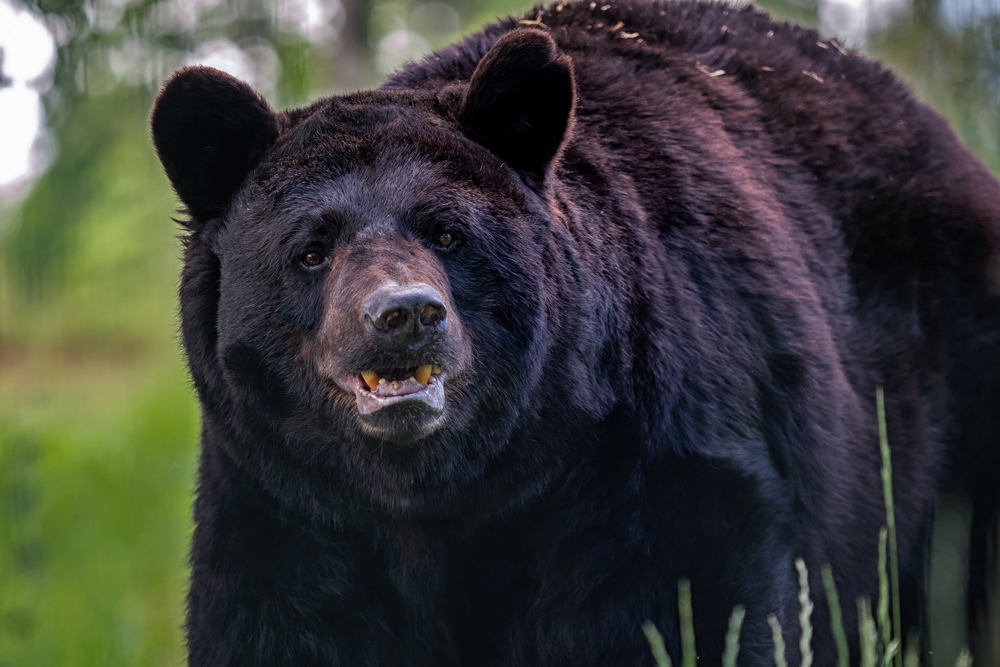
Black bears kill an average of 1 person per year in North America. Between 2000 and 2020, there were 25 fatal black bear attacks across the U.S. and Canada combined. In that same period, lightning killed roughly 400 Americans, and bees killed about 1,200.
The numbers tell a clear story: black bears are not aggressive toward humans under normal circumstances. The vast majority of bear encounters at campgrounds involve a bear that smelled food, investigated, and left when it realized a human was present.
That said, black bears are still 200-to-600-pound wild animals with claws that can peel bark off a tree. Respect is appropriate. Fear isn’t.
Black Bears vs. Grizzly Bears
This is the critical identification that shapes your response. The two species require different behavior from you.
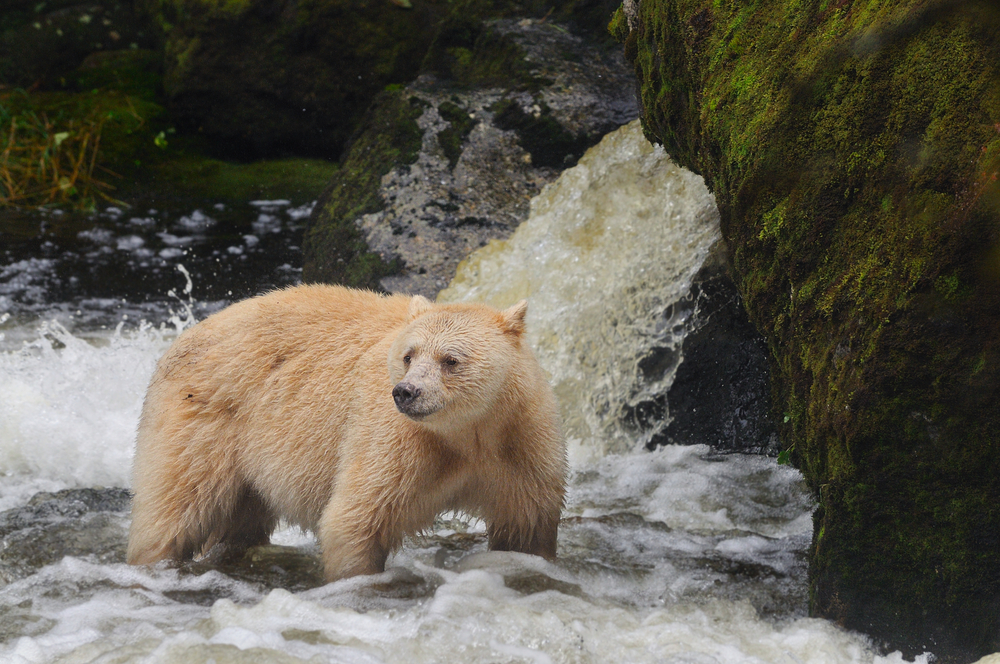
Black bears: 200 to 600 pounds (males average 250 to 350). Straight facial profile. Tall, pointed ears. No shoulder hump. Coat color is misleading: “black” bears can be brown, cinnamon, blonde, or even white (the Kermode “spirit bear” of British Columbia). The color doesn’t identify the species. The face shape does.
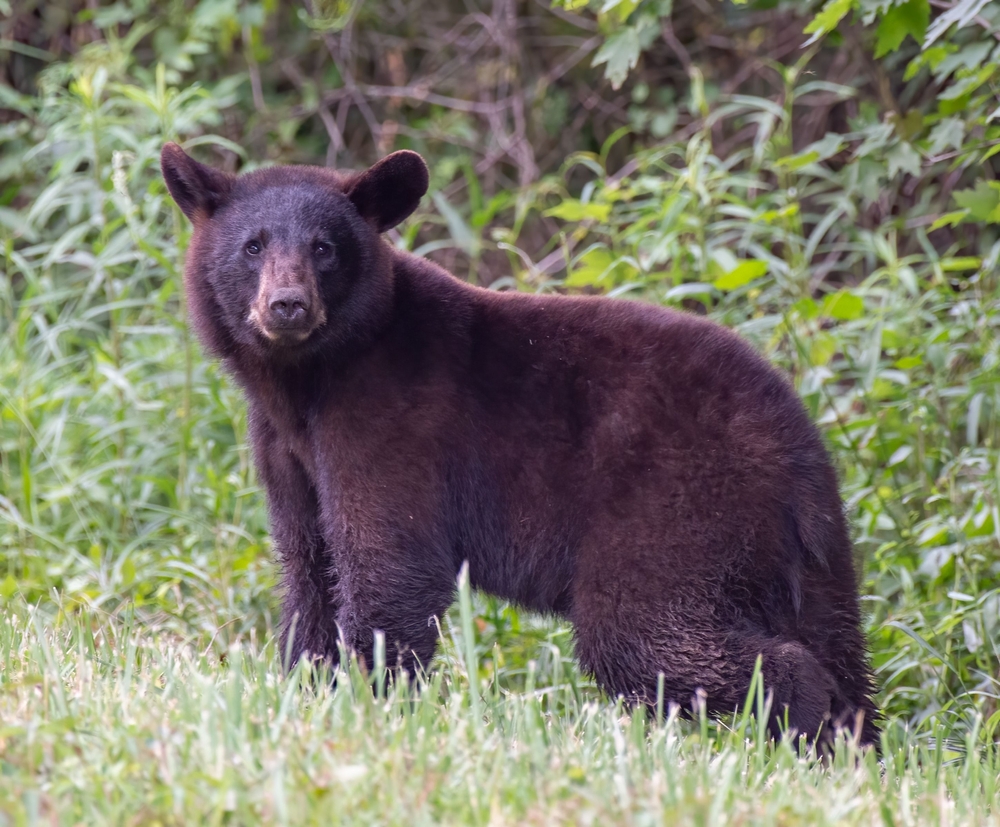
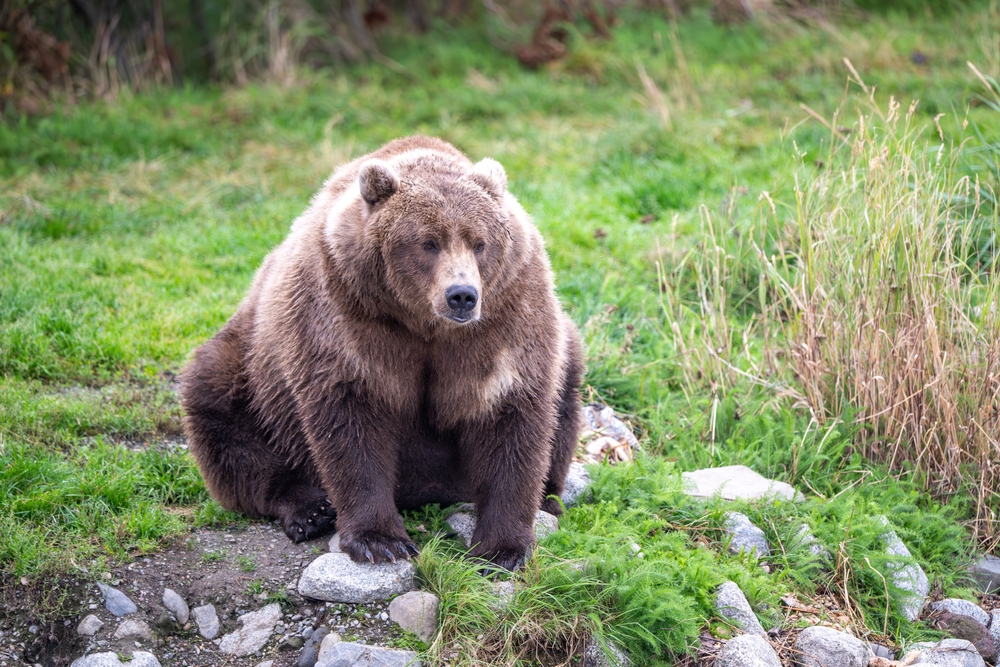
Grizzly bears: 400 to 800 pounds (males can exceed 1,000 in coastal Alaska). Dished (concave) facial profile. Short, rounded ears. Prominent shoulder hump of muscle. Longer, lighter-tipped claws. Grizzlies are restricted to Montana, Wyoming, Idaho, Washington, and Alaska.
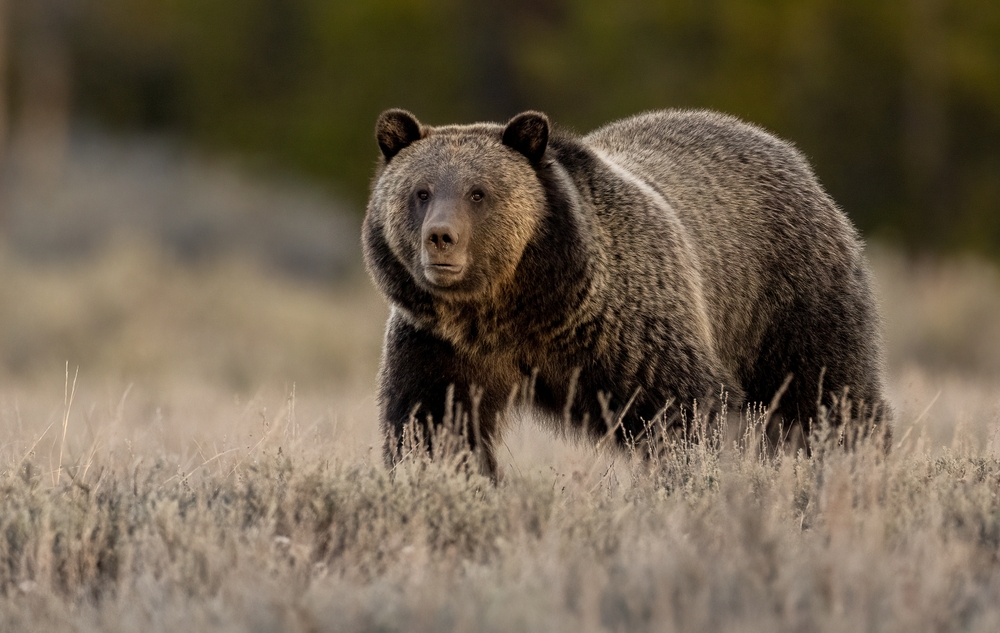
Why it matters: If a black bear charges, fighting back is the recommended response. If a grizzly charges, playing dead is usually the right call. Getting this backwards can be fatal. If you’re camping in grizzly range, carry bear spray and know how to use it.
For most campgrounds in our network, you’re in black bear territory. Grizzlies aren’t a factor below the northern Rockies.
Where Do Black Bears Live?
Black bears range across 40 U.S. states, all Canadian provinces, and into northern Mexico. They’re the only bear species in the eastern United States. Their population has recovered significantly since the 1970s, with an estimated 900,000 black bears across North America.
They prefer forested areas with dense understory for cover and a mix of hardwoods and berry-producing shrubs for food. River corridors, mountain slopes with oak and hickory stands, and the edges where forest meets meadow are prime habitat.
Black bears are increasingly common in areas where they’d been absent for decades. Pennsylvania alone has over 20,000 black bears. The population in the Appalachians is dense enough that bear sightings near campgrounds are routine.
What Do Black Bears Eat?
Berries. Mostly berries.
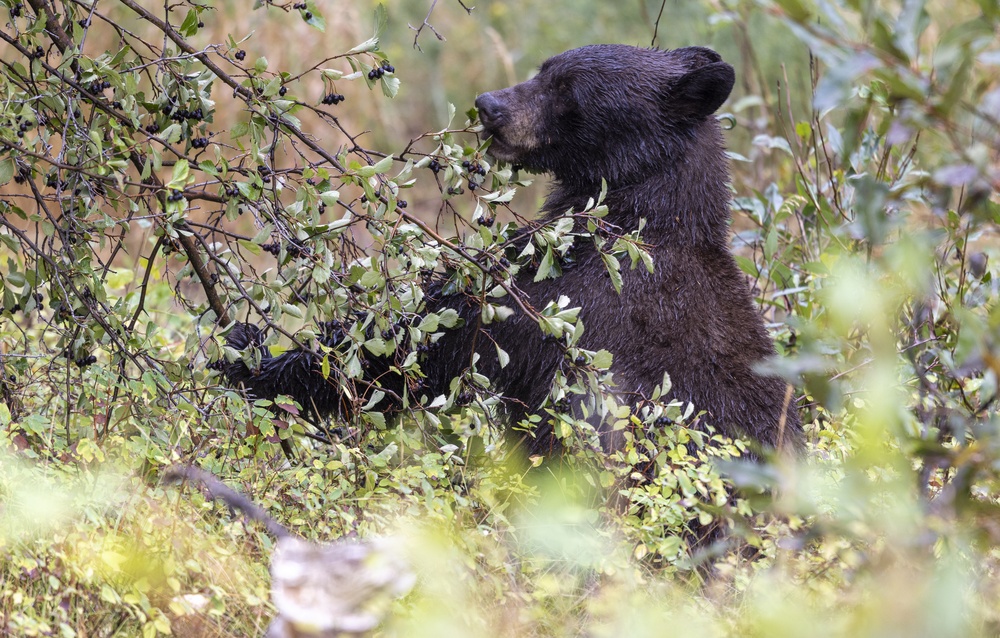
Black bears are technically carnivores by classification, but about 85% of their diet is plant material: berries, nuts, grasses, roots, and insects. They eat ants by the thousands, strip berry bushes clean, raid acorn caches from squirrels, and occasionally catch fish in shallow streams.
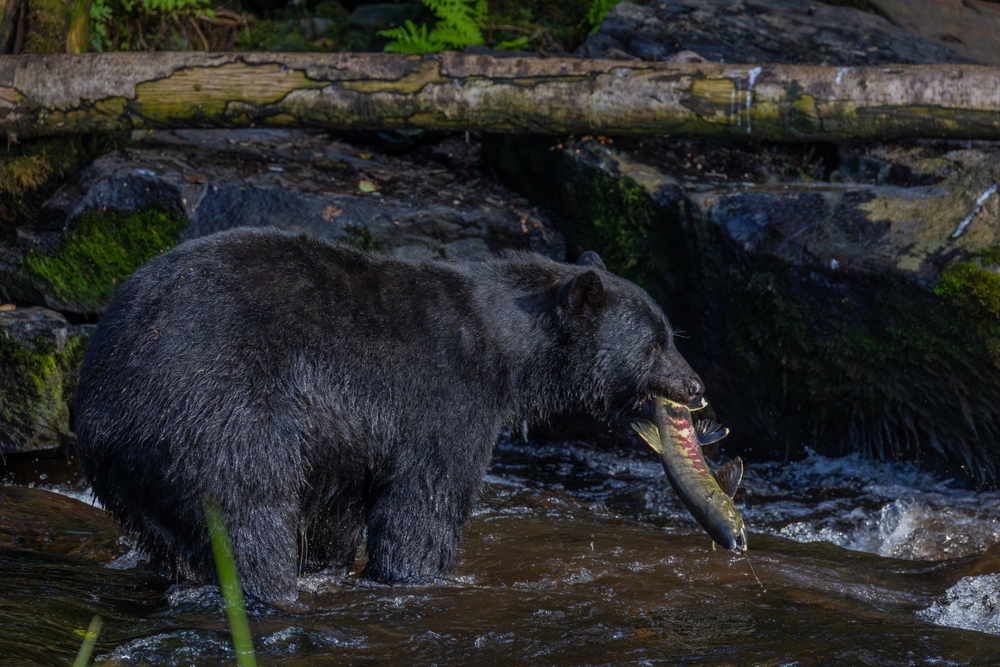
The remaining 15% is opportunistic protein: fawn deer in spring, ground-nesting bird eggs, carrion, and (the part relevant to campers) human food when it’s available.
A black bear that discovers an unsecured cooler doesn’t see a crime. It sees 4,000 calories with no effort. And it remembers. A bear that gets a food reward at a campsite will return to that campsite. And the next one. The phrase “a fed bear is a dead bear” exists because bears that become food-conditioned almost always have to be relocated or euthanized.
Your food storage isn’t just about your safety. It’s about whether that bear survives the season.
What to Do If You See a Black Bear
At a distance (50+ yards):
Enjoy it. Seriously. A black bear foraging at the edge of a meadow is one of the best wildlife sightings you’ll get in North America. Watch from a safe distance. Don’t approach. Don’t follow. If it hasn’t noticed you, keep it that way. Back up slowly if it looks in your direction.
At medium range (25 to 50 yards):
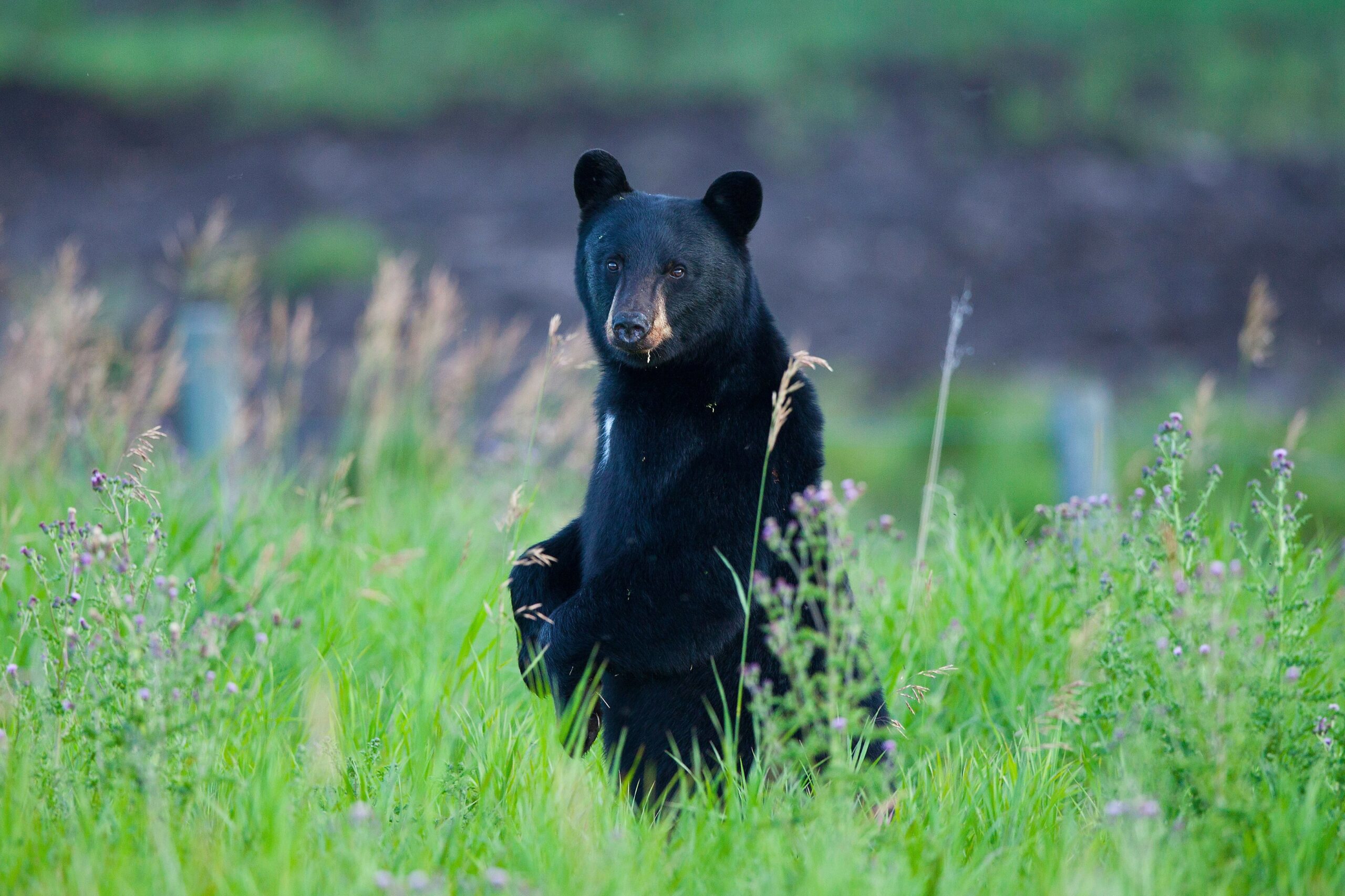
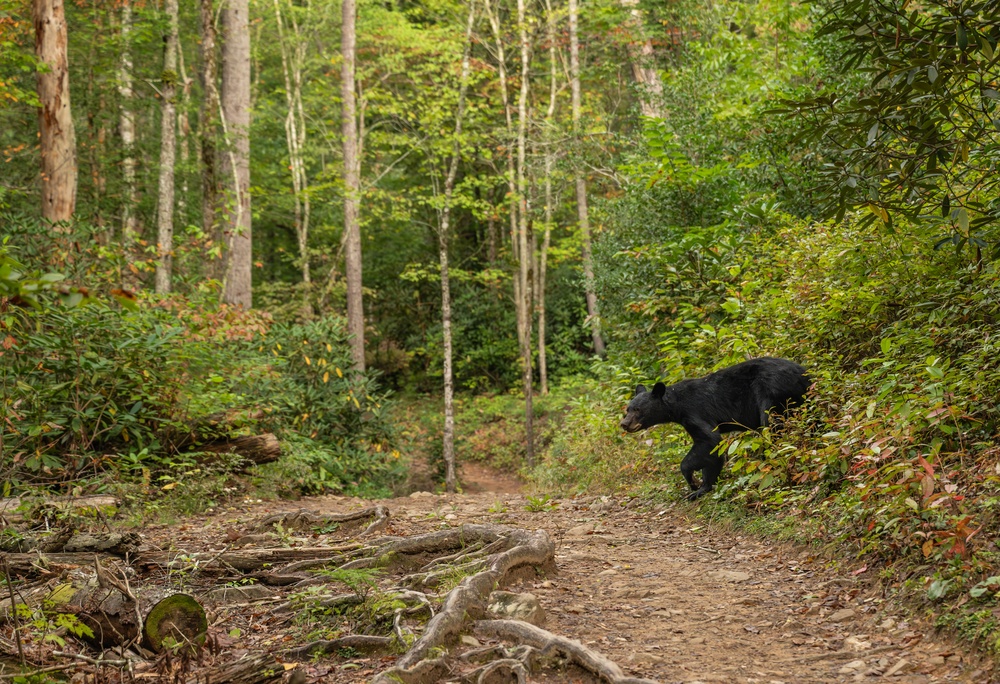
Make your presence known. Talk in a calm, steady voice. Bears have poor eyesight and may not have identified you as human yet. Avoid sudden movements. If the bear stands on its hind legs, it’s trying to see and smell you better, not threatening you. Standing is curiosity, not aggression.
Close range (inside 25 yards):
Stop. Don’t run. Running triggers a chase response, and black bears can sprint at 35 mph. Make yourself look large. Raise your arms. Speak firmly (“Hey bear. Go on. Get out of here.”). Back away slowly at an angle. Don’t make direct, sustained eye contact, but don’t look away entirely either.
If a black bear charges:
Most black bear charges are bluff charges. The bear runs toward you, then veers or stops short. It’s testing whether you’re a threat. Hold your ground. Yell. Make noise. In the vast majority of cases, the bear will break off.
If a black bear makes contact: fight back. Hit the nose and eyes. Use rocks, sticks, trekking poles, or bear spray. Black bears that press an attack on a human are treating you as prey, and playing dead doesn’t work with a predatory attack. This is different from grizzlies, where playing dead during a defensive attack is often the right move.
Bear spray: Capsaicin-based bear deterrent sprays have [an effectiveness rate above 92%](https://above.nasa.gov/safety/documents/Bear/bearspray_science.pdf) in stopping aggressive bear behavior. Carry it accessible, not buried in a pack. Practice deploying the safety clip. This may seem obvious, but bear spray is there to spray AT the bear, as opposed to bug spray, which is meant to be sprayed on your body. This confusion has resulted in more than one hospital visit…
Bear-Proofing Your Campsite
This is where you actually prevent bear encounters. Everything else is damage control.
Food storage:
– Use bear-proof containers or lockers provided by the campground. This is non-negotiable in bear country.
– If no containers are provided, hang food in a bear bag at least 10 feet off the ground and 4 feet from the nearest trunk or branch. Bears can climb, but the sag in a properly hung line makes it hard for them to reach.
– Store all scented items with your food: toothpaste, sunscreen, lip balm, deodorant. Bears have a sense of smell 7 times more powerful than a bloodhound’s.
– Never store food in your tent. Not a granola bar. Not gum. Not the shirt you cooked dinner in.
Cooking:
– Cook at least 100 feet from your sleeping area when possible.
– Clean dishes immediately after eating. Don’t leave them soaking overnight.
– Strain dishwater and scatter it broadly (don’t pour it in one spot). Pack out food particles.
– Clean your grill grate before dark. Grease is one of the strongest bear attractants.
Trash:
– Use bear-proof dumpsters when available.
– Seal all trash in airtight bags between disposal trips.
– Crush cans and rinse them. A rinsed tuna can isn’t interesting. An unrinsed one is a dinner bell.
Camping in Bear Country
Bears are part of the fabric at parks near national forests, state parks, and mountain corridors. A well-run campground with solid food storage infrastructure makes the whole thing straightforward.
Dixie Forest RV Resort in Panguitch, Utah is a basecamp for Bryce Canyon, Zion, and Capitol Reef. The GM, Jenny Cannon, describes it as the park “families and friends use as a base camp for all of their outdoor adventures.” She knows the trail conditions across the region and adjusts her recommendations based on your fitness level, group size, and whether you’ve got dogs. If you ask about hiking, ask about the trails outside the big parks, too: Red Canyon, Kodachrome Basin, and Escalante National Monument. There’s a reason the locals call the area north of town “Bear Valley.” Panguitch itself means “Big Fish” in Southern Paiute, and the fishing at Panguitch Lake backs that up.
Bryce Canyon RV Resort in Cannonville puts you minutes from the hoodoos and the Navajo Loop Trail. The high-altitude ponderosa forest around Bryce is active black bear habitat, and the park service maintains strict food storage rules inside the national park boundary. The RV resort sits at the gateway, with nature trails and hiking access that put you in the transition zone between red rock and alpine forest.
Dolores River RV Resort in Colorado sits at the edge of San Juan National Forest. The San Juan range holds Colorado’s densest black bear population. The Dolores River runs through the property, and the forest access puts hikers directly in bear habitat. Mesa Verde National Park is just down the road. Good bear box availability and a campground host who knows the local patterns.
Splash Magic RV Resort in Pennsylvania sits in the heart of one of the most bear-dense states in the eastern U.S. The GM, Jacqueline Woods, highlights fishing on the pond and river, and nearby Ricketts Glen State Park offers 22 named waterfalls across a trail system that winds through old-growth hemlock forest. Pennsylvania’s 20,000+ bear population means sightings are common enough that the park treats bear-safe food storage as standard operating procedure, not a special warning.
Pearl Lake RV Campground in Redgranite, Wisconsin offers “camping in the pines,” as the GM Stacey Herbst puts it. She’s been at the park for 29 years. The rustic, natural setting (swimming pond, UTV trails to the park, pine canopy) is black bear habitat in the classic Northwoods sense. Wisconsin’s bear population is concentrated in the northern third of the state, and the forested areas around Pearl Lake sit right in that zone.
At each of these parks, the combination of established food storage, experienced campground hosts, and a culture of coexistence means you can camp in bear country without making it complicated.
Frequently Asked Questions
Will a black bear break into my RV?
Extremely unlikely. Bears can and have opened car doors (they’re strong enough to bend a car frame), but a locked, hard-sided RV is not a target they’ll typically pursue. Don’t leave windows open with food inside, and don’t cook inside your RV with the door open in bear country.
Should I carry a gun for bear protection?
Bear spray is statistically more effective than firearms at stopping charging bears, and it doesn’t require the marksmanship that a 35 mph, adrenaline-fueled encounter demands. Many campgrounds and national parks restrict firearm discharge. Bear spray is the recommended tool.
Do black bears hibernate?
Sort of. Black bears enter a state called torpor in winter, where their heart rate drops from 40-50 beats per minute to about 8, and their body temperature falls several degrees. They don’t eat, drink, urinate, or defecate for up to 7 months. But it’s lighter than true hibernation: they can wake up and move if disturbed. In southern states with mild winters, some bears skip torpor entirely.
What time of year are bears most active around campgrounds?
Late summer and fall (August through October). This is “hyperphagia,” the pre-hibernation feeding frenzy where bears consume 15,000 to 20,000 calories per day to build fat reserves. They’re more active, less cautious, and more motivated to investigate food smells. This is when food storage discipline matters most.
Are bear bells effective?
They’re better than silence, but not by much. Bears can hear you talking at normal volume from hundreds of yards away. The best “bear bell” is your voice. Talk, laugh, clap when you’re on trails with limited visibility. Announce yourself at blind corners and creek crossings.
Find Your Park
Bears and campgrounds have coexisted for as long as there have been campgrounds. The bear wants your food, not you. Control the food, and the rest takes care of itself. Check availability across the RJourney network and pick a basecamp where the wildlife is part of the experience.