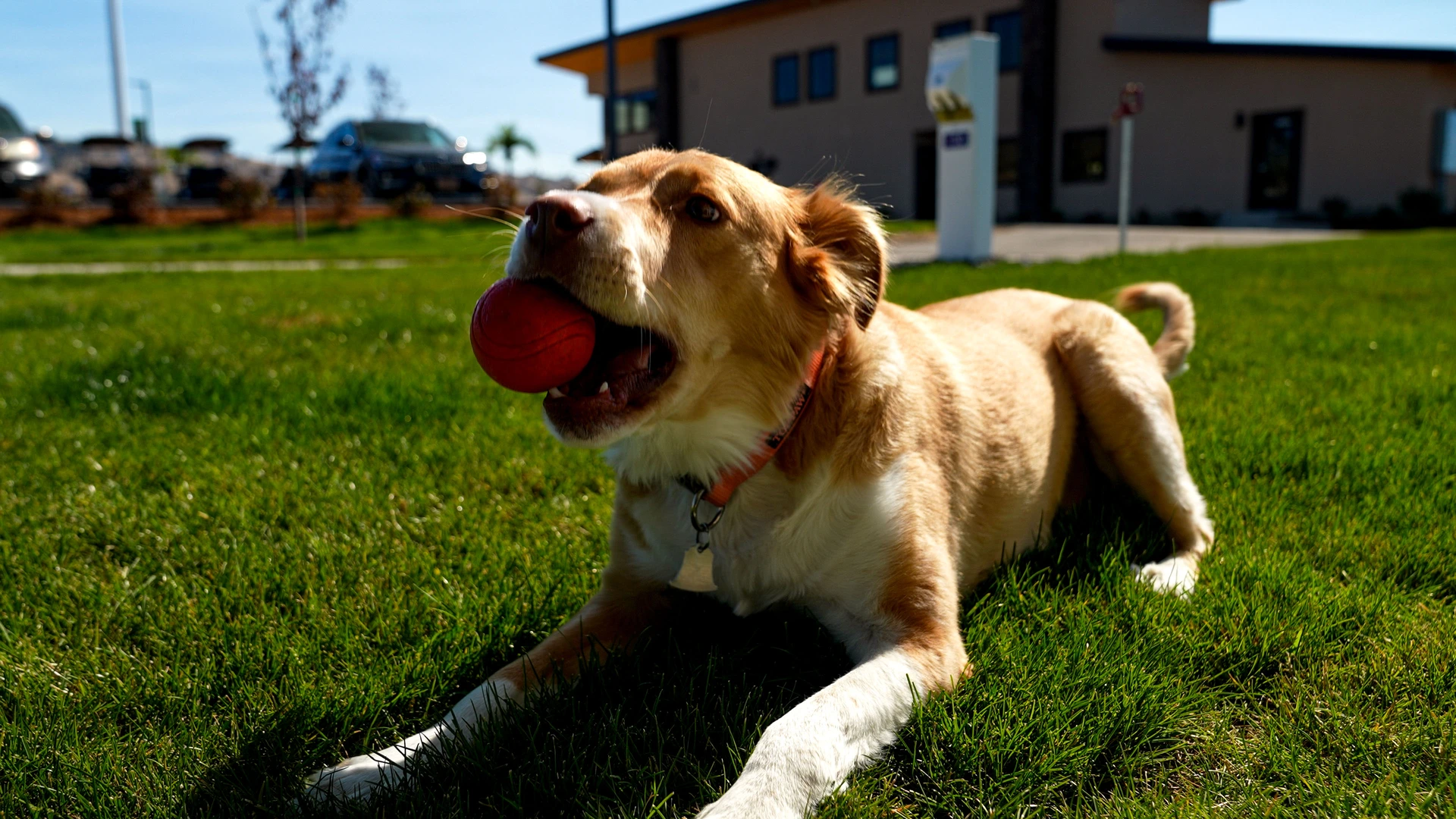
Your dog is the easiest travel companion you’ll ever pack for. He needs 3 things: you, a cracked window, and a place to run when the wheels stop. Dog friendly road trips get complicated when you build them around hotels, airline crates, and restaurant patios that tolerate him at best. An RV solves most of that in one move. The den travels with him. Same bed, same bowls, same smells, new backyard every morning.
We operate RV parks and campgrounds across the country, and thousands of dogs come through our gates every season. The trips that go well share a pattern. Here’s the whole playbook, from the vet visit 2 weeks out to the moment you unclip the leash inside a fenced dog park 1,400 miles from home.
Why an RV Is the Right Vehicle for a Road Trip With a Dog
Dogs run on routine. Feeding time, walk time, the spot where they sleep. A road trip with a dog in a car means that routine resets at every hotel: new floor, new elevator, new rules, a $75 pet fee for the privilege. In an RV, the routine rides along. Your dog naps on his own bed while the scenery changes, and by night 2 most dogs treat the rig like home because, functionally, it is.
The practical wins stack up fast. You control the temperature. You carry his food instead of hunting for a store that stocks his brand. Vet records live in a drawer, his crate sits where it always sits, and nobody at a front desk gets to decide he’s 10 pounds over the limit.
Before You Leave: The Vet Visit and the Paperwork
Book a vet appointment about 2 weeks before departure. You want enough runway to handle anything the visit turns up.
Cover 4 things while you’re there. Confirm vaccinations are current and take a printed copy of the records, since some campgrounds ask for proof of rabies vaccination at check-in. Refill any prescriptions with enough overage to survive a lost bottle. Ask about flea, tick, and heartworm coverage for the regions you’re driving through, because the parasite map changes a lot between Wisconsin and South Carolina. And if your dog has never done long drives, ask about motion sickness options before you need them at 70 mph.
Check the microchip registration while you’re at it. A chip with your old phone number on file is decoration. Add a physical ID tag with your cell number, and consider a temporary tag with your rig description for the trip.
What to Pack for Your Dog
The packing list is short but unforgiving. Forgetting item 3 ruins exactly 1 morning; forgetting item 1 can ruin the trip.
- 2 leashes (one lives in the RV, one lives by the door)
- 20% more food than the trip should need, in a sealed container
- Water from home for the first few days (sudden water changes upset some stomachs)
- Collapsible bowls for the truck cab and trailheads
- Vet records, medications, and a pet first-aid kit
- His actual bed, not a new one (familiar smell is the point)
- Waste bags in every jacket pocket, door pocket, and cupholder
- A long tether line and a stake for campsite lounging
- Towels. More than you think. Then 1 more.
Setting Up the RV for Your Dog
Two decisions matter more than all the gear combined: how your dog rides, and how you manage heat.
While the RV is moving, your dog should be secured, either in a crash-tested harness clipped to a seat belt or in a crate anchored so it can’t slide. An 80-pound dog loose in a motorhome during a hard brake is a projectile, and towable RVs are off-limits entirely; no living thing rides in a trailer.
Heat is the risk RVers underestimate. An RV in the sun heats up like a car does. If you’ll ever leave your dog inside (a grocery run, a restaurant dinner, a shower at the bathhouse), you need shore power or an autostart generator running the A/C, plus a wireless temperature monitor that alerts your phone when the interior passes a threshold you set. They cost $100 to $200 and they’re the single best piece of dog gear an RVer can buy. If the campground loses power and you’re 3 miles away at dinner, you want to know in 90 seconds, and the monitor is how.
On the Road: Pace, Stops, and Routine
Plan fuel and leg-stretch stops every 2 to 3 hours. That’s a comfortable rhythm for most adult dogs and, conveniently, about right for most drivers too. Keep feeding on home schedule, but feed light before long driving stretches.
Keep travel days honest. 250 to 300 miles is a full day with a dog aboard. You’ll arrive with daylight left for a real walk, which does more for your dog’s settling-in than any treat you packed.
Watch for the quiet signs of stress: excessive panting with the A/C on, drooling, refusing water. Most dogs level out by day 2 or 3. If yours doesn’t, shorten the drives and lengthen the stays. The itinerary works for the dog, and the dog will tell you when it doesn’t.
Campground Etiquette for Dog Owners
Every campground writes its own pet rules, and the good ones enforce them. A few norms hold almost everywhere, and knowing them makes you the camper the staff remembers fondly.
Leashes are required at nearly every RV park in the country, including at your own site. Dogs can’t be left unattended outside, and most parks (ours included) don’t allow pets to be left tied out while you’re away. Pick up waste immediately; pet waste stations exist so you have no excuse within 100 feet. Expect specific exclusion zones like pools, beaches, camp stores, and playgrounds. At Pearl Lake, for example, dogs are welcome at every campsite but stay off the beach. Rules like that keep parks pet friendly for the next season, and the one after.
Pet fees vary more than most RVers expect. Some parks charge nothing, some charge per pet, some cap the number of pets per site. Read the pet policy on the park’s page before you book, the same way you’d check the rig length limit.
3 RJourney Parks Where Your Dog Gets a Real Welcome
Plenty of parks tolerate dogs. These 3 planned for them, with fenced dog parks on the grounds and pet policies you can read in plain English before you book. Together they make solid anchors for a northern lakes loop, a Pacific volcano run, or a red rock circuit.
Pearl Lake RV Campground, Redgranite, Wisconsin
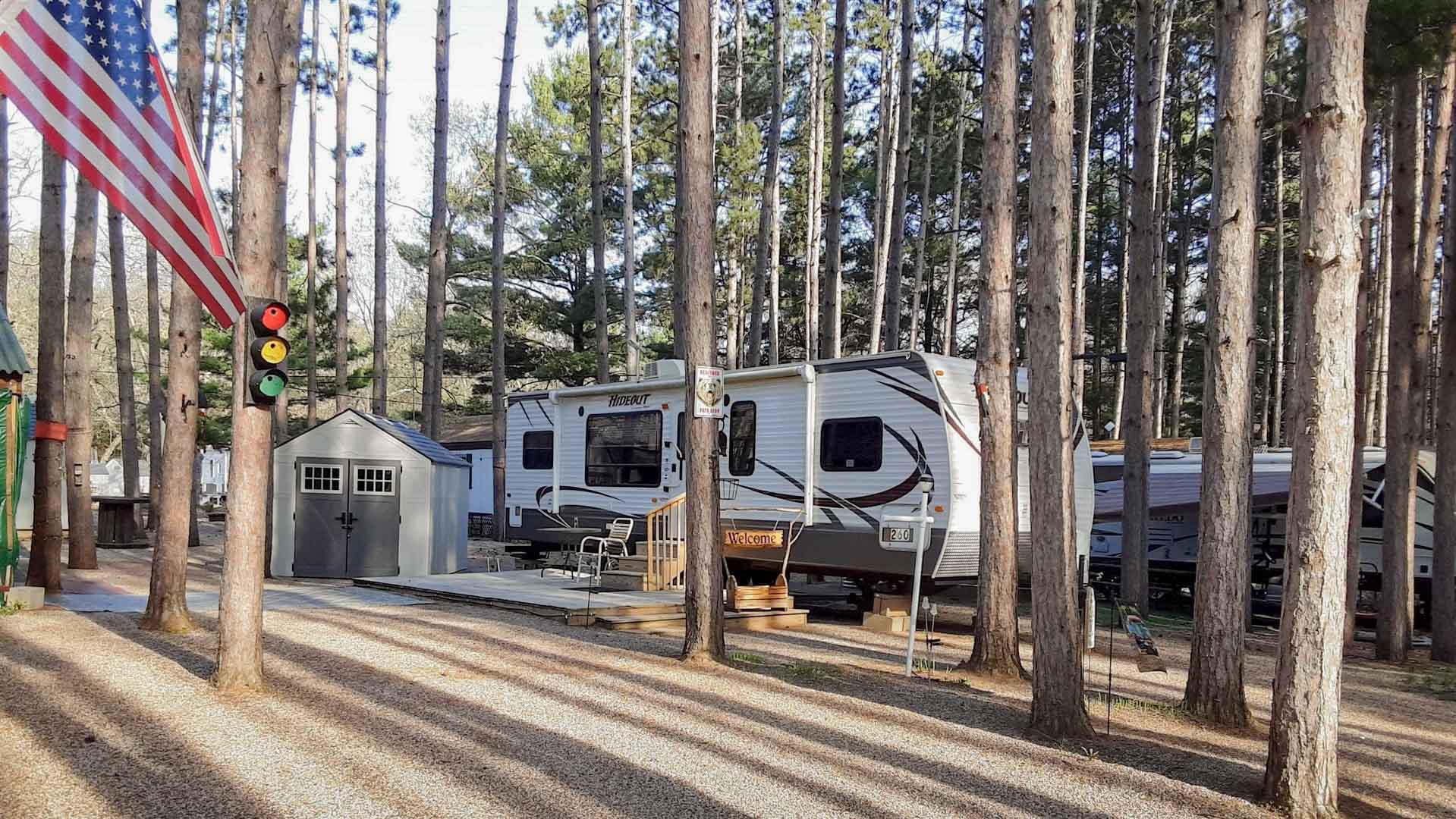
Pearl Lake has hosted campers since 1969, and it treats dogs like part of the family lineage: every campsite is pet friendly, there is an on-site dog park for off-leash time, and there is no standard pet fee. Swim-loving dogs will grumble about the no-pets beach rule, but the trade is a lake-country basecamp in central Wisconsin where your dog can run every single day.
Klamath Falls RV Resort, Klamath Falls, Oregon
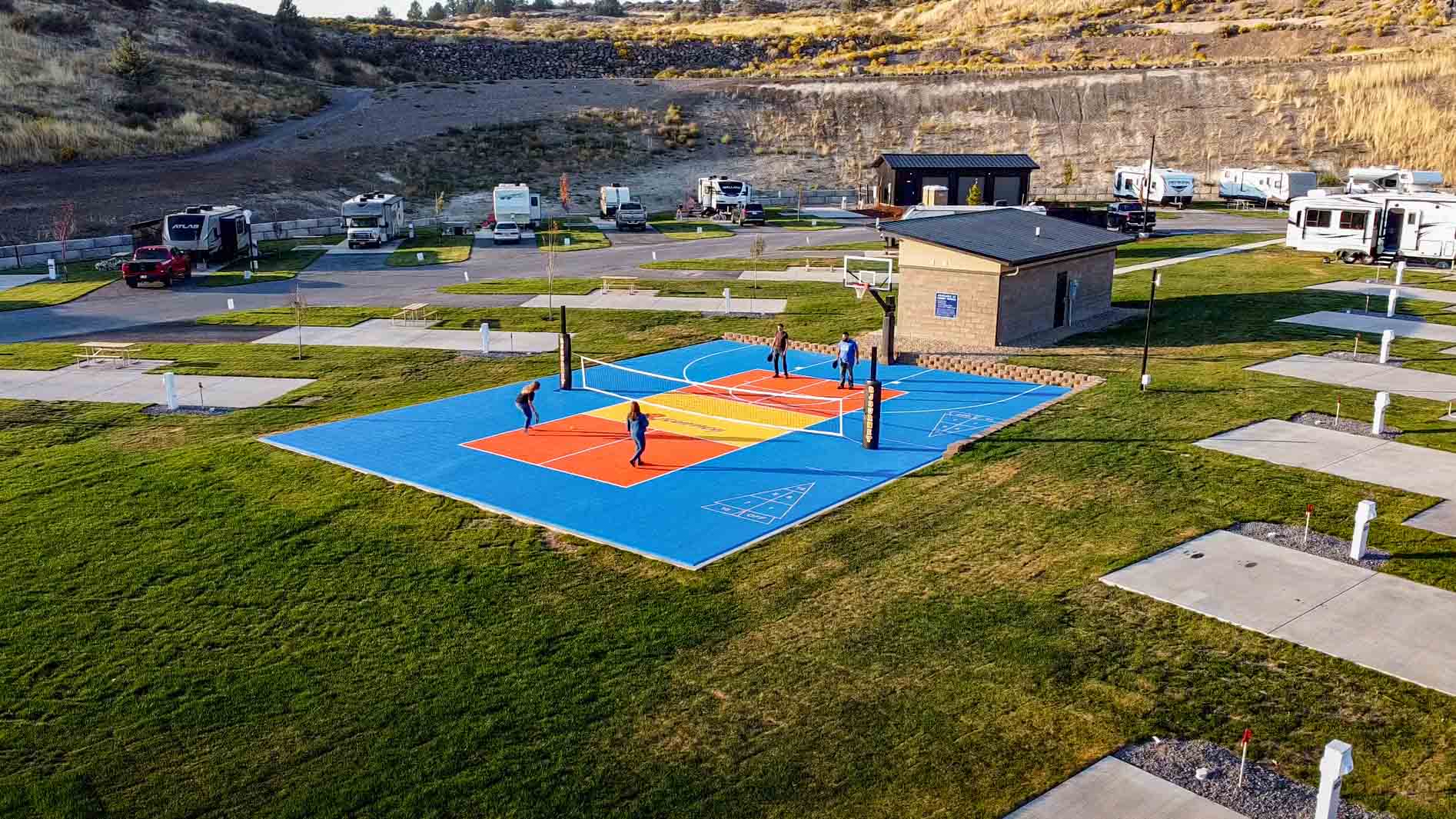
Klamath Falls RV Resort doubles down with both a dog park and a separate fenced pet area, which matters when your dog prefers solo zoomies to group play. Crater Lake National Park sits about an hour north, and while national parks keep dogs on pavement, the surrounding Fremont-Winema National Forest trails are far more generous with leashed dogs.
Bryce Canyon RV Resort, Cannonville, Utah
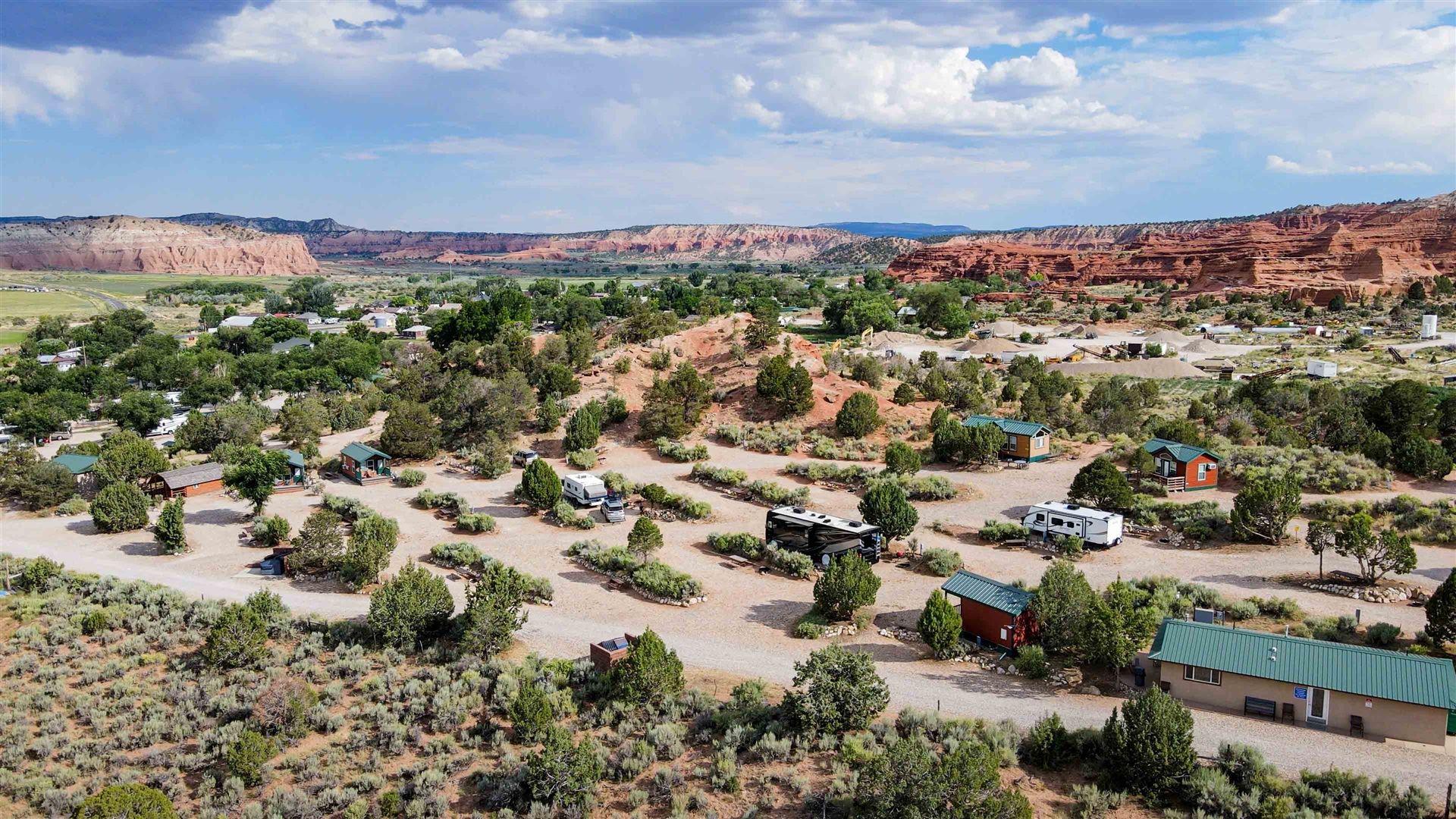
Most trails inside Bryce Canyon National Park are closed to dogs, which makes your basecamp choice the whole ballgame. Bryce Canyon RV Resort answers with an on-site dog park, pet waste stations throughout the grounds, and 4 designated pet-friendly cabins for travelers who want red rock country without towing. RV and tent sites take up to 2 pets; the pet cabins take 1.
Quick Answers for First-Timers
How often should I stop on a road trip with a dog?
Every 2 to 3 hours for water, a walk, and a bathroom break. Puppies and senior dogs need stops closer to the 2-hour mark.
Can I leave my dog alone in the RV?
Only with active climate control (shore power or autostart generator), a wireless temperature monitor alerting your phone, and the campground’s rules permitting it. Keep absences short and always tell the office how to reach you.
Do RV parks charge pet fees?
Some do, some don’t. Pearl Lake charges no standard pet fee, while other parks charge a few dollars per extra pet or per night. The park’s pet policy page will say; read it before booking.
Load the Dog, Take the Long Way
A dog raises the stakes of a road trip and repays you double. Every stop is an adventure to somebody in the rig, even the fuel stops. Start with the vet visit, buy the temperature monitor, and pick campgrounds that actually planned for your co-pilot.
If you are still choosing a route, our guide to pet friendly camping across the USA covers more parks coast to coast, and first-timers should start with planning your first RV road trip. When you are ready, browse all RJourney parks and check the pet policy on any park that catches your eye. Your dog is already sitting by the door.