Your first RV road trip is mostly a planning problem. The driving is easy. The campground hookups get easy after the first try. What trips up new RVers is everything that happens before you turn the key: too many miles, too few reservations, and a rig packed with stuff but missing the 3 systems that actually matter.
This guide walks through planning your first RV road trip the way an experienced traveler would, start to finish. No jargon, no gear worship. Just the decisions that separate a trip you finish smiling from one you cut short.
Start with your days, not your destination
Most first trips fail at the calendar. You get excited, pin 6 national parks on a map, and then realize you’ve signed up to drive 9 hours a day for a week.
Count your real days first. A long weekend is 3 days. A week off is really 5 exploring days once you subtract the day you pack and the day you unpack. Pick destinations that fit inside that number.
A good first trip stays close: 1 anchor destination, 2 nights minimum at each stop, and a loop that brings you home without backtracking.
The 200-mile rule
Here’s the single best habit for a first RV road trip: drive less than you think you can.
200 miles a day is plenty. In an RV that’s roughly 4 hours of real driving once you factor in fuel stops, a lunch break, and the fact that you’re not hammering 75 mph in a 30-foot rig. Push past 250 miles and you’ll arrive too tired to set up camp, which is exactly when mistakes happen.
Short driving days also leave room for the good part: the overlook you didn’t plan on, the diner someone recommended, the hour your kid spends throwing rocks in a creek.
Book your campgrounds before you leave
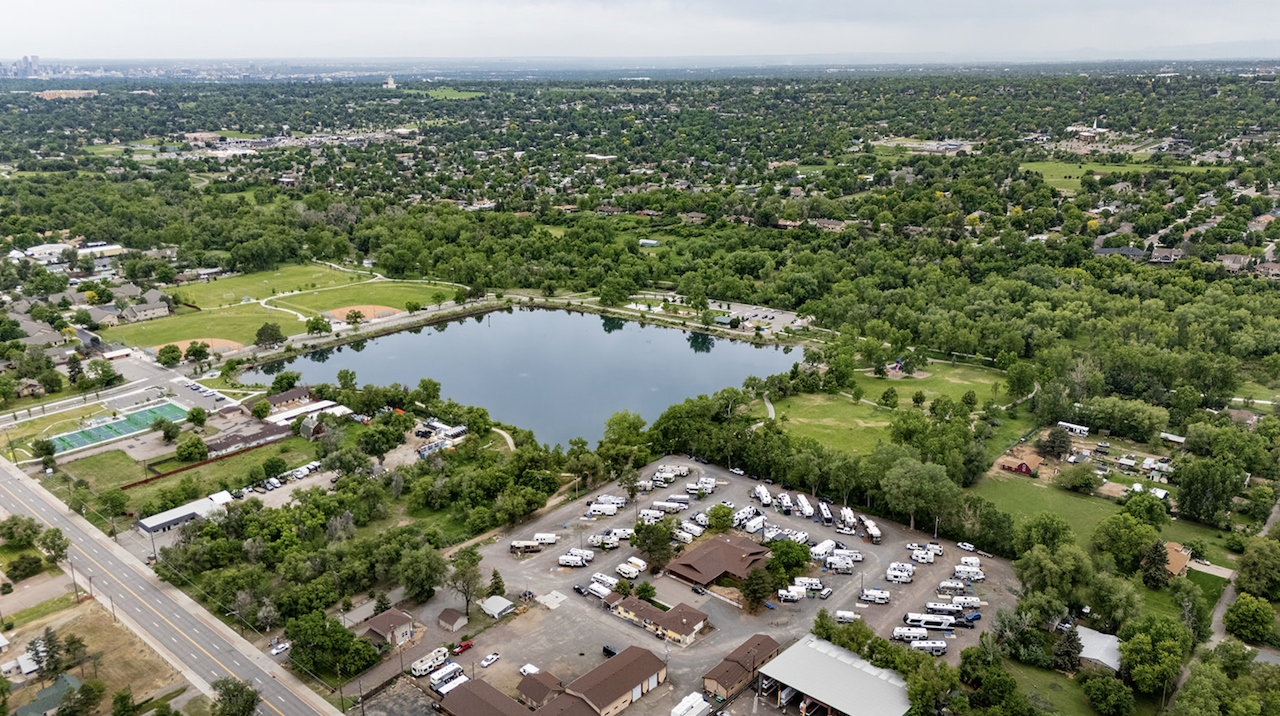
Spontaneity sounds great until you pull into a full park at 7 p.m. with no backup. Reserve every night in advance for your first trip. Summer weekends at popular parks book out weeks ahead, and showing up without a site is the fastest way to turn a good day bad.
Check these 3 things when you book:
- Your rig fits. Confirm the site’s max length and that it handles your slide-outs.
- The hookups match. 30-amp vs 50-amp matters, and so does full hookups vs water and electric only.
- Recent photos and reviews. A site that looked level in a 2019 photo might not be today.
Pack the systems, not just the stuff
First-timers overpack clothes and underpack the gear that keeps an RV running. Focus on 3 systems.
Power. Know your amperage, carry the right adapter (a 50-to-30 or 30-to-15 dogbone), and pack a surge protector. Bad campground power can fry your electronics.
Water. Use a drinking-water-safe hose (the white one, not the green garden hose), a water pressure regulator, and a 90-degree elbow so the hose doesn’t kink at the spigot.
Waste. A quality sewer hose, disposable gloves, and a clear elbow connector so you can see when the tank’s empty. Dump black first, then gray, to rinse the hose.
The pre-departure checklist
Run this the morning you leave, every time:
- Tire pressure checked cold, including the spare
- Awning in and latched
- Steps retracted, antenna down, vents closed
- Fridge switched to the right power source
- Cabinets and drawers latched
- Hitch and safety chains secured (for towables)
- Headlights, brake lights, and turn signals tested
- Black and gray tanks emptied, fresh water topped off
For the maintenance side before a long haul, our Ultimate RV Maintenance Checklist covers the full rig walk-through.
Mistakes first-timers make
Driving too far on day 1. You’re excited, so you book a stop 400 miles out. Make the first day the shortest one instead.
Forgetting about height. Your RV is taller than your car. Know your clearance and use an RV-specific GPS or app that routes around low bridges.
Ignoring arrival windows. Many parks have a check-in window. Rolling in after the office closes can mean finding your site in the dark.
No plan for power. If you ever want to camp without hookups, read up first. Our Boondocking 101 guide covers the basics of going off-grid.
Where to stay on your first trip
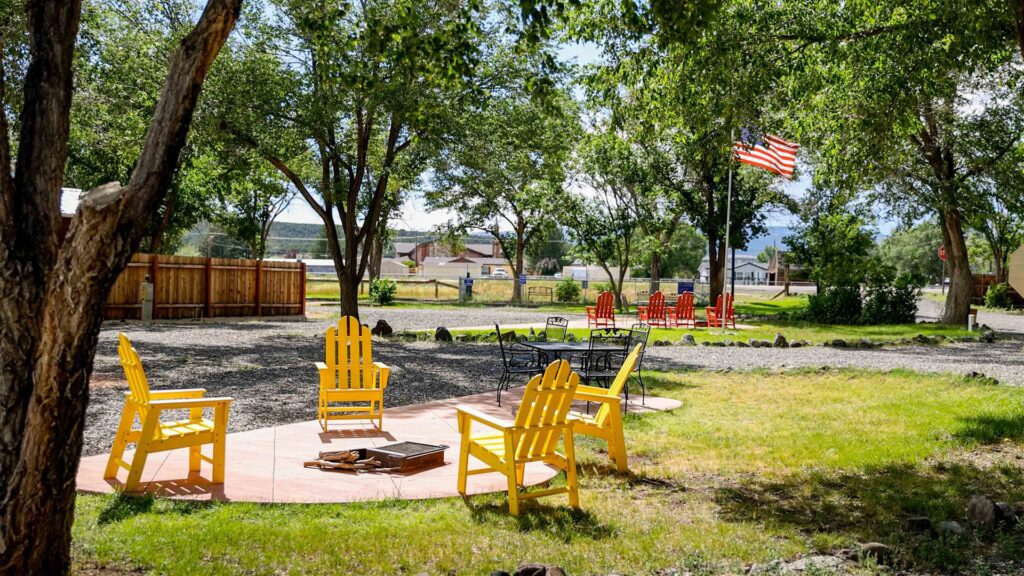
A good first campground does half the work for you: level sites, full hookups, clear directions, and staff who pick up the phone. RJourney runs parks across the country, from lakefront sites in the Southeast to mountain basecamps in the West, so your first trip and your tenth can both start somewhere that’s already set up for you.
Routing through the national parks? Borrow a route from our Best National Parks for Families guide or the Mighty 5 Utah itinerary.
Plan the days, drive less than you think, book ahead, and pack the systems. That’s planning your first RV road trip in one line. The rest is just enjoying the drive.
Check availability across the RJourney network and pick your first stop.