Foxes show up around campsites more often than most people expect. They’re quiet, they’re fast, and they’re almost always more interested in your trash bag than in you.
But the questions come up every season: Are foxes actually related to dogs? Should you be worried if one shows up near your tent? What do you do if one won’t leave?
Here’s what we know.
Are Foxes Canines?
Yes. Foxes belong to the family Canidae, the same taxonomic family as wolves, coyotes, and domestic dogs. That makes them canines in the biological sense.
But foxes split from the rest of the canine family tree roughly 10 to 12 million years ago, and the behavioral gap shows. Wolves and dogs are pack animals. Foxes are solitary. Wolves cooperate to bring down elk. Foxes hunt alone, targeting mice, voles, bird eggs, and the occasional unattended sandwich. They’ll eat wild berries, insects, and fresh roadkill with equal enthusiasm. Their diet is closer to a raccoon’s than a wolf’s.
The physical similarities to dogs are real (pointed ears, bushy tail, long snout), but the behavior is its own thing entirely. Foxes don’t form packs. They don’t hunt cooperatively. They cache food by burying it in shallow holes and returning later, sometimes days later, with a memory for location that researchers have compared to squirrels.
Types of Foxes in North America
Six fox species live in North America. These are the 4 you’re most likely to encounter near a campsite.
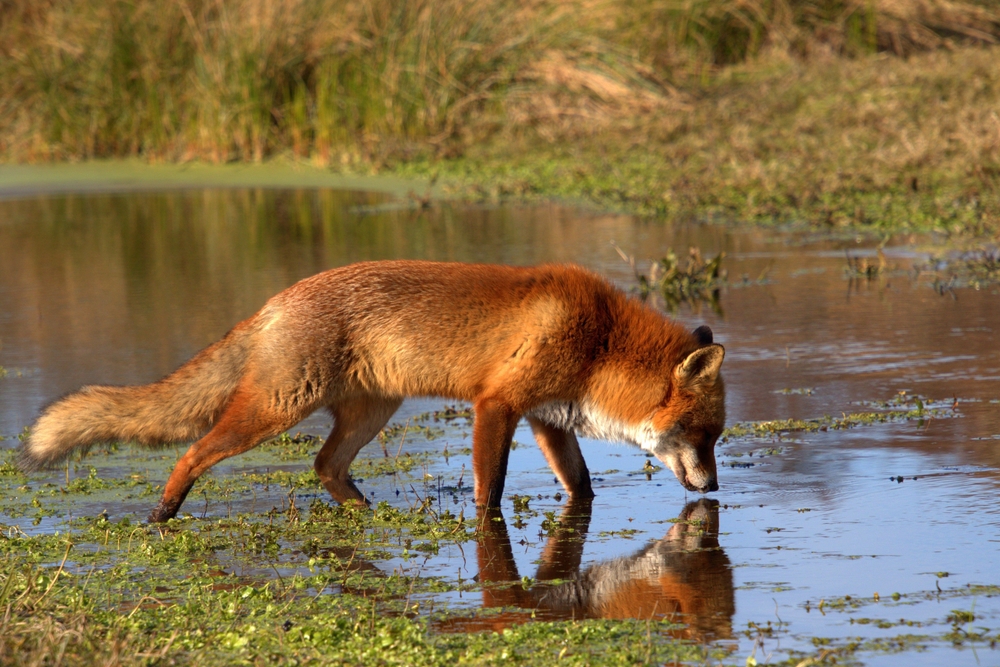
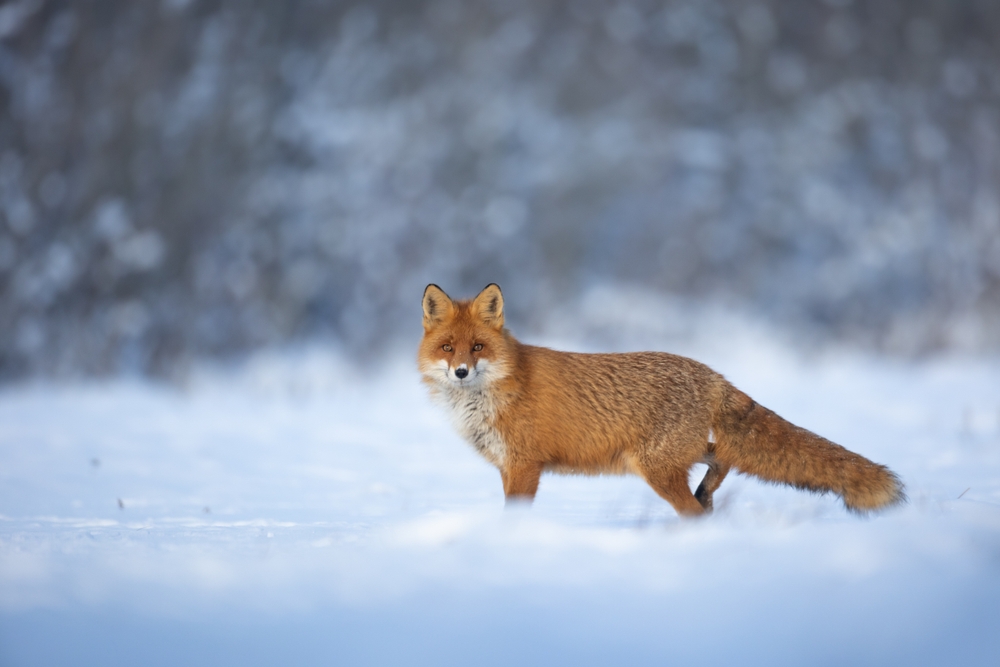
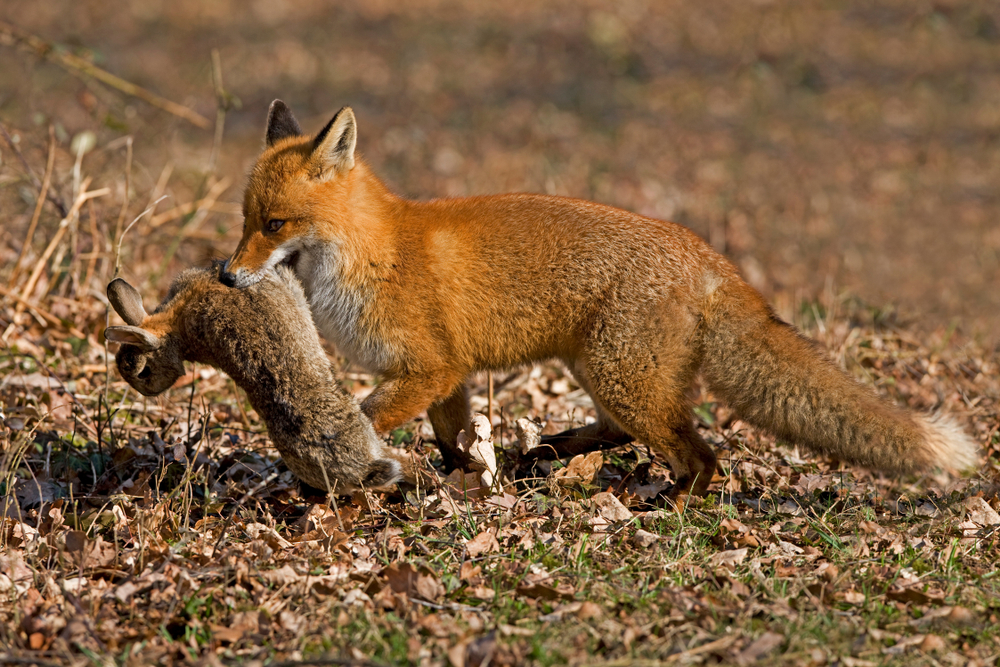
Red Fox. The most common and most widespread. Red foxes live in every U.S. state except Hawaii, from deep forest to suburban backyards. Adults weigh 8 to 15 pounds. Their coat is usually reddish-orange with a white-tipped tail (the white tip is the quickest ID marker), though color morphs exist in silver, black, and cross patterns. Red foxes are the species most likely to show up near a campground because they’ve adapted to human presence better than any other wild canine. They can produce over 40 distinct vocalizations, and the screaming bark they make during mating season (January through March) sounds unsettling enough to send first-time campers reaching for their phones.
Gray Fox. Slightly smaller than the red fox, with salt-and-pepper fur and a black-tipped tail (as opposed to the red fox’s white tip). Gray foxes have a trick no other canine can match: they climb trees. Their semi-retractable claws and rotating forearms let them scale trunks and walk along branches to escape predators or raid bird nests. Their range covers the eastern U.S., parts of the Southwest, and into Mexico. They’re shyer around humans than red foxes and more likely to bolt before you see them.
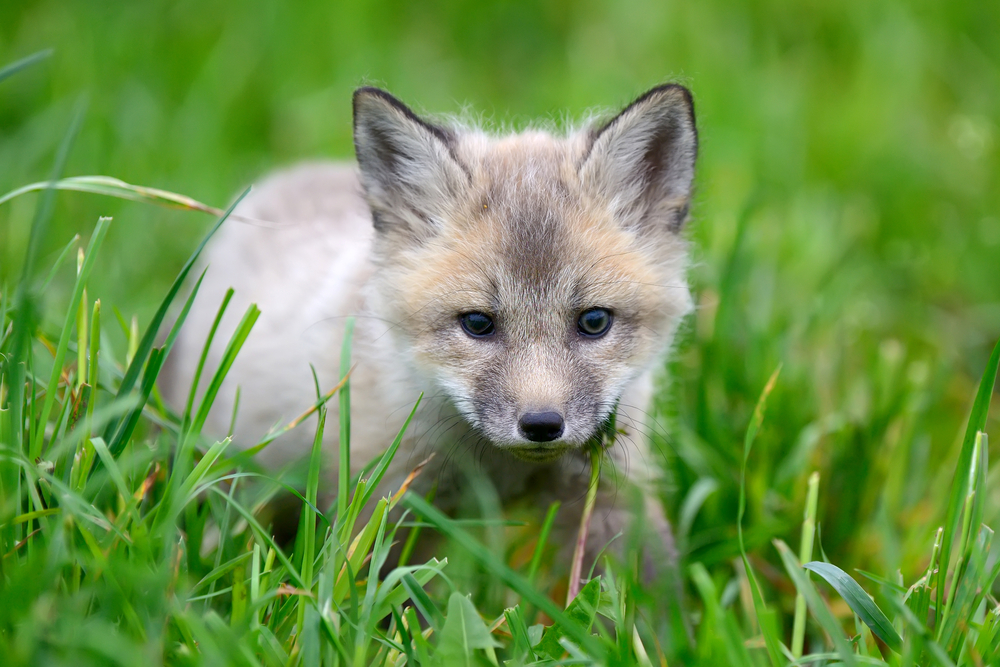
Kit Fox. Small, big-eared desert specialists weighing 3 to 6 pounds. Those oversized ears (about 4 inches each) work as heat radiators, shedding body heat in arid environments. Kit foxes live in the deserts of the Southwest: Nevada, Utah, Arizona, New Mexico, and parts of California. They’re nocturnal and sensitive to human disturbance, so campsite encounters are rare. If you’re camping in southern Utah or the Mojave and you see a tiny fox with comically large ears at dusk, that’s a kit fox.
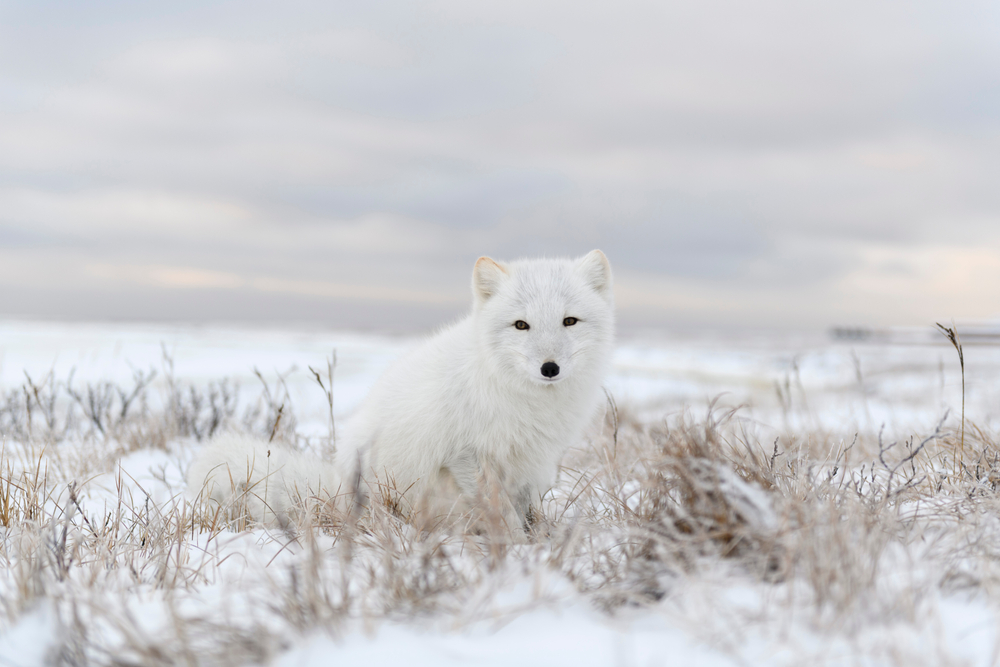
Arctic Fox. Found in Alaska and northern Canada. Arctic foxes weigh 6 to 12 pounds and are best known for their seasonal coat change: white in winter, brown or gray in summer. They survive temperatures as low as -58F without shivering, thanks to a fur density that’s among the highest of any mammal. Arctic foxes follow polar bears and scavenge from their kills. They’re relevant to campers in Alaska, where they occasionally investigate campsites in tundra regions.
Other Wild Canines You Might See While Camping
Foxes aren’t the only wild members of the dog family in North America.
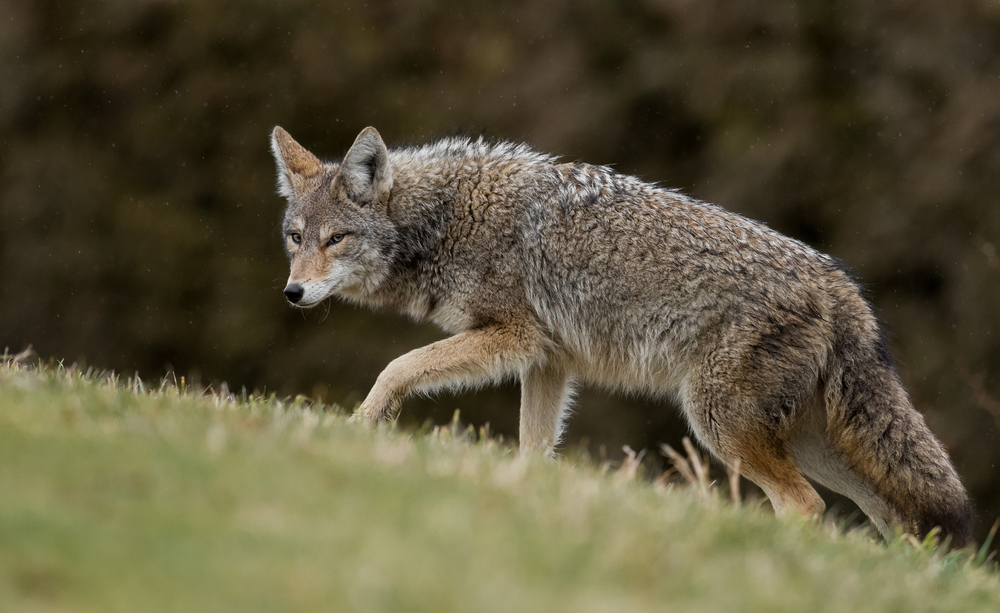
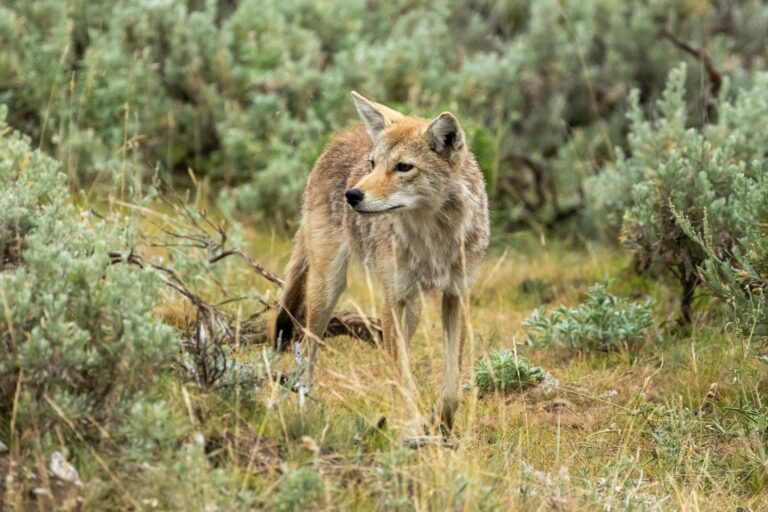
Coyotes. Found in every U.S. state, including urban areas. Coyotes are larger than foxes (20 to 50 pounds) and hunt in pairs or small family groups. They’re more vocal than foxes (the yipping chorus at dusk is almost certainly coyotes, not wolves) and more comfortable around people. The risk of a coyote approaching a campsite is higher than a fox, but attacks on humans are extremely rare.
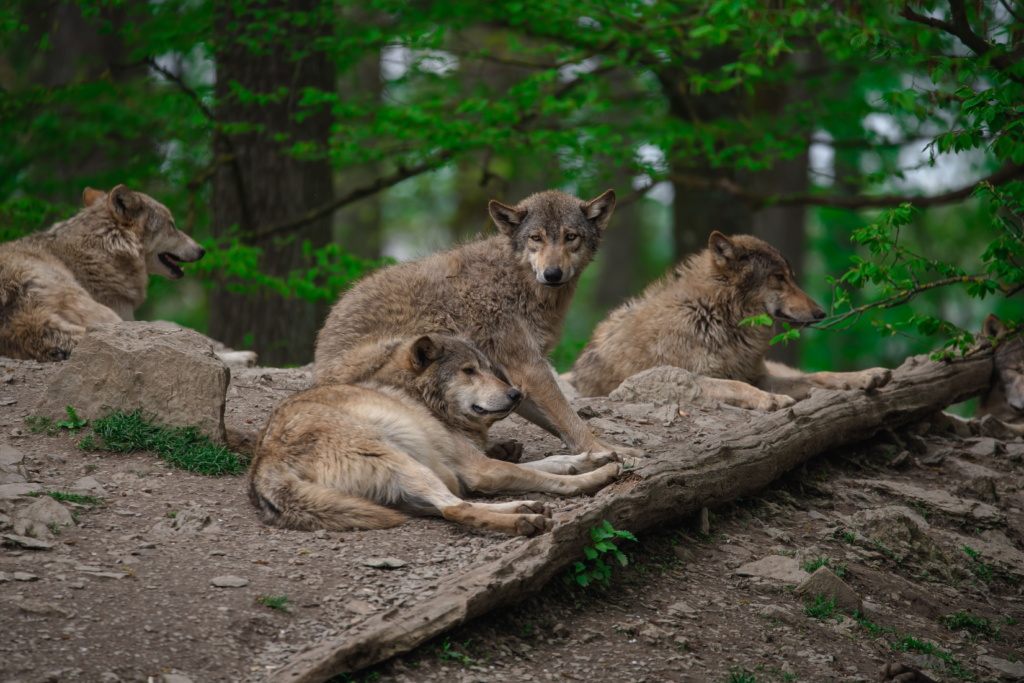
Wolves. The largest wild canine in North America, weighing 70 to 150 pounds. Wolves are far more avoidant of humans than coyotes or foxes. Their range has recovered significantly in the northern Rockies, Great Lakes, and Pacific Northwest. If you want to understand wolf behavior in depth, our wolf pack hierarchy guide covers how packs are structured and what it means for campers.
Where Do Foxes Live?
Everywhere you’d pitch a tent, and most places you wouldn’t.
Red foxes thrive in forests, grasslands, mountains, wetlands, farmland, suburbs, and city edges. They den in burrows (often repurposed from groundhogs or other diggers), under sheds, in hollow logs, or beneath rock piles. A red fox’s home range is typically 2 to 5 square miles, though urban foxes compress that significantly.
Gray foxes prefer wooded areas with dense understory. Kit foxes need open desert with loose soil for digging dens. Arctic foxes stick to tundra.
The common thread: foxes are adaptable. If there’s food and cover, a fox can probably make it work. Campgrounds check both boxes, which is why sightings are common even in well-trafficked areas.
Are Foxes Dangerous?

Almost never.
Foxes weigh 8 to 15 pounds. They have thin jaws built for mice, not confrontation. Their instinct when they encounter a human is to run, and they’re fast enough (up to 30 mph) that running works well for them.
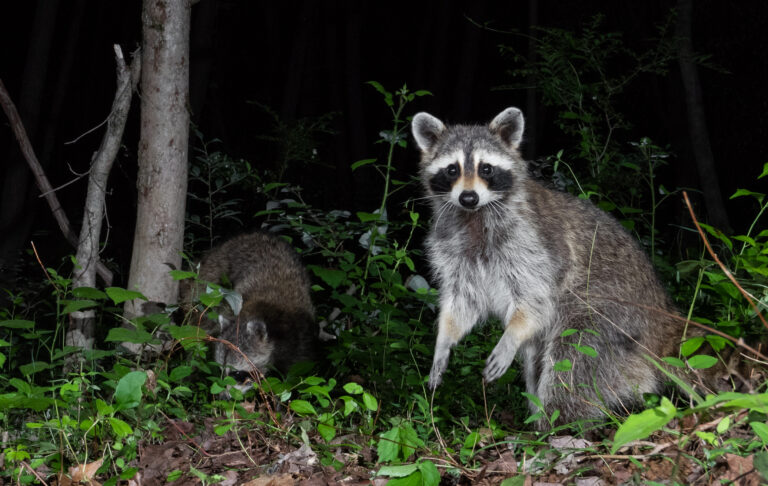
The one legitimate concern is rabies. Foxes account for about 8% of wild animal rabies cases in the U.S., behind raccoons (29%), bats (35%), and skunks (17%). That said, the fox strain of rabies has never been confirmed as the cause of a human death in the United States. The risk exists, but it’s statistical background noise compared to other wildlife.
Warning signs of a rabid fox: staggering or circling as if disoriented, unprovoked aggression, no fear of humans at all, partial paralysis, or self-mutilation. A healthy fox that wanders near your campsite at dusk is being a fox. A fox that approaches you in broad daylight and won’t retreat when you make noise is a fox you should report to a ranger.
For pets, the calculus is different. A fox can injure a small dog or cat, and rabies transmission between foxes and domestic animals is a real concern. Keep pets supervised and vaccinated.
How to Handle a Fox Near Your Campsite
Foxes visit campsites for one reason: food smells. Remove the smell and the fox has no reason to stay.
Prevention (before the fox shows up):
- Store all food in sealed containers or a bear box. If it’s good enough to keep bears out, it’ll keep foxes out.
- Cook at least 50 feet from your sleeping area when possible.
- Pack out all food waste. Foxes can smell a discarded granola bar wrapper from a surprising distance.
- Seal trash in airtight bags. Double-bag anything with meat or grease.
- Never store food inside your tent. Not snacks, not gum, not chapstick with flavor.
Response (if a fox is already there):
- Make noise. Clap, talk loudly, bang a pot. Healthy foxes retreat from sudden sounds.
- Stand up and look tall. Foxes gauge threats by size.
- Don’t chase it. Let it leave on its own terms.
- Don’t feed it. A fox that associates campsites with food becomes a recurring problem for every camper after you.
If a fox doesn’t retreat from noise, or if it’s displaying signs of illness (staggering, aggression, excessive drooling), keep your distance and alert the campground host or local ranger station.
Camping Where Foxes Live
Foxes are part of the landscape at most of our parks. That’s a feature, not a problem. Seeing a red fox trot through a meadow at dusk is one of those campfire-story moments that sticks.
Our campgrounds with established food storage infrastructure (bear boxes, sealed dumpsters, clean cooking areas) make coexistence simple. The fox does its thing. You do yours.
Check availability across the RJourney network and find a park that puts you where the wildlife is, with the infrastructure to keep your food where it belongs.