That yipping chorus you hear after sunset? That’s coyotes. And if you’re camping anywhere in the lower 48, there’s a decent chance they’re closer than you think.
Coyotes are the most widespread wild canine in North America. They’ve colonized every U.S. state except Hawaii, adapted to deserts, forests, prairies, suburbs, and cities, and learned to thrive in places that wiped out wolves and mountain lions decades ago.
So, should you be worried? Here’s what the data actually says.
Are Coyotes Dangerous to Humans?
Rarely. But “rarely” isn’t “never,” and the distinction matters.
Between 1970 and 2015, researchers documented 367 coyote attacks on humans across the U.S. and Canada. That’s less than 10 per year across 2 countries with a combined population of 370 million people. About half of those involved coyotes that had been fed by humans, either intentionally or through unsecured garbage. The pattern is clear: coyotes that associate people with food lose their natural wariness, and that’s when problems start.
Fatal attacks are extraordinarily rare. Two confirmed deaths in the last 50 years. For comparison, domestic dogs kill roughly 30 to 50 Americans per year.
The honest risk assessment: a healthy coyote that hasn’t been habituated to humans is not a threat. A coyote that’s been eating out of campsite trash cans for 3 months is a different animal, behaviorally speaking.
How Big Are Coyotes?
Smaller than most people assume.
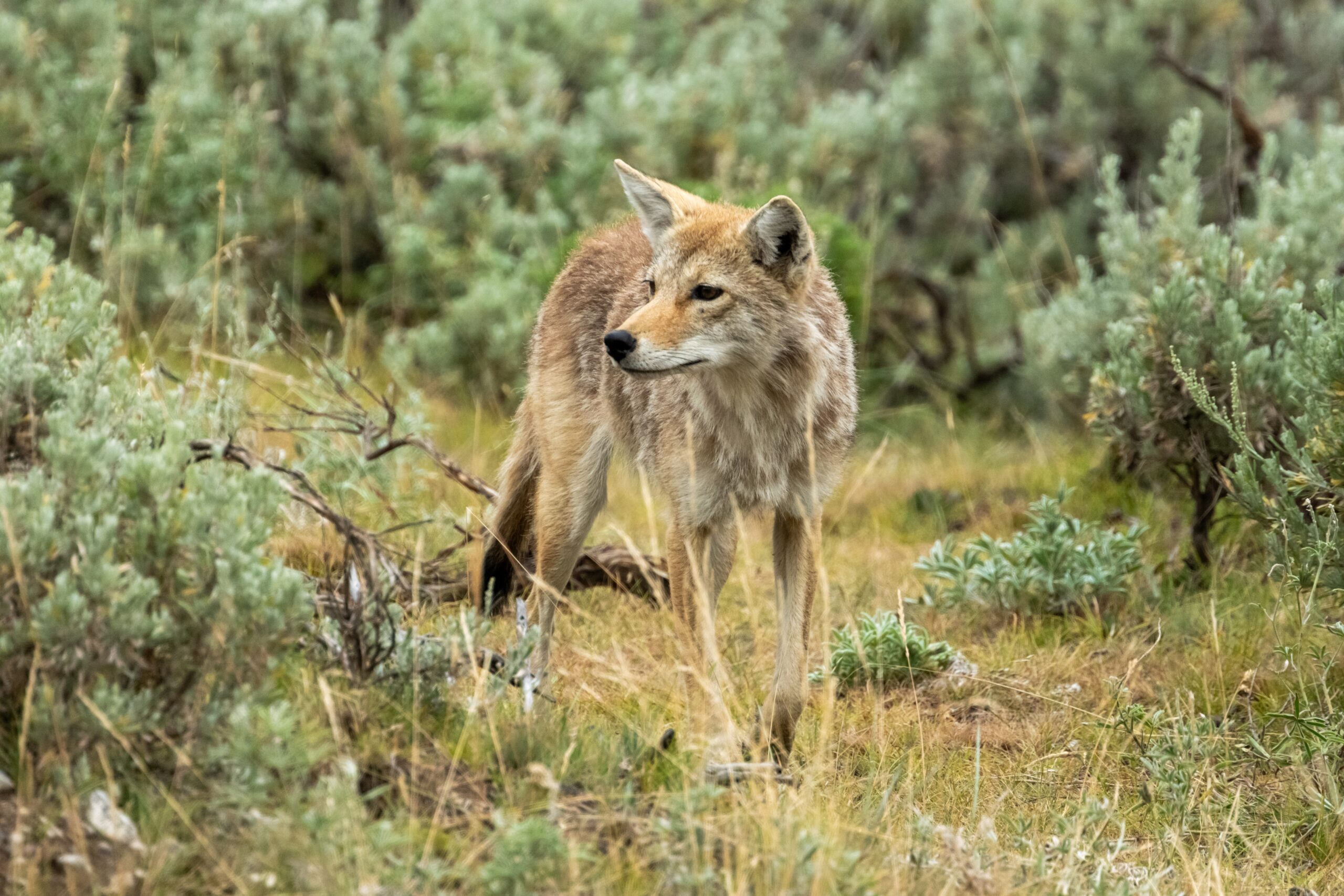
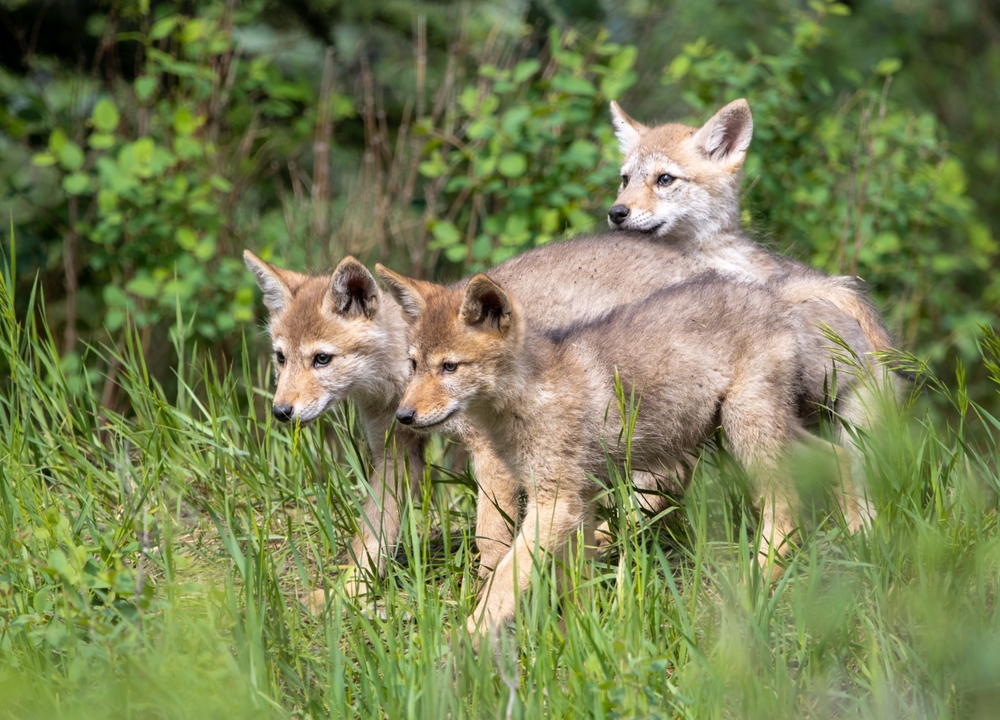
Western coyotes weigh 20 to 35 pounds. About the size of a medium dog, with longer legs and a narrower build. Eastern coyotes run heavier, 35 to 50 pounds, because of historical hybridization with wolves. The “coywolf” genetics are real and measurable in DNA studies, though the animals still look and behave like coyotes in every way that matters to a camper.
A coyote’s jaw can exert about 88 pounds of force per square inch. For reference, a German Shepherd’s bite is around 238 psi. Coyotes aren’t built for large prey. Their teeth are designed for mice, rabbits, ground squirrels, and fruit.
Where Do Coyotes Live?
Everywhere you’d camp. And several places you wouldn’t.
Coyotes have the widest range of any wild canine in the Western Hemisphere. They occupy all of the continental U.S., most of Canada, and into Central America. Before European settlement, they were limited to the Great Plains and western deserts. The removal of wolves (their primary competitor and predator) opened corridors into the East, South, and eventually into every major city from Los Angeles to New York.
They’re habitat generalists. Desert scrub, alpine meadows, hardwood forests, suburban golf courses, parking garages. Coyotes are the least picky carnivore on the continent.
For campers, this means coyote encounters are possible at almost any campground. Parks near open scrubland, river corridors, and forest edges see the most activity.
When Are Coyotes Most Active?
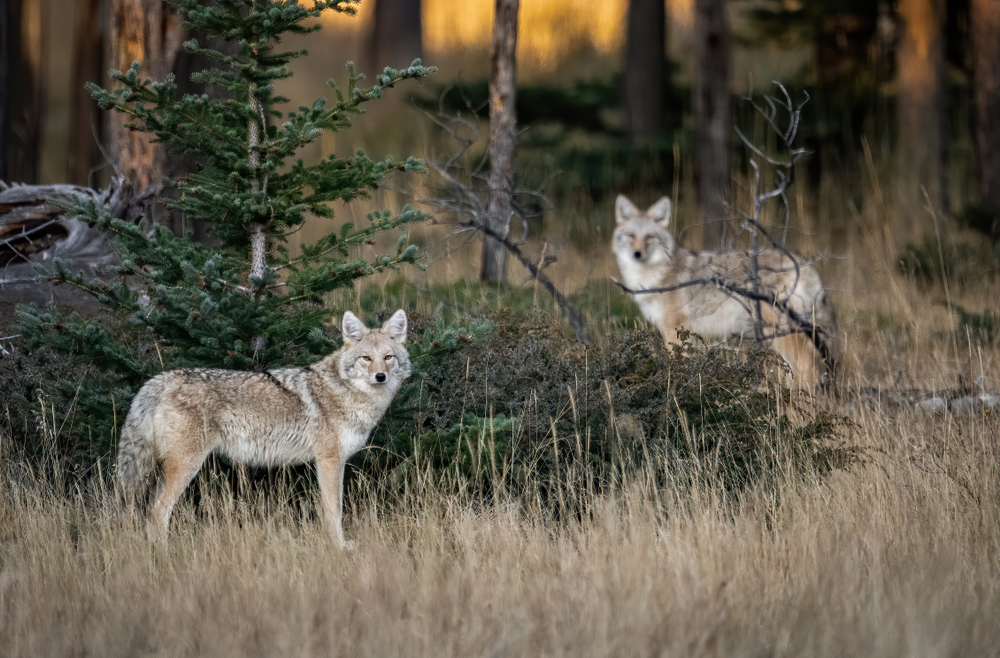
Coyotes are crepuscular, meaning they’re most active at dawn and dusk. In areas with heavy human traffic, they shift to fully nocturnal behavior to avoid contact. That’s why you hear them more than you see them.
The yipping, howling, and bark-howling you hear after dark is social communication. A group that sounds like 20 coyotes is usually 3 to 4. They layer their vocalizations to sound larger, a trick that works on rival coyotes and on campers sitting around the fire at 10 pm.
Peak encounter season is January through March (breeding) and September through November (pup dispersal). During dispersal, young coyotes are traveling through unfamiliar territory, and they’re more likely to wander close to a campsite because they haven’t learned where the boundaries are yet.
Coyotes vs. Wolves vs. Dogs: How to Tell the Difference
This matters because the appropriate response varies by species.
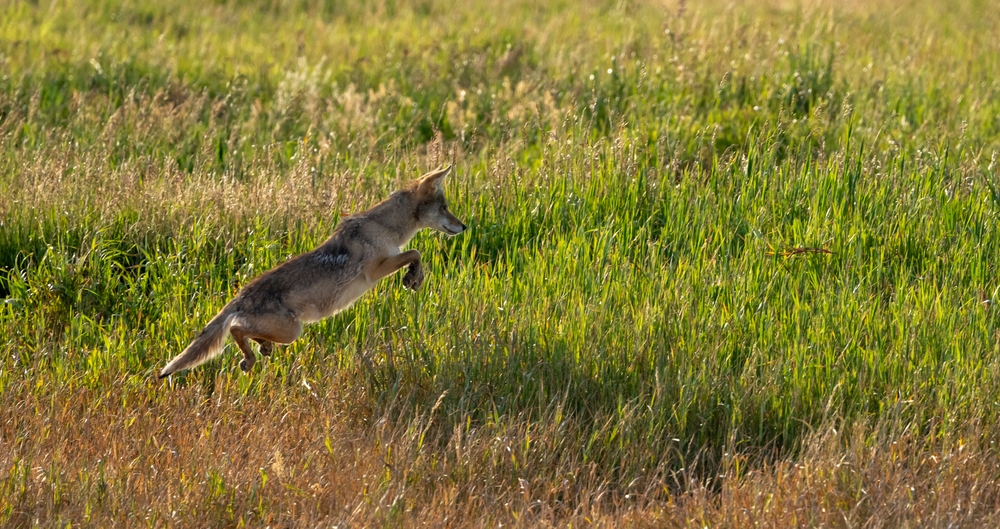
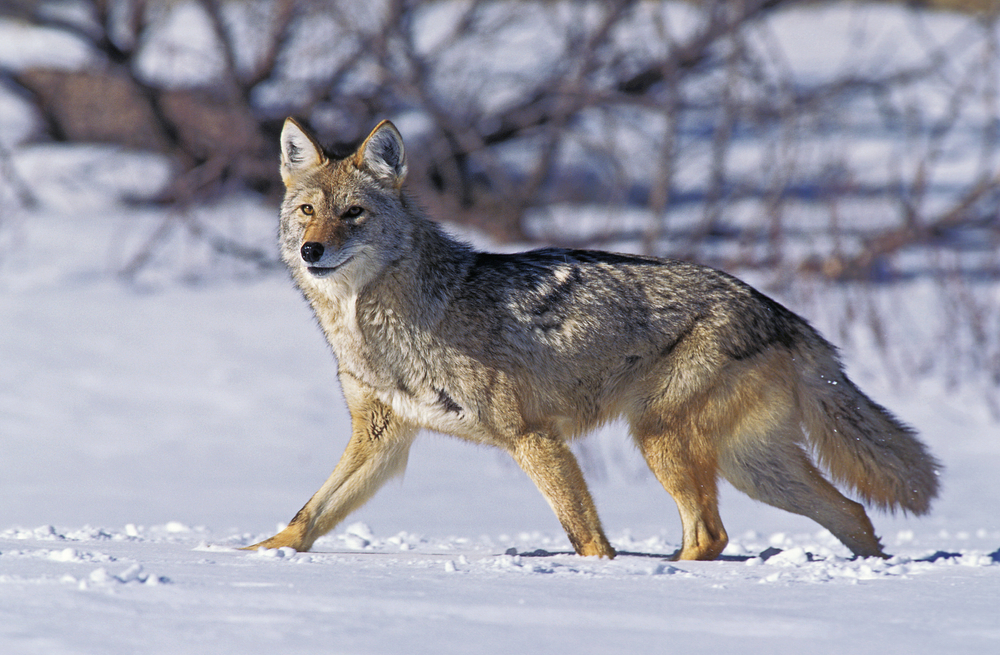
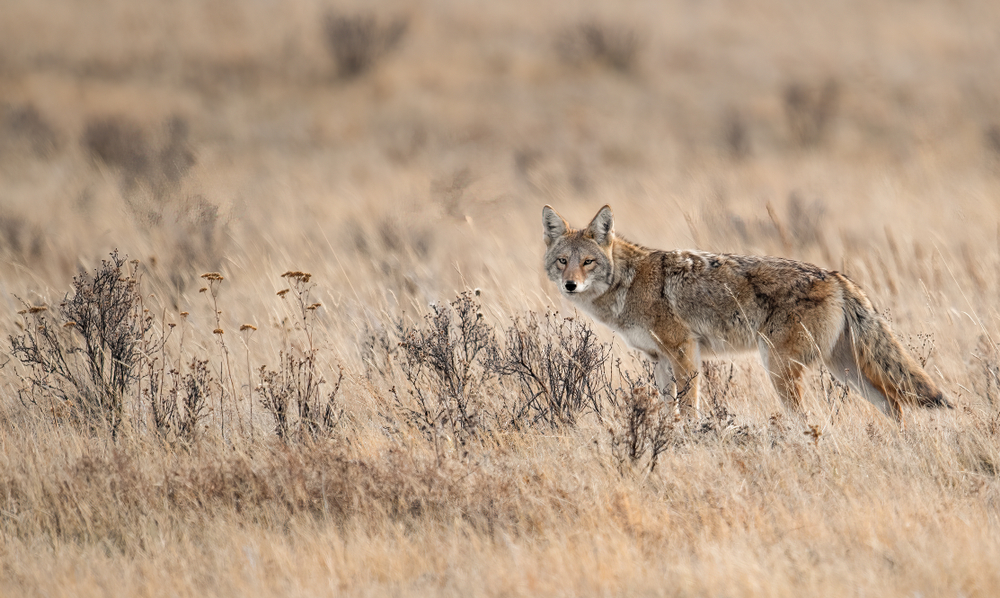
Coyotes: 20 to 50 pounds. Narrow, pointed snout. Large triangular ears relative to head size. Bushy tail carried low (below the horizontal line of the back) when running. Gait is light and bouncy, almost like they’re tiptoeing.
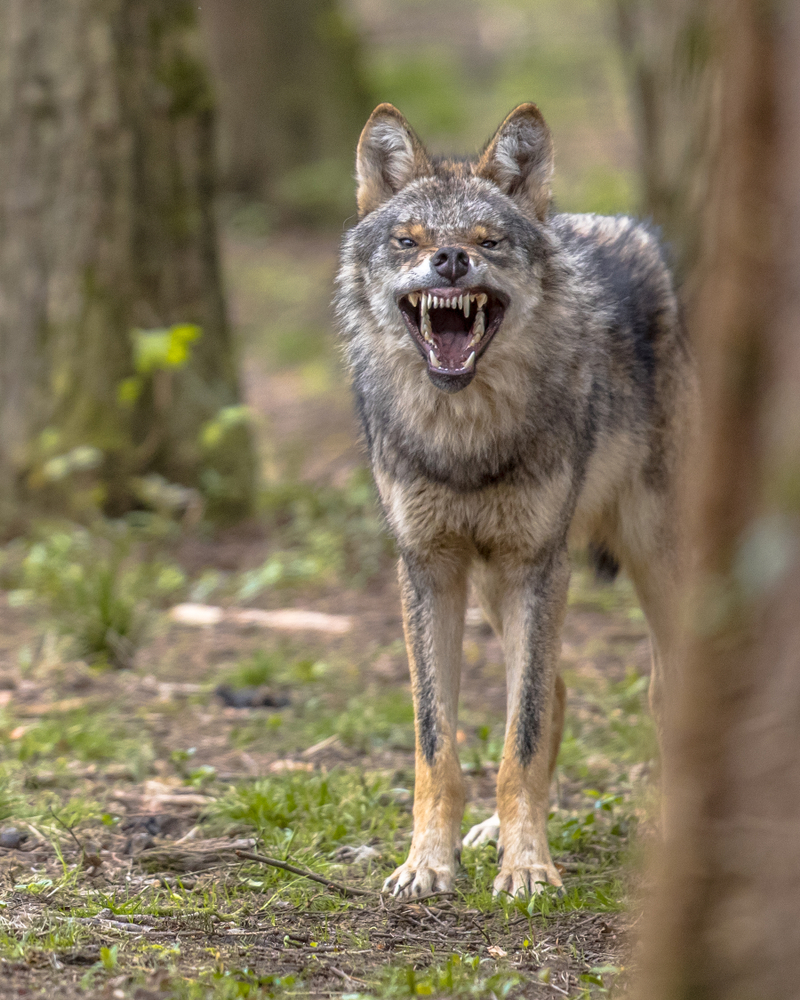
Wolves: 70 to 150 pounds. Broader head with shorter, rounded ears. Tail carried straight out when running. Gait is a heavy, loping stride that covers ground efficiently. If you’re camping in the northern Rockies or Great Lakes, our wolf pack hierarchy guide covers what to know.
Domestic dogs: Huge variation, but feral dogs tend to be thicker-bodied than coyotes, with rounder eyes and less pointed ears. Dogs wag their tails. Coyotes don’t.
The quick test: if the animal is trotting through the brush with its tail down and its ears up, moving with the confidence of something that knows exactly where it’s going, that’s a coyote.
What to Do If You See a Coyote at Your Campsite
Don’t freeze. Don’t run. Stand your ground and make yourself big.
The technique wildlife managers use is called “hazing,” and it works because coyotes are wired to avoid confrontation with anything that looks like a threat.
Step 1: Stand tall. Wave your arms. Make direct eye contact.
Step 2: Make noise. Yell, clap, bang pots together. Air horns work if you have one. The goal is sudden, aggressive sound, not a casual “hey.”
Step 3: Move toward the coyote, not away from it. This feels counterintuitive. Do it anyway. Retreating signals that you’re prey. Advancing signals that you’re a problem.
Step 4: If it doesn’t leave, throw something near it (not at it). A rock, a stick, a water bottle. The object landing close is usually enough.
Step 5: Don’t stop hazing until the coyote is completely out of sight. Coyotes that retreat 30 feet and sit down are testing you. Keep the pressure on.
The one exception: a coyote that approaches you directly, ignores hazing, or shows signs of illness (staggering, drooling, aggression) may be rabid or extremely habituated. Do not engage. Back away slowly and report it to the campground host or ranger station immediately.
Are Coyotes Dangerous to Dogs?
Yes. This is where the real risk lives for campers.
Coyotes view small dogs (under 25 pounds) as potential prey. Studies in urban Los Angeles documented coyotes killing small dogs in backyards, on leashes, and even through gaps in fences. In campground settings, the risk is real if a small dog is left unattended or off-leash near brush.
For larger dogs, the dynamic shifts. Coyotes are territorial during denning season (March through May), and a dog wandering near a den site can trigger a defensive response. Coyotes have been known to lure dogs away from their owners by sending one coyote out as a decoy while the rest wait in cover.
Campground rules for dogs in coyote country:
- Leash always. No exceptions. A dog off-leash at dusk is a dog at risk.
- Don’t leave dogs tied outside your RV or tent unattended.
- Walk dogs in daylight when possible.
- Carry a noise deterrent (air horn, whistle) on evening walks.
- Pick up dog food bowls after meals. Kibble draws coyotes fast.
Are Coyotes Dangerous to Cats?
Extremely. Outdoor cats are a primary prey item for coyotes in most of their range. If you’re traveling with a cat, keep it inside your RV, cabin, or tent at all times. There’s no safe way to let a cat roam outdoors where coyotes are present.
How to Keep Coyotes Away from Your Campsite
- The rules are the same as for any wildlife encounter at a campground: control the food.
- Store everything in sealed containers or a bear box. If the campground provides food storage lockers, use them.
- Clean your grill or cooking surface before dark. Grease residue is a beacon.
- Seal trash in airtight bags. Double-bag anything with meat or fish.
- Don’t leave pet food outside overnight.
- Pick up fallen fruit if you’re camped near trees.
- Keep your site clean after meals. A dropped hot dog bun is a coyote invitation.
Motion-activated lights near your site can help. Coyotes avoid sudden bright light. Some campers carry coyote deterrent sprays (the same capsaicin-based sprays used for bears), though the spray is a last resort, not a first line.
Camping in Coyote Country
Coyotes are part of the experience at parks across our network. Hearing them at night is one of those distinctly outdoor sounds that reminds you you’re not home, in the best way.
Tunatua RV Resort in Craig, Colorado, sits in the kind of wide-open northwest Colorado country where coyotes, deer, elk, and antelope all move through. The Yampa River corridor runs nearby, and guests regularly spot wildlife from their sites. The park’s GM describes it as a “basecamp where elk hunters, travelers, and families all find their version of the great outdoors.” Evenings here are quiet enough that the coyote chorus carries across the whole property.
Dixie Forest RV Resort in Panguitch, Utah puts you at the doorstep of Bryce Canyon, Zion, and Capitol Reef. The terrain is high desert and pine forest, classic coyote habitat. The locals have their own vocabulary: “10-mile” means Bear Valley, north of town on Highway 89. The GM’s top recommendation for guests? Ask about trail conditions, because the best hikes change with the season, and she’ll steer you right based on your fitness level and whether you’ve got kids or dogs with you.
Klamath Falls RV Resort sits on the southern tip of Upper Klamath Lake in Oregon, about an hour from Crater Lake. Deer roam the hill above the park regularly enough that the GM mentions it as something guests wouldn’t expect. The sunsets over the lake are the most photographed thing at the property. The trails nearby are where you’re most likely to hear coyotes working the transition zone between lake edge and forest.
Laramie RV Resort in Wyoming borders the edge of Medicine Bow National Forest. Prairie meets mountain here, and that ecotone is prime coyote territory. The high-altitude grasslands around Laramie support some of the densest rodent populations in the state, which means coyotes have plenty of food and plenty of reason to stay.
At all of these parks, the food storage infrastructure (sealed dumpsters, clean cooking areas, campground hosts who know the local wildlife patterns) makes coexistence simple. The coyotes do their thing at the edges. You do yours at the fire ring.
Frequently Asked Questions
Will a coyote attack a human unprovoked?
Unprovoked attacks on adults are extremely rare. Most documented attacks involved coyotes that had been fed by humans or were protecting a den with pups. Healthy, wild coyotes avoid people.
Can you outrun a coyote?
No. Coyotes can sprint at 40 mph. Usain Bolt tops out at 27 mph. Running also triggers a chase response. Stand your ground and haze instead.
Are coyotes more dangerous in packs?
Coyotes don’t hunt in “packs” the way wolves do. They’re typically solitary or hunt in pairs. Family groups (parents and pups from the current year) may travel together in fall and winter, but coordinated group attacks on humans are essentially undocumented.
Do coyotes carry rabies?
Yes, but at lower rates than raccoons, skunks, and bats. Coyotes accounted for less than 5% of confirmed animal rabies cases in 2023. If you see a coyote acting disoriented, aggressive, or fearless during daylight, report it to a ranger and keep your distance.
Should I be worried about coyotes near my RV?
Generally, no. An RV is a hard-sided enclosure, and coyotes have zero interest in trying to get inside one. The concern is outside the RV: pet food left on the ground, unsecured trash, or a small dog on a long lead.
Find Your Park
If you want a campsite where the night sounds include coyotes and the morning sounds include birds you can’t identify, we’ve got parks in 19 states where that’s the baseline. Check availability across the RJourney network or explore options by state to find your next basecamp.