Florida has 2 kinds of sandhill cranes, and from November through March you can see both in the same pasture. One kind never leaves the state. The other flies in from northern states for the winter and heads home in spring.
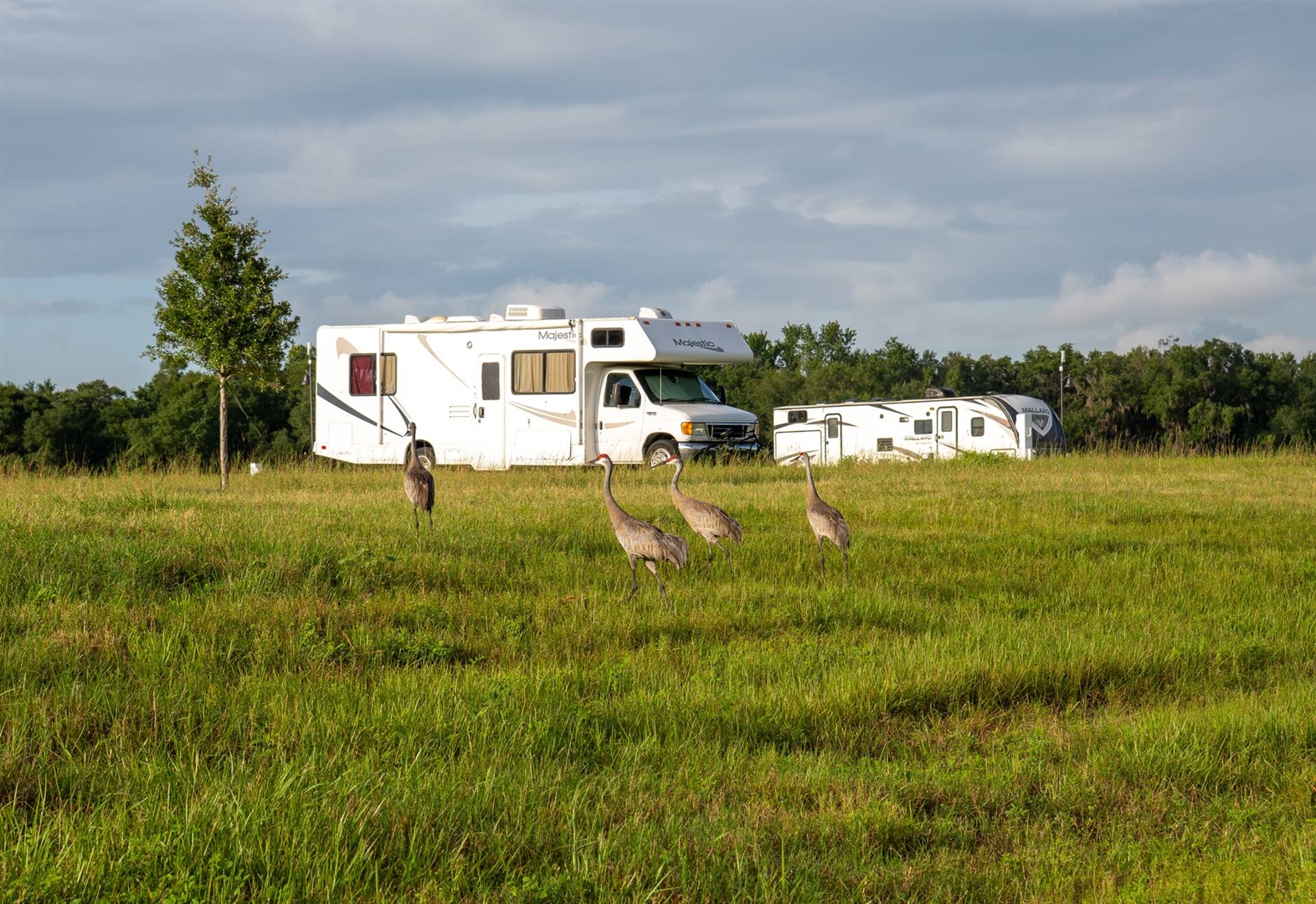
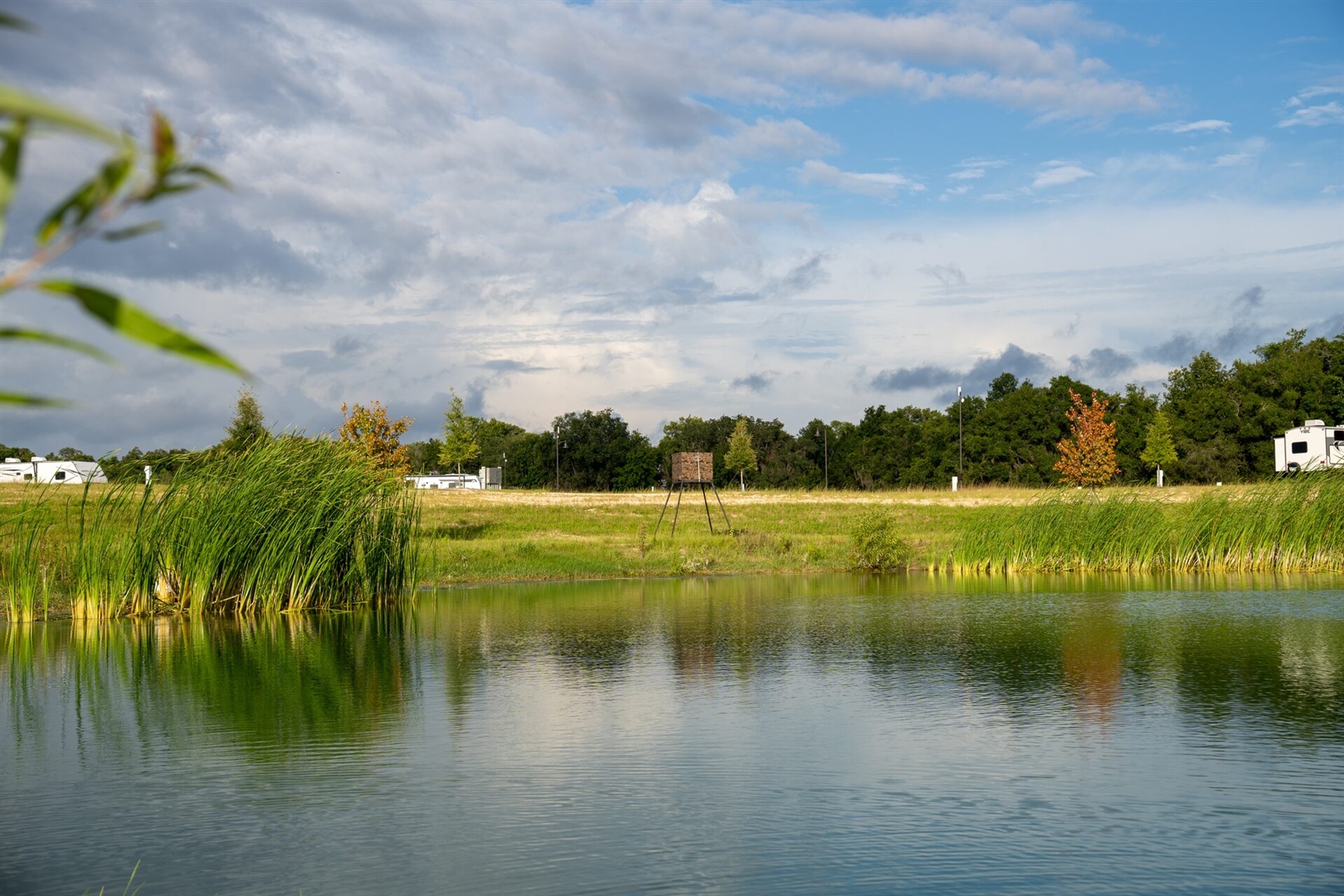
At Preservation Point RV Resort outside Inverness, a flock of the year-round residents lives on the pond in the middle of camp. Guests name them in reviews right alongside the level concrete pads and the Wi-Fi.
This guide covers where to see sandhill cranes in Florida, when they nest, how to tell the residents from the winter visitors, and the habits that keep a campground flock wild. Last verified November 10, 2026, against FWC, UF/IFAS, Florida Museum, and Florida Birding Trail sources.
Sandhill Cranes Florida Quick Facts
- Who lives here: the Florida sandhill crane (Antigone canadensis pratensis), a year-round resident. In winter, roughly 25,000 migrating greater sandhill cranes join them.
- Resident population: an estimated 4,000 to 5,000 birds.
- Status: state-designated Threatened.
- Best months: November through March, when the migrants are in.
- Nesting: mainly February to April. Give a nest about 100 yards.
- The rule: feeding sandhill cranes is illegal in Florida (Florida Administrative Code 68A-4.001(6)).
Resident Cranes and Winter Visitors
The Florida sandhill crane is a subspecies that stays put. It ranges from the Everglades north to the Okefenokee Swamp, working pastures, open prairies, freshwater marshes and, more and more, golf courses and neighborhoods. Its numbers fell about 36% between 1974 and 2003. Newer studies show them climbing again, partly because cranes figured out that suburban lawns are full of mole crickets and grubs (the lawn owners rarely object).
Greater sandhill cranes are the commuters. Up to 25,000 arrive in October and November, spend the winter on Florida prairies and farm fields, and leave between January and March. The 2 look nearly identical, and greaters run a little bigger. From a campsite, context is your best clue: a flock of hundreds on an open prairie in January is mostly migrants, while a pair walking a chick across a parking lot in May is a local.
How to Identify a Sandhill Crane
- Size: almost 4 feet tall, a wingspan over 6 feet, and about 10 pounds.
- Color: gray, with a bald red patch on the crown. Some birds look rusty brown; that’s iron-rich mud they preen into their feathers.
- Flight: neck stretched straight out, slow and powerful wingbeats. Herons fly with the neck tucked into an S.
- Sound: a rolling, rattling bugle that can carry up to 2.5 miles. You’ll usually hear a flock before you find it.
- Family: pairs stay together for years, and the young (called colts) stick with their parents for about 10 months.
When to See Sandhill Cranes in Florida
Residents are here every month of the year. The big numbers come November through March, when migrants pack the prairies and you can see flocks lift off at dawn.
Late winter is courtship season. Pairs dance: bows, leaps, flared wings, and a duet call that sounds like 2 rusty gates arguing. Nesting runs mainly February to April. The nest is a mound of vegetation in shallow marsh water, with 1 to 3 eggs that hatch after 29 to 32 days. Chicks walk and swim within hours and fly at 65 to 70 days.
Late spring and summer are colt season. Families forage away from the nest and cross roads on foot, which is when drivers need to slow down most.
Where to See Sandhill Cranes Near Inverness
Preservation Point RV Resort, Inverness
The easiest crane-watching on the Nature Coast happens from a camp chair. The resident flock works the grass around the pond, and the cranes walk through camp most mornings. Bring coffee, sit still, and let them come by. Deer and wild turkeys show up on the same lawns.
Flying Eagle Preserve, Inverness
This 16,305-acre Southwest Florida Water Management District preserve sits in the Tsala Apopka Chain of Lakes, a mix of small lakes, marshes, swamps, and pasture. Sandhill cranes are on its bird list, and the trail starts in open pasture, which is classic crane ground. About 16 miles of marked trails and roads (roughly 13 open to bikes) cross Moccasin Slough toward the southern marshes. It’s free and open sunrise to sunset at 11080 E. Moccasin Slough Rd. Check FWC hunt dates before a fall or winter visit.
Paynes Prairie Preserve State Park, Micanopy
This is Florida’s headline crane show. Large numbers of migrating sandhill cranes winter on the prairie from November to March, Florida sandhills are there year-round, and whooping cranes sometimes turn up in winter. Walk the Bolen Bluff Trail to the viewing platform, and stop at the visitor center (100 Savannah Blvd.) for a map and recent sightings. It’s roughly an hour and 15 minutes north of Inverness on I-75, an easy day trip.
Pastures, Golf Courses, and Neighborhoods
Statewide, the most common crane sighting is from the car window. Scan wet pastures and the edges of golf courses on the back roads, especially early and late in the day. If you pull over, park fully off the road and stay in or beside the vehicle.
How to Share a Campground With Sandhill Cranes
Cranes that live around people get bold. Keeping them wild takes 5 habits.
1. Keep every crumb to yourself. Florida made it illegal to intentionally feed sandhill cranes in 2002. Accidental feeding counts as a problem too: spilled birdseed, a dog bowl left on the pad, chips under the picnic table. Fed cranes lose their fear of people, grab food from hands, and now and then peck. Preservation Point’s park rules also prohibit feeding any wildlife.
2. Give them room. Watch from a distance and let them walk past on their own schedule. Use a zoom lens for photos. Stay about 100 yards from a nest, and back off from any pair with colts; adults defend their young by kicking, and they’ll do it to dogs, cats, alligators, and people.
3. Leash the dog. Dogs and cats are a real threat to young cranes. A leash protects your dog from a 10-pound bird with a strong opinion, too.
4. Cover the shiny stuff. Cranes attack their own reflections in windows and glossy paint. If one starts sparring with your rig, put up the windshield sunshade and cover the mirrors for a day or 2.
5. Drive like a crane is about to step out. Many sandhill cranes die on Florida roads each year, and families cross on foot. Inside Preservation Point the limit is 10 mph, which happens to be the right speed for crane traffic.
Your Basecamp: Preservation Point RV Resort
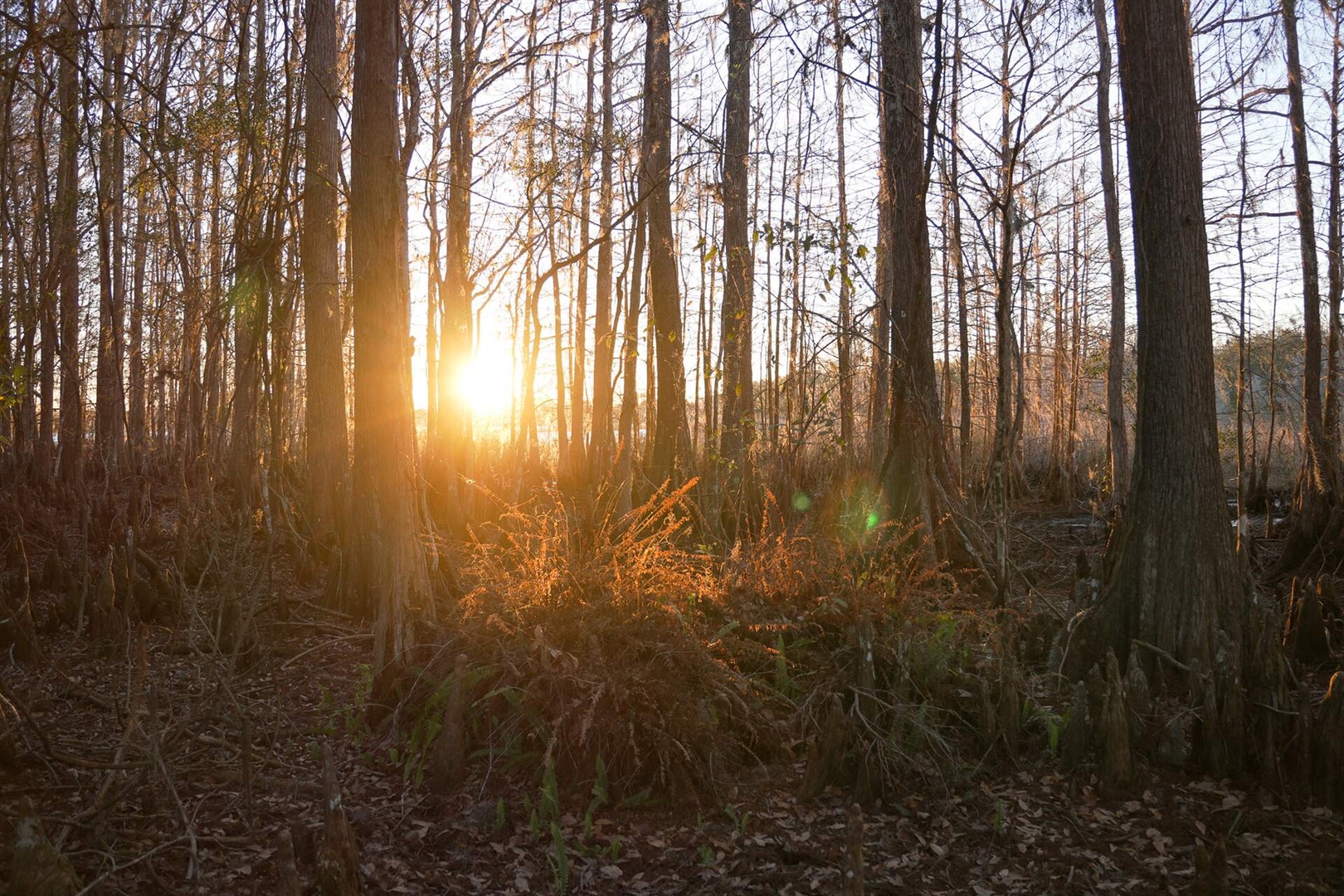
Preservation Point covers 230 acres of Old Florida on State Road 44, 12 miles west of I-75 (Exit 329) and about 6 minutes east of downtown Inverness. Oaks and cypress, a catch-and-release pond, frontage on Lake Tsala Apopka, and a flock of sandhill cranes that were here before the first RV.
All 221 sites are concrete pads with full hookups and 50/30/20-amp service. Pull-throughs run 60 feet and back-ins 45 feet. The park is new and still building, with the pool, bathhouse, and laundry on the way, so arrive self-contained for now. The Withlacoochee State Trail is about 6 minutes away, and Crystal River’s springs are about 27 minutes west.
Preservation Point RV Resort
8588 E. Gulf to Lake Hwy. (State Road 44), Inverness, FL 34450
(352) 353-1342
Check availability at Preservation Point RV Resort.
Keep Exploring the Nature Coast
- Best Time to See Manatees in Crystal River: the other cold-weather crowd, on the Gulf side of the county.
- Three Sisters Springs: tickets, the shuttle, and where to park the RV.
- Things to Do in Inverness, Florida: the lake town 6 minutes from camp.
- Are Alligators Dangerous?: cranes nest in the same shallow marshes where gators hunt.
- Wildlife Encounters While Camping: the full safety hub, from bears to bobcats.
Sandhill Crane Questions
Are sandhill cranes dangerous?
Rarely. Wild cranes keep their distance. Cranes that people have fed may grab food, peck, or kick, and any adult will defend its young. Give them space and they’ll give you the same.
Is it illegal to feed sandhill cranes in Florida?
Yes. Intentionally feeding sandhill cranes has been illegal in Florida since 2002 under Florida Administrative Code 68A-4.001(6). Clean up spilled seed and pet food so you don’t feed them by accident.
When do sandhill cranes migrate to Florida?
Migrating greater sandhill cranes arrive in October and November and leave between January and March. Florida sandhill cranes live here year-round.
Do sandhill cranes mate for life?
Usually. Pairs stay together for years, dance and call together in late winter, and raise their colts together for about 10 months.
Where can I camp near sandhill cranes in Florida?
Preservation Point RV Resort in Inverness has a resident flock on its pond, and Flying Eagle Preserve and the Withlacoochee State Trail are close by. Winter brings the biggest crane numbers to the region, and the bugling starts early.