Most people drive to Bryce Canyon for the hoodoos. They stay for what happens after the sun goes down.
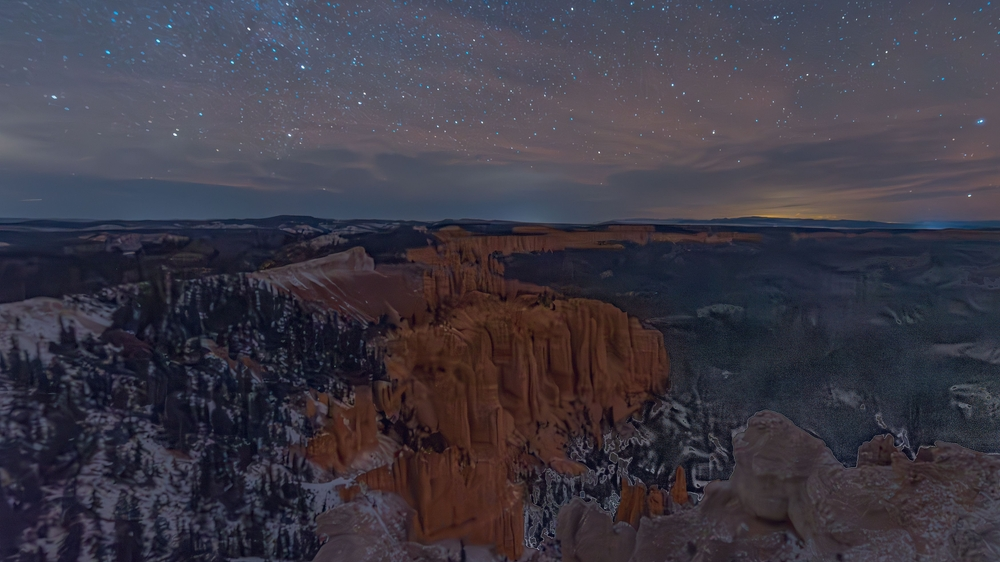
At 8,000 feet, with dry desert air and almost no city glow for a hundred miles in any direction, Bryce Canyon holds some of the darkest skies left in the country. On a moonless night you can see roughly 7,500 stars with your naked eye. Most backyards in America top out around a few dozen. The Milky Way arcs from one horizon to the other like a silver rainbow, bright enough to throw a faint shadow.
Here is how to plan a night under those skies, and where to park the RV so you are 15 minutes away when the stars come out.
Why Bryce Canyon has some of the darkest skies in the country
Bryce Canyon earned International Dark Sky Park status in 2019, and not the entry-level kind. It carries a Gold Tier designation from DarkSky International, the highest rating they give, reserved for skies with almost no light pollution.
Three things stack up in its favor. Elevation puts you above a good chunk of the atmosphere and the haze that comes with it. The high desert air is dry and clean, so starlight cuts through instead of scattering. And the nearest real city glow is hours away, which means the darkness holds all the way down to the horizon.
The park protects it on purpose. A team of Astronomy Rangers and volunteer astronomers works to keep the skies dark and to share them with visitors. That combination, natural darkness plus people whose job is to protect it, is rarer than it sounds.
The best time to go stargazing at Bryce Canyon
The single biggest factor is the moon. A full moon washes out the faint stuff, so the darkest, most dramatic skies land during the week of the new moon or the week just before it. Check a moon-phase calendar before you lock in dates and you will see far more.
Season matters too. Summer nights are warm and comfortable and line up with the park’s ranger programs, which makes June through August the easy pick for first-timers. Spring and fall trade some warmth for thinner crowds and, often, crisper air. Winter skies at Bryce are stunning and brutally cold, so that one is for the committed. If you want to line the trip up with the ideal window, our guide to the best time to visit Utah national parks breaks it down by season.
One thing the elevation guarantees: it gets cold after dark no matter the month. Summer afternoons in the 90s can drop into the 40s or 50s at night up on the plateau. Pack the layers you think you will not need.
Where to look up
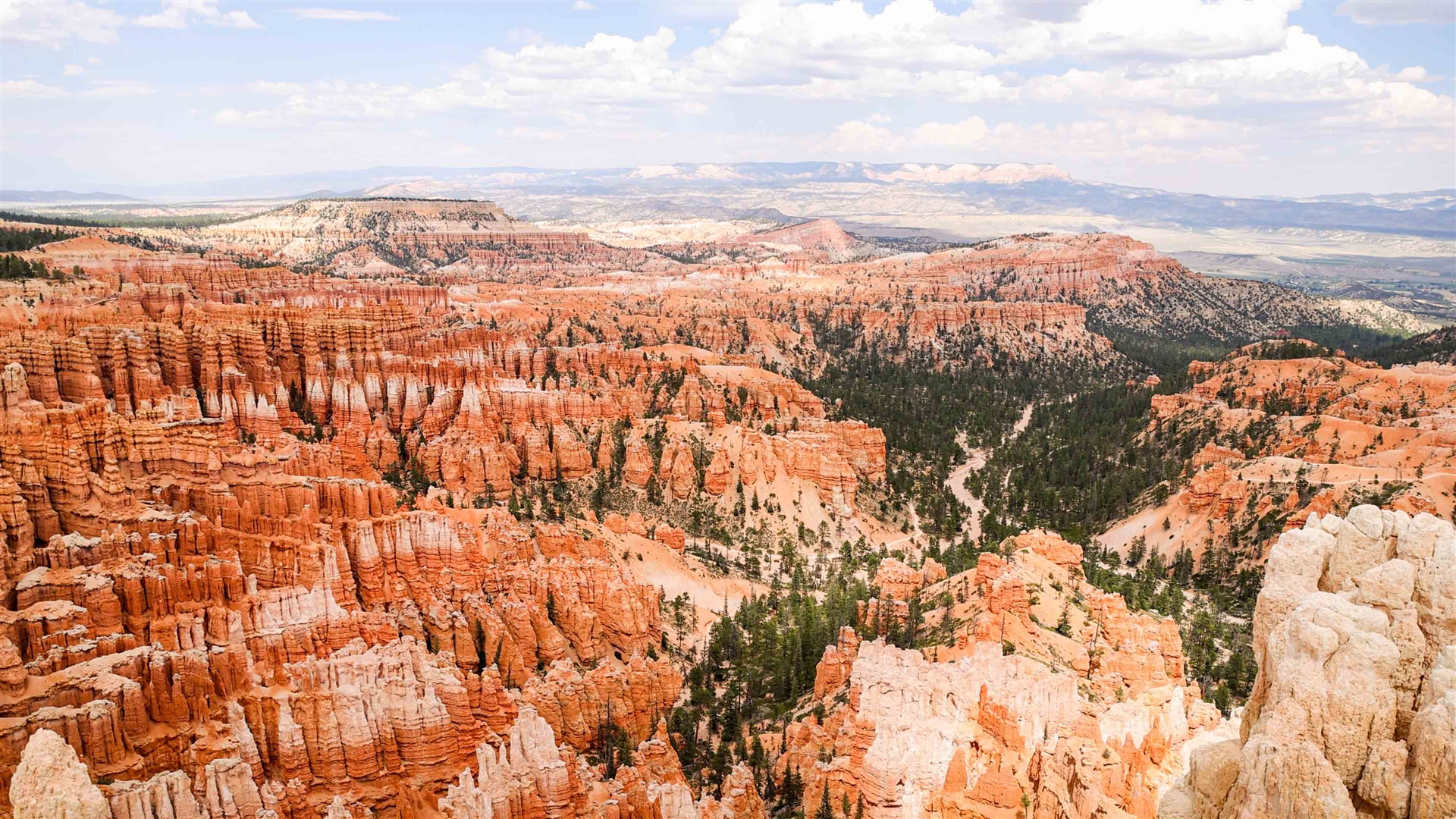
Inside the park, the classic viewpoints double as stargazing spots once the lots empty out. The overlooks near the amphitheater give you an open sky and the hoodoos as a foreground, which is the shot every night photographer is chasing. Ranger programs usually set up near the Visitor Center, an easy place to start if you want a telescope pointed at the right thing.
You do not have to be inside the park boundary to get a great sky, either. The whole plateau around Cannonville, Tropic, and Panguitch sits under the same darkness. A camp chair, an open patch of ground, and no headlights is most of what you need.
Ranger astronomy programs and the annual festival
This is where Bryce goes from good to unforgettable. The park runs about 100 astronomy programs a year, led by its Astronomy Rangers and volunteers. Evening talks cover everything from the life cycles of stars to the missions exploring them, and they are often followed by telescope viewing where you can put your eye on Saturn’s rings or a distant galaxy.
A few programs worth planning around:
Night sky telescope programs. Rangers and volunteer astronomers set up telescopes for the public, usually at the Visitor Center. Arrive a little early for a good spot.
Full Moon Hikes. On full-moon nights, rangers lead a 1 to 2 mile hike through the moonlit landscape with no flashlights allowed. Tickets are limited and lug-tread footwear is required. These fill fast.
The Annual Astronomy Festival. Every summer, usually in June, Bryce hosts a multi-day festival with daytime solar viewing, evening talks, and dozens of telescopes set up by visiting astronomers from groups like the Salt Lake Astronomical Society. It is the biggest night-sky event on the park’s calendar.
Program schedules shift with staffing, weather, and the season, so check the park’s official calendar on nps.gov or ask at the Visitor Center when you arrive. Clouds can cancel a program, and at this elevation the weather has opinions.
How to prepare for a night under the stars
A little planning is the difference between a cold, squinting hour and a night you remember for years.
Give your eyes time. Full dark adaptation takes about 20 to 30 minutes, and one glance at a phone screen resets it. Use a red flashlight or a red headlamp instead of white light. Red preserves your night vision, which is why every serious stargazer carries one.
Dress warmer than the forecast. Layers, a hat, and a blanket for the camp chair. Bring the chair, too, because craning your neck for an hour gets old fast. A pair of binoculars does more than you would expect on the Milky Way and the moon’s craters.
If you are shooting photos, bring a tripod and plan around that new moon. And build in patience. The best nights are the ones where you stop checking the time.
Where to stay: basecamps near Bryce Canyon
The trick with stargazing is being close enough to roll back to a warm bed without a long drive in the dark. Two RJourney parks put you right in the heart of the dark-sky zone.
Bryce Canyon RV Resort sits in Cannonville, just off Highway 12 and about 15 minutes from the park entrance. Full-hookup sites, cabins, a pool for the hot afternoons, and a location one guest described as far enough from town to keep the sky dark but close enough for a morning coffee run. That is exactly the balance you want for a stargazing trip. You can check rates and availability at the Bryce Canyon RV Resort park page, or call the park at (435) 523-4109.
Dixie Forest RV Resort is up the road in Panguitch, off Highway 89, with Bryce Canyon and Red Canyon both a short drive away and Zion within reach. It sits a little higher and cooler, with full hookups, cabins, and a walkable stretch into town. Guests consistently rate it 4.7 stars. Details and booking are on the Dixie Forest RV Resort park page, or call (435) 772-9633.
Either one drops you under the same Gold Tier sky. Pick the one that fits your route.
Make it a whole trip
Bryce is the front door to a lot more. If you are building a longer route, the stargazing pairs naturally with the rest of southern Utah’s red rock. Our 14-day Mighty 5 road trip itinerary maps the full loop, the Grand Circle guide runs Horseshoe Bend to Bryce to Zion, and the Zion camping guide covers the next park down the road.
Come for the hoodoos. Stay for the 7,500 stars. Check availability at a Bryce Canyon basecamp and plan your nights around the new moon.