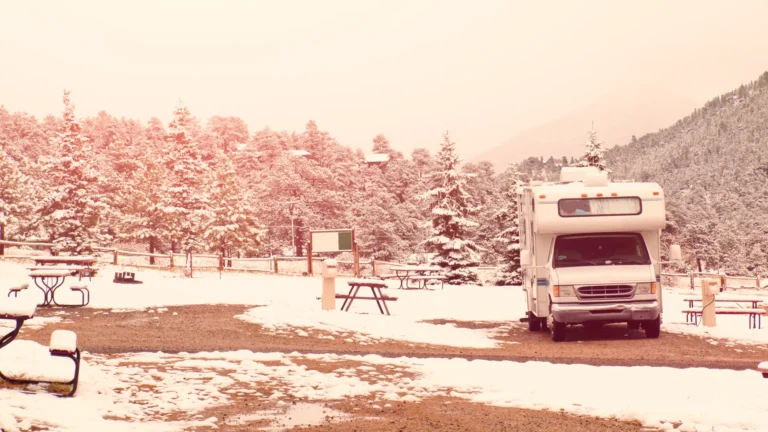
Here is how to heat an RV in winter: run the propane furnace as your baseline, add one electric heater for the room you live in, and stop the heat from leaking out before you buy any more of it. Each source has a real cost, a real limit, and a real way to go wrong. This guide compares them with the math so you can pick before the first hard freeze.
It covers RVs in use during cold weather. If you are shutting a rig down for the season, read how to winterize a camper instead. Last verified: October 9, 2026.
Heating an RV in Winter: The Four Options Compared
| Heat source | Energy used | Works best | Watch for |
|---|---|---|---|
| Built-in propane furnace | About 0.33 gal of propane per hour at 30,000 BTU, plus a 12V blower | Primary heat, whole rig, below freezing | Propane refills, battery drain from the blower |
| Electric space heater | Up to 1,500 W (12.5 amps at 120V), about 5,100 BTU | One room, mild to cold nights, on a pedestal | Tripped breakers on 30A service |
| Rooftop heat pump | Electric, output drops as temperatures fall | Shoulder season, lows near or above 40°F | Weak heat in a hard freeze |
| Portable propane heater | Propane, rated for indoor use only | Backup, with fresh air | Moisture and carbon monoxide risk |
The Propane Furnace
Your furnace is a sealed-combustion unit that vents outside, which makes it the safest source of combustion heat in the rig. Most RV furnaces are rated between 20,000 and 40,000 BTU. Propane holds about 91,500 BTU per gallon, so a 30,000 BTU furnace burning continuously uses roughly a third of a gallon each hour.
Furnaces cycle, so the real number depends on outside temperature and how tight the rig is. A rough overnight guess for a hard-cold night is 3 to 5 gallons. A 20-lb tank holds about 4.7 gallons and a 30-lb tank about 7, so in a deep freeze a single 30-lb tank can disappear in 2 days. Track your own burn rate for the first week and plan refills from that number.
The blower runs on 12V and can pull several amps. On shore power the converter keeps the battery topped up. Without it, a furnace can drain a battery overnight.
Electric Space Heaters
A standard space heater tops out at 1,500 watts, which is 12.5 amps at 120V and about 5,100 BTU per hour. That is a quarter of what a 20,000 BTU furnace puts out, and it is still plenty for one room.
Pedestal size sets your limit. A 30-amp service delivers about 3,600 watts, and the working ceiling for continuous loads is around 2,900 watts. A 1,500 watt heater plus a microwave or a hair dryer will trip the breaker. A 50-amp service gives you roughly 12,000 watts across two legs, which is room for a heater in the living area and another in the bedroom.
Oil-filled radiator heaters run quietly and hold heat after they cycle off. Look for tip-over shutoff and overheat protection, plug straight into the wall, and skip extension cords and power strips.
Heat Pumps
A rooftop RV air conditioner with a heat pump mode moves heat instead of making it, which is efficient when it works. The catch is temperature. Output drops as the air gets colder, and most rooftop units fade out somewhere near the 40°F mark. Use one for fall and spring nights, and keep the furnace ready for anything below that.
Portable Propane Heaters
Small indoor-rated propane heaters carry an oxygen-depletion sensor and a tip-over switch. They also burn fuel inside your living space, so they add moisture, consume oxygen, and need a cracked window. Treat them as a backup, never as the plan for sleeping hours.
Carbon Monoxide and Fire Safety
Never heat with the oven or stovetop. Install a carbon monoxide alarm near the sleeping area, test it monthly, and replace it on the date printed on the unit. Keep anything that burns at least 3 feet from heaters. Check the furnace exhaust vent after snow or ice storms, because a blocked vent can back combustion gases into the rig.
Keep the Heat You Make
Heat is cheap to keep and expensive to replace. Start with the leaks.
Window insulation film and reflective window covers cut loss at the weakest surface in the rig. Seal door gaps with weatherstripping. Close the vents and pull curtains across the cab. Fit skirting around the base so wind stops pulling heat out through the floor. Run a small fan to move warm air from the ceiling back toward the floor, and cover roof vents with insulated vent pillows.
Burning propane and cooking add moisture. Crack a vent when you cook or shower, and a small electric dehumidifier handles the rest. Condensation on windows and cold walls is the early sign of a moisture problem.
Heating and the Pipes
Furnace heat keeps the cabin comfortable, but water lines and the hose still freeze first. Pair this guide with how to keep RV pipes from freezing for heated hoses, tank heaters, and the temperature line to watch.
What Winter Heating Costs on a Park Stay
At many parks, monthly and seasonal stays bill electricity on a separate meter. Moving heat from propane to electric changes where the cost lands. Ask the park how electric is billed before you commit to a space heater strategy, and compare against your propane refill costs. Our Winter RV Living guide explains what monthly park life looks like after the season ends.
Where to Stay Warm
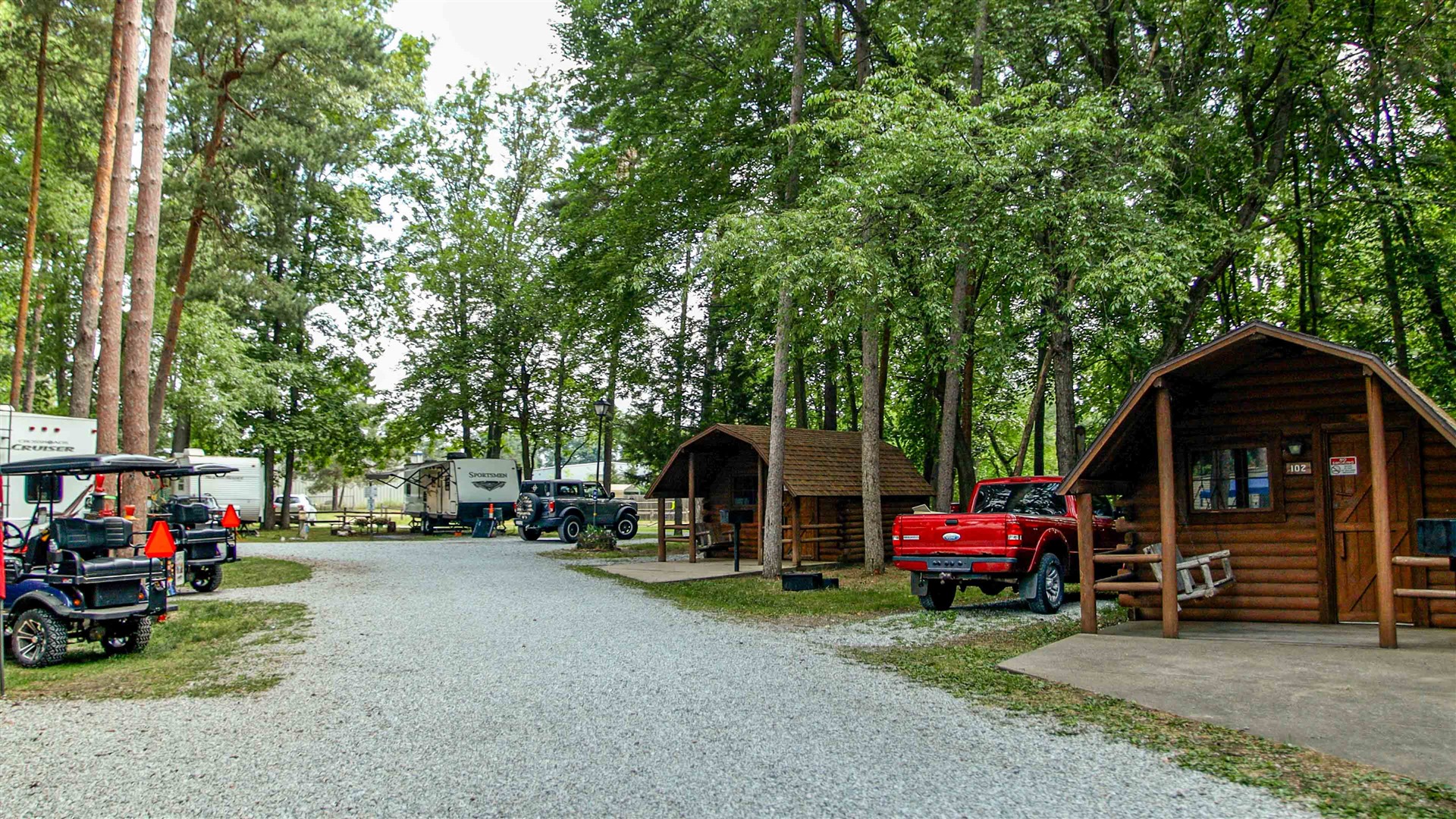
Laramie RV Resort (1271 W Baker St., Laramie, WY 82072) is at high altitude, and the winters there reward a tight, well-planned rig. Elkhart RV Resort (50707 Princess Way, Granger, IN 46530) lists year-round RV stays, with full hookups, a pool, and a restaurant on site. Winter water service varies by park, so ask about it when you book.
Prefer to follow warmer weather? Rockport RV Resort (1401 Smokehouse Rd., Rockport, TX 78382) sits on the Texas Gulf Coast, where heat matters far less. See our long-term RV parks for extended stays.
FAQ: Heating an RV in Winter
What is the best way to heat an RV in winter?
Use the propane furnace as the baseline, add an electric heater where you spend time, and seal and skirt the rig to cut the heat loss.
Is an RV furnace or a space heater better?
The furnace heats the whole rig and works in any cold. A space heater costs nothing in propane and heats one room, but it is limited by your pedestal amperage.
Can I run a space heater all night in an RV?
A modern heater with tip-over and overheat shutoff, plugged straight into a wall outlet, is a common choice on shore power. Keep clearances and a working CO alarm, and never run one through an extension cord.
How much propane does an RV use in winter?
On a hard-cold day a 30,000 BTU furnace can use 3 to 5 gallons. Track your own use for a week and plan refills around it.
Planning a winter stay? Check availability at Laramie RV Resort or Elkhart RV Resort.