The first hard freeze does its damage overnight. Water left in a camper’s lines expands about 9% when it turns to ice, and that’s enough to split PEX fittings, crack the water pump housing, and blow the fill valve on the toilet. The repair bill routinely runs $500 to $2,000. The prevention costs about $25 and an afternoon.
This guide covers how to winterize a camper step by step: draining the water system, bypassing the water heater, running antifreeze through the lines, and putting batteries and tires to bed. It also covers the other path, keeping the rig livable through winter at a monthly park.
When to winterize your camper
Winterize before the first night of sustained temperatures below freezing. A brief dip to 30°F won’t hurt a camper that still holds daytime warmth; a night in the low 20s will. In Wyoming and the northern plains that usually means early to mid October. In the Midwest, late October. If you’re gambling on the forecast, remember the plumbing runs through unheated underbelly compartments that freeze before the cabin does.
What you’ll need
- 2 to 3 gallons of RV antifreeze (the pink propylene glycol kind, rated non-toxic for potable systems; never automotive antifreeze)
- A water heater bypass kit, if your rig doesn’t have one built in (most built after 2010 do)
- A water pump converter kit or a length of tubing that reaches from the pump inlet into the antifreeze jug
- A tank flush wand or built-in flush connection for the black tank
- A socket for the water heater drain (1-1/16″ for the anode rod on Suburban heaters; Atwood units use a plastic drain plug)
- Optional: an air compressor with a blowout plug, regulated to 30 to 40 psi
Total cost if you own none of it: about $25 to $60. A shop will winterize the rig for roughly $150 to $300, and every fall they book out fast.
How to winterize a camper in 7 steps
Step 1: Drain the fresh water tank and low-point drains
Turn off the water pump and disconnect city water. Open the fresh tank drain valve, then find the low-point drains (usually 2 small valves or caps on the underbelly, 1 hot and 1 cold) and open those too. Open every faucet, hot and cold, plus the outdoor shower, to let air in while the lines empty.
Step 2: Drain and flush the gray and black tanks
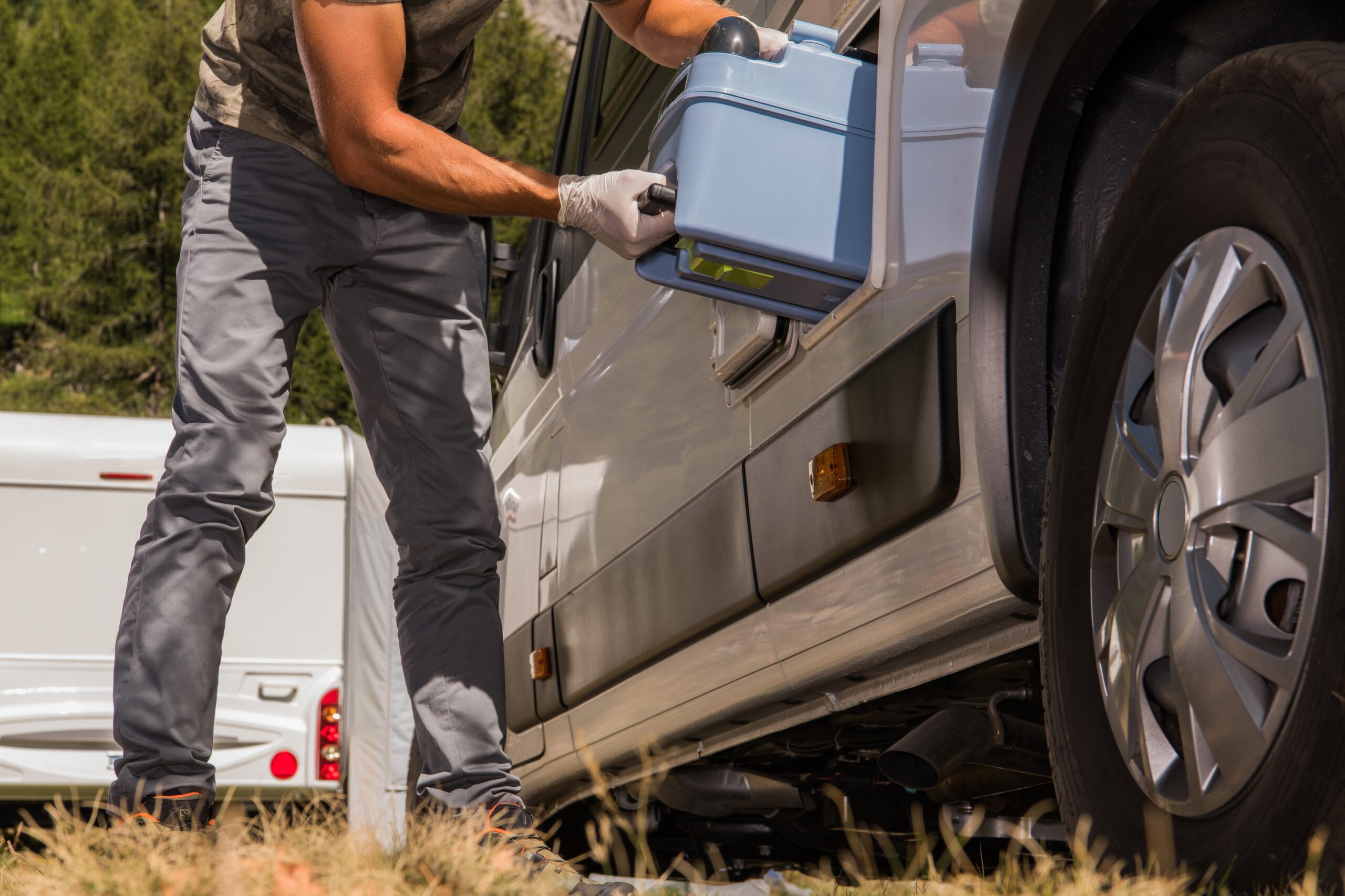
Dump the black tank first, then the gray, at a proper dump station. Flush the black tank with a wand or the built-in flush port until the water runs clear. Waste left in the tanks over winter dries into a layer that no amount of spring flushing fully removes.
Step 3: Drain the water heater and set the bypass
With the heater off and cool and the pressure relief valve opened, pull the drain plug or anode rod and let the 6 to 10 gallons empty out. Then set the bypass valves so antifreeze skips the tank. Skip the bypass and the heater tank will quietly swallow 6 gallons of antifreeze before a drop reaches your faucets.
Step 4: Pump antifreeze through the lines
Connect the pump’s siphon tube to the antifreeze jug (or install the converter kit), switch the pump on, and open each fixture one at a time, starting with the faucet closest to the pump: hot side until it runs pink, then cold. Work through every faucet, the shower, the outdoor shower, and the toilet. Flush the toilet until pink appears, then pour a cup of antifreeze into the bowl and each P-trap.
Step 5: Protect the batteries
A fully charged battery survives deep cold; a discharged one can freeze and crack at around 20°F. Disconnect the negative terminal at minimum. Better: pull the batteries, store them somewhere above freezing, and put them on a maintainer. Lithium batteries shouldn’t be charged below 32°F, so check your BMS specs before leaving them connected to solar.
Step 6: Tires, seals, and the roof
Inflate tires to the sidewall maximum; pressure drops roughly 1 to 2 psi for every 10°F of temperature loss. Cover them if the rig sits outside. Walk the roof and check every seam and sealant bead, because snow sitting on a failed seal becomes a spring ceiling stain. Crack a roof vent under a vent cover so the interior can breathe.
Step 7: Interior shutdown
Empty the fridge, prop the doors open, and pull anything that can freeze and burst (canned goods, cleaning sprays, water bottles). Set out moisture absorbers. Plug steel wool into any gap where a mouse could follow the plumbing in. Mice do more winter damage to stored campers than ice does.
Winterizing when you’re living in it
Everything above assumes the camper sits empty until spring. Plenty of people winter in their rigs instead, on a monthly site with full hookups. That’s a different checklist: a heated water hose, holding-tank heat pads, and skirting around the base to keep wind from stripping heat off the underbelly. Skirting is the single biggest upgrade for winter livability, and our guide to RV skirting for winter breaks down what foam board, vinyl, and inflatable systems cost.
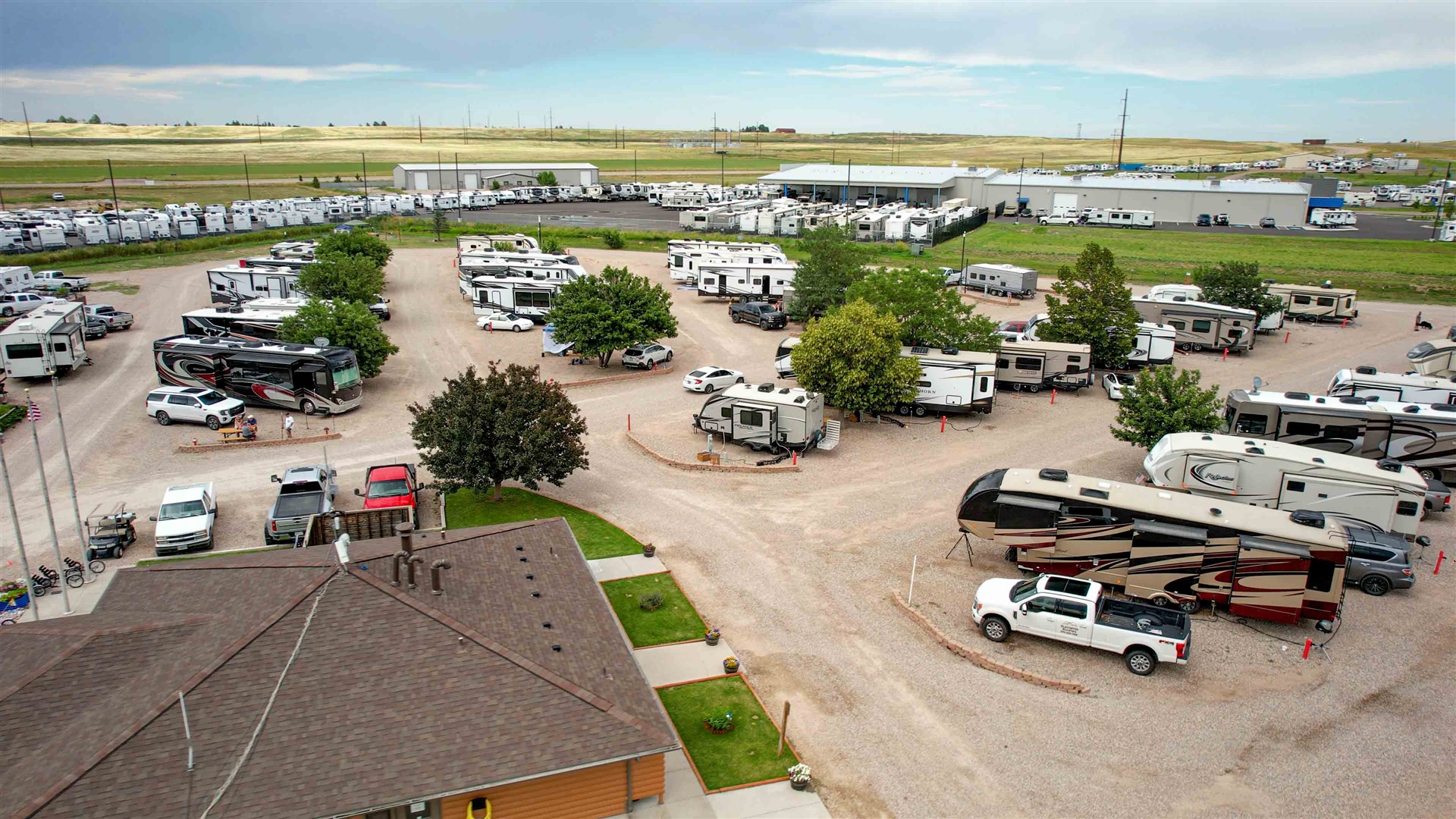
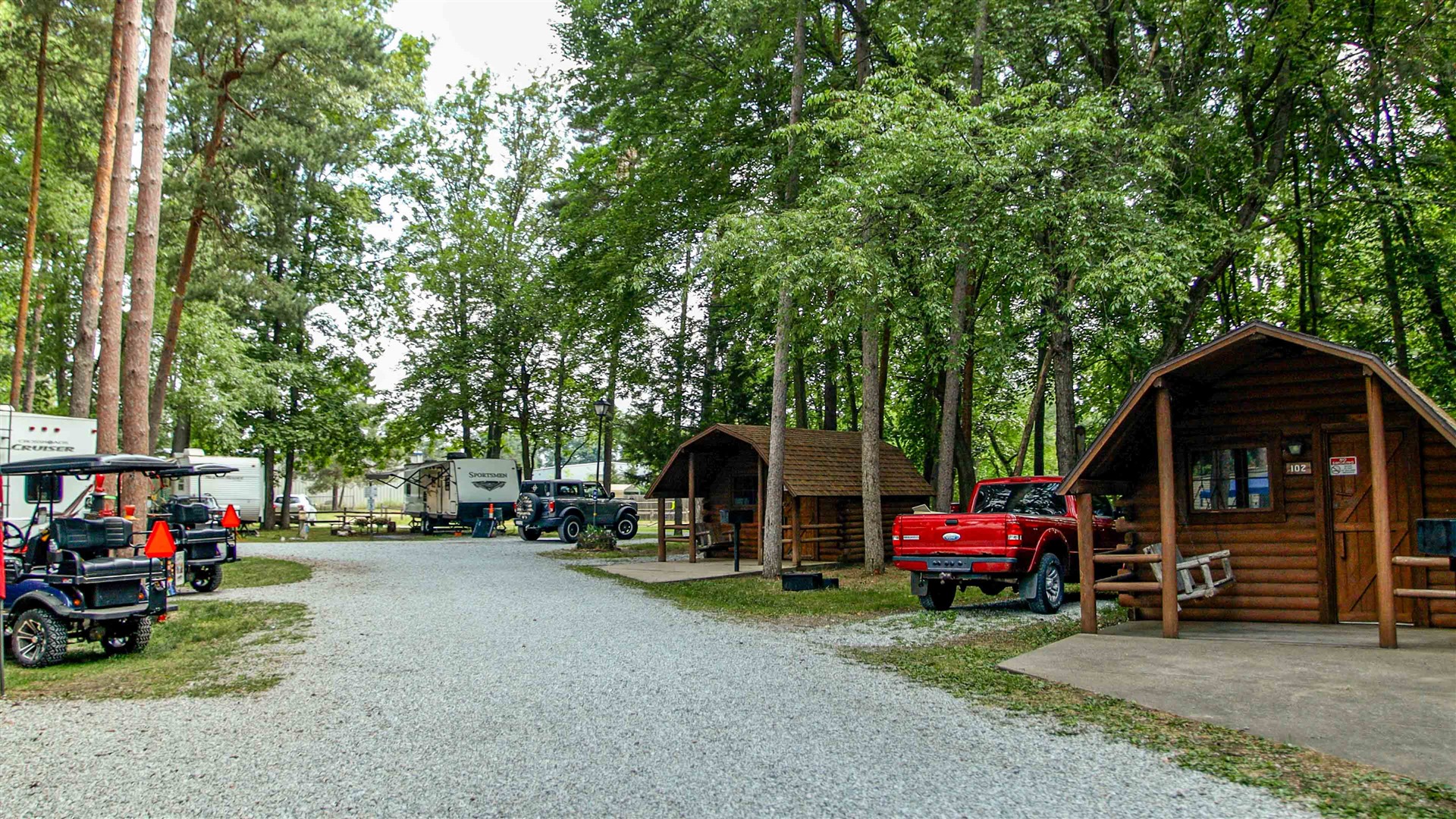
Several RJourney parks run year-round with winter monthly rates, including Laramie RV Resort and Cheyenne RV Resort in Wyoming and Elkhart RV Resort in northern Indiana. Browse the full list at our long-term RV parks page.
If you’d rather not haul it home
Winterizing solves the plumbing. Where the rig physically spends the winter is a separate decision, and hauling it home to a skeptical HOA is only one option. Our guide to RV winter storage costs and options breaks down open lots, covered storage, and the RJourney parks that store rigs on site. Seasonal campers have a 3rd path: many parks let seasonal site holders leave the camper on their site over winter, winterized and skirted, ready for spring. 2027 seasonal waitlists are open now on our seasonal camping page.
Quick answers
How much antifreeze does it take to winterize a camper? 2 to 3 gallons for most travel trailers and fifth wheels, assuming the water heater is bypassed.
Can you winterize a camper without antifreeze? Yes, by blowing out the lines with compressed air at 30 to 40 psi. Most owners do both air and antifreeze, since air alone leaves water pooled in low spots and P-traps.
At what temperature will camper pipes freeze? An unheated camper’s pipes can freeze after roughly 24 hours below 32°F, and faster once temperatures hit the low 20s.
How much does it cost to winterize a camper? About $25 to $60 in supplies if you do it yourself, or $150 to $300 at a shop.
Last verified: August 13, 2026.