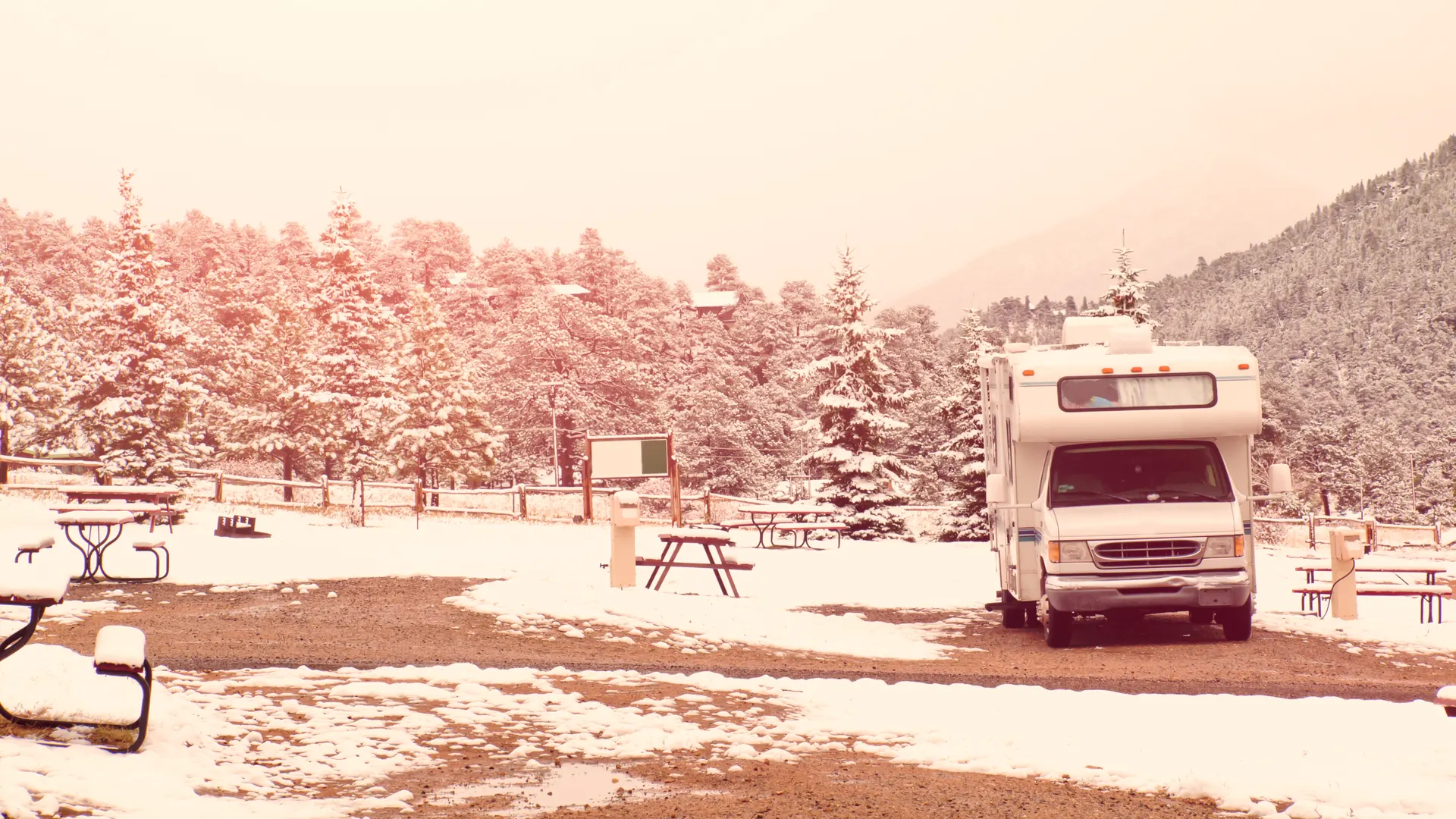
RV skirting is a barrier that closes the gap between the bottom of your rig and the ground, so wind stops moving under the floor. That trapped pocket of air is the whole point. It keeps the underbelly warmer, slows heat loss through the floor, and takes some pressure off your water lines and holding tanks when the temperature drops below freezing and stays there.
The 3 options most winter RVers land on are rigid foam board, vinyl panels, and inflatable tubes. Cost runs from about $100 to well past $2,000 depending on which you pick and who installs it. Here’s how they compare, and how to tell whether you need skirting at all.
Does RV skirting actually save you anything?
Some of the numbers you’ll see online are borrowed from manufactured housing. Department of Energy research on skirted mobile homes points to roughly 10% to 30% less heating fuel burned in cold climates. RVs are built differently, with thinner walls, exposed plumbing, and a floor that sits in open air, so treat that range as a directional signal rather than a promise.
What full-timers report is more consistent than it is precise: propane consumption drops noticeably once the wind stops running under the rig, and the underbelly stays meaningfully warmer than the outside air. If you’re parked for a full winter and burning propane every week, skirting tends to pay for itself somewhere in the first month or 2. If you’re passing through for a long weekend in October, it probably won’t.
The strongest argument for skirting is the frozen water line you don’t have to thaw at 6am.
Foam board: cheapest, least portable
Rigid foam insulation board, usually 1-inch or 2-inch sheets in 4×8 panels, cut to the profile of your rig and held in place with furring strips, stakes, or tape. Most DIY builds land between $100 and $250 in materials.
It insulates better per dollar than anything else on this list, and it’s the standard pick at monthly and seasonal sites where the rig isn’t moving until spring. The tradeoff: once you’ve cut foam to your rig’s exact profile, you’ve built a single-season object. It’s awkward to store, it cracks, and hauling it to the next park is more trouble than cutting new sheets.
Best for: one park, one winter, tight budget.
Vinyl: the middle path
Heavy vinyl or reclaimed billboard tarp, cut to length and attached with snaps, twist fasteners, or a track along the rig’s belly line. A DIY vinyl setup usually runs $200 to $250 in materials. Custom-measured kits with professional snap hardware sit much higher, commonly $1,000 to $3,000 depending on rig length and how much of the work you hand off.
Vinyl blocks wind well and insulates less than foam, but it rolls up. That matters if you’re doing a winter in Wyoming and a spring in Indiana with the same rig. The snap hardware is the part worth thinking about before you commit, since most systems mean drilling into the sidewall or bonding adhesive studs to it.
Best for: people who move between parks and want to reuse the skirt.
Inflatable: fastest to set up, priciest to buy
Inflatable skirting uses air-filled tubes wedged between the ground and the frame. Nothing attaches to the rig, so there’s no drilling and no adhesive. Systems generally start around $1,300 and climb with rig length.
Setup is measured in minutes instead of a weekend, and deflated tubes pack down small enough to live in a bay. The price is the obvious hurdle. It makes sense if you’re skirting every winter for years, less so for a single season.
Best for: repeat winter stays, and anyone who won’t drill their rig.
Cost at a glance
| Type | Typical cost | Insulation | Reusable? | Setup time |
|---|---|---|---|---|
| Foam board (DIY) | $100 to $250 | Best | Rarely | A weekend |
| Vinyl (DIY) | $200 to $250 | Good | Yes | A weekend |
| Custom vinyl kit | $1,000 to $3,000 | Good | Yes | A day, plus lead time |
| Inflatable | $1,300 and up | Good | Yes | Under an hour |
When skirting is worth it, and when it isn’t
Skirting earns its keep under a specific set of conditions:
- You’re staying put for a month or longer. Skirting is a fixed cost you amortize over nights parked.
- You’re on full hookups and living in the rig. Water and sewer lines under an open floor are the first thing to freeze.
- Overnight lows sit below freezing for stretches, not just once. A single cold snap is a heat-tape problem. A cold season is a skirting problem.
- The site gets wind. Wind moving under the floor pulls heat out faster than still cold air does.
If your rig is going into storage instead of being lived in, skip the skirt. Winterize it and park it. We covered that whole process in the winterizing walkthrough, and the storage side in RV winter storage costs and options.
Things people get wrong the first winter
- Sealing it airtight. You want a slow air exchange under there. Fully sealed skirting traps moisture, and moisture under a rig turns into mold and rusted frame components. Leave a vent or 2.
- Skipping the ground. Cold radiates up. A layer of foam board or heavy tarp on the dirt inside the skirt does real work.
- Treating skirting as a substitute for heat tape. Your water hose and any exposed line still want heat tape and foam insulation on top of the skirt.
- Measuring once. Ground under an RV is rarely level, so the gap you’re closing changes along the length of the rig. Measure at each corner and at the midpoint.
- Building it in November. Cutting foam board in 20-degree wind is miserable, and adhesive-backed snaps don’t bond well in the cold. Late September or early October is the window.
Ask the park before you build
Skirting rules vary by park, and a few questions up front save a rebuild:
- Is skirting allowed, and are there material or appearance requirements?
- Can anything be staked into the ground, or is the site on gravel over a utility bed?
- Is the site metered for electric, and how is winter usage billed?
- Does the site have a frost-free water riser, or does the park expect you to run off tanks in a deep freeze?
That last one changes the math more than any material choice. A park that keeps water on through winter is a different stay than one that shuts risers down in December.
RJourney parks where skirting makes sense
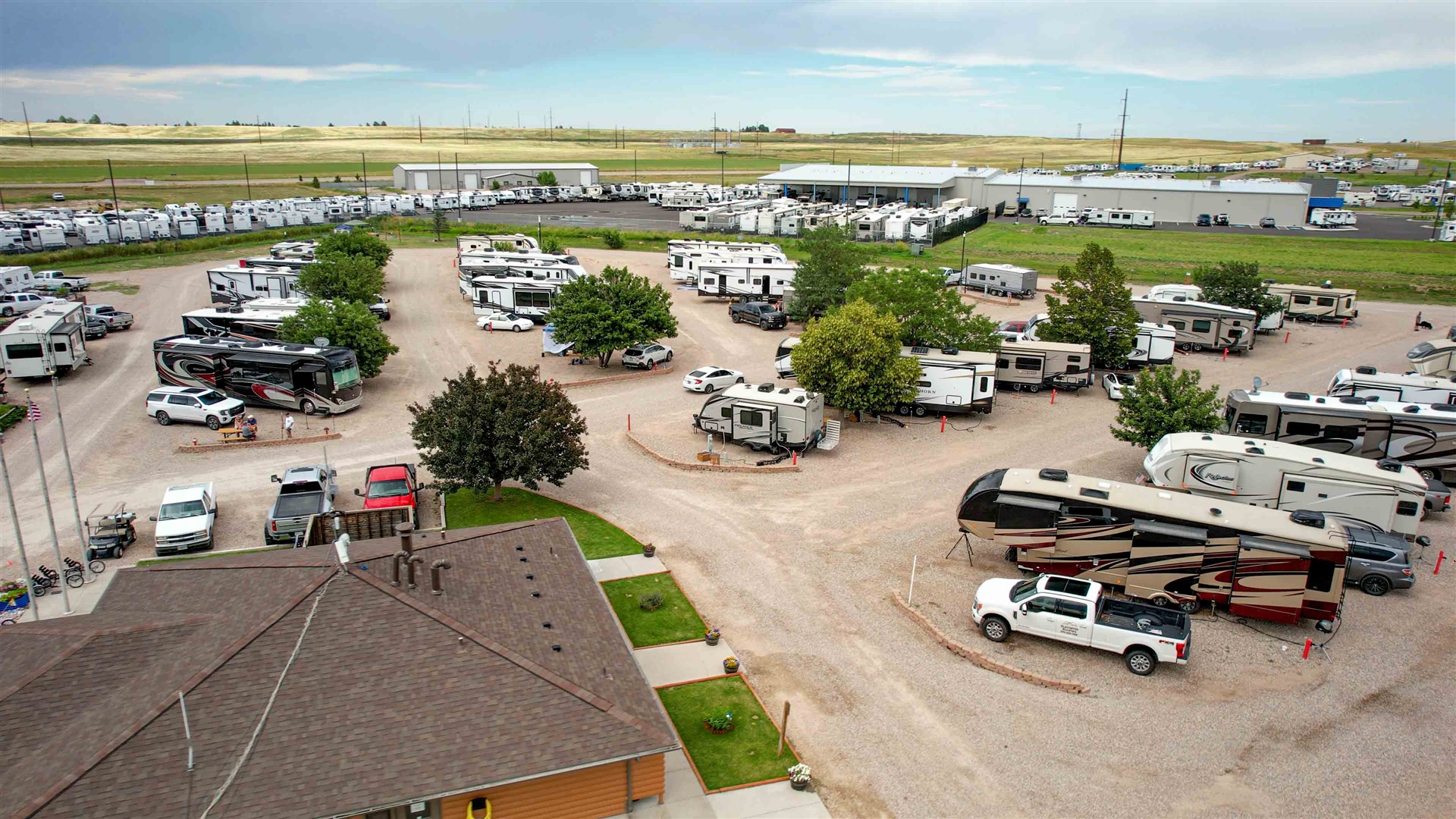
Laramie RV Resort and Cheyenne RV Resort, Wyoming. High plains, open sky, and wind that doesn’t quit. Laramie sits at about 7,200 feet and stays open year round, which puts it squarely in skirting territory. Both parks sit on the I-80 corridor and offer monthly and long-term sites. Winter operating dates vary by park, so call ahead before you plan a season around one.
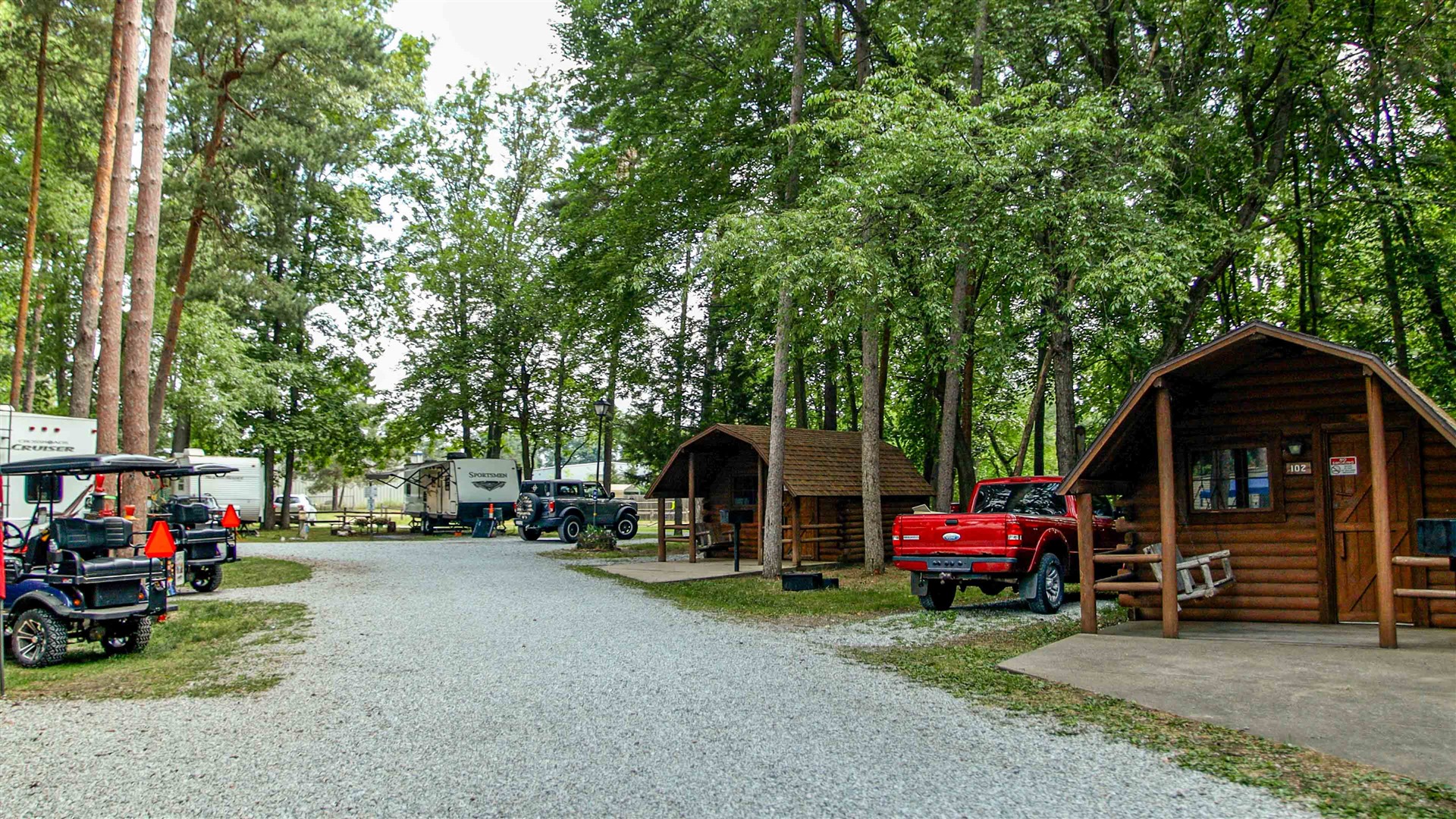
Elkhart RV Resort, Granger, Indiana. Northern Indiana winters bring lake-effect snow and a long stretch of freezing nights. The park sits in the middle of the RV manufacturing world, which means parts, service, and people who’ve skirted a rig before are all within a short drive.
Monthly and seasonal stays are where this all pencils out. You can see how those work in our guide to seasonal camping, or browse long-term RV parks across the network.
The short version
If you’re parked for a season and living in the rig, build foam board and spend a weekend on it. If you move between parks, buy vinyl and reuse it. If you’ll do this every winter for the next 5 years, inflatable pays off. And whichever you choose, vent it, insulate the ground, and get it up before the first hard freeze.
Our team can tell you what winter looks like at any park in the network, including which sites hold water through the season. Check seasonal availability when you’re ready.
Last verified: August 14, 2026.