Yellowstone was the first national park in the world, and it still camps like a place that predates the modern RV. The park spreads across three states (Idaho, Montana, and Wyoming), the interior roads run high and slow, and the campgrounds fill before noon on summer days. Bringing an RV here works well. It just rewards planning more than almost anywhere else you’ll tow.
Here’s how Yellowstone RV camping actually works in 2026: which campgrounds fit a rig, what the length limits really mean, when the roads open, and where to base if the in-park sites are gone by the time you look.
The 5 campgrounds that take RVs comfortably
Yellowstone has 11 campgrounds and more than 2,000 sites. Only a handful are built for larger rigs, and those are the ones reserved through Yellowstone National Park Lodges (the park’s concessioner). These are your realistic targets if you’re towing anything over 30 feet.
| Campground | 2026 season | Nightly fee | Sites | Max RV length | Hookups |
|---|---|---|---|---|---|
| Fishing Bridge RV Park | May 8 to Oct 17 | $94 + taxes | 310 | 95 ft | Full (water, sewer, electric) |
| Madison | May 1 to Oct 17 | $38 + taxes | 276 | 60 ft | None (dump station on site) |
| Bridge Bay | May 15 to Sep 13 | $38 + taxes | 431 | 60 ft | None (dump station on site) |
| Grant Village | Jun 26 to Sep 26 | $45 + taxes | 429 | 50 ft | None (dump station on site) |
| Canyon | May 29 to Sep 19 | $45 + taxes | 272 | 40 ft | None (dump station on site) |
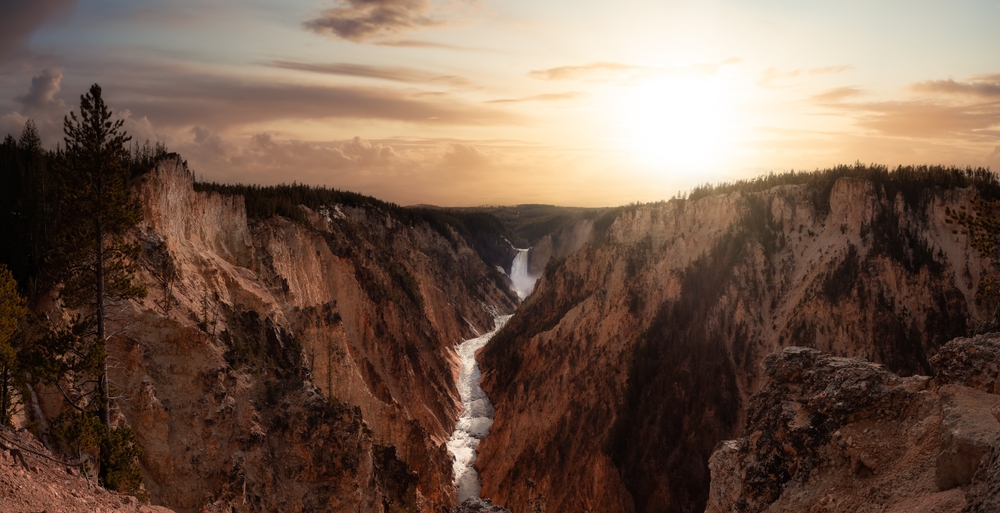
Madison sits near the west side, close to the geyser basins and about 14 miles from the West Entrance. Bridge Bay and Grant Village put you on Yellowstone Lake. Canyon lands you near the Grand Canyon of the Yellowstone, which is worth the shorter length cap if your rig fits. All 5 have flush toilets and a dump station, and every one of them takes reservations 6 months out on a rolling window.
Fishing Bridge RV Park: the only full-hookup option
If you want to plug in water, sewer, and electric inside the park, Fishing Bridge RV Park is the only address that offers it. That’s the reason it books first and costs the most ($94 a night before taxes).
Two things to know before you reserve. First, it takes completely hard-sided units only. No tents, no pop-up campers, no tent trailers, because you’re in prime grizzly country and soft walls aren’t allowed. Second, it runs a generous 95-foot max length, so big fifth wheels and Class A coaches that get turned away elsewhere fit here. The season runs May 8 through October 17, one of the longest in the park.
If your trip depends on hookups, build the rest of your itinerary around Fishing Bridge availability. It’s the constraint that moves everything else.
RV length limits, decoded
The single number that makes or breaks a Yellowstone reservation is your total length: rig plus tow vehicle or towed car. The park’s smaller campgrounds have real limits, and rangers enforce them because the loops were cut decades ago for shorter trailers.
Here’s the honest spread. Lewis Lake caps at 25 feet. Indian Creek runs to 35. Canyon holds 40. Mammoth allows 45 feet from May through mid-October. Grant Village takes 50, and both Madison and Bridge Bay go to 60. Fishing Bridge tops the list at 95.
The smaller first-come and Recreation.gov campgrounds (Indian Creek, Lewis Lake, Slough Creek, Tower Fall) charge about $20 a night and feel far more primitive, with vault toilets and no dump stations. Tower Fall involves a sharp hairpin curve on the approach, and Slough Creek asks you to assess the road before committing a big rig. Measure your total length before you book anything under 30 feet of clearance. A reservation you can’t physically pull into does you no good.
When to go, and the 2026 season
Yellowstone’s interior roads close to regular vehicles through winter and plow open in stages each spring. For 2026, the park scheduled its main spring opening for April 17, then pushed the first roads to April 18 after a late-season storm. Additional roads keep opening through May, weather permitting.
Practically, that means the RV season is May through late September for most campgrounds, with Madison and Fishing Bridge stretching into mid-October. Mammoth is the lone year-round campground, though it drops to first-come, first-served from October 15 to April 1 and its length limit tightens in winter.
June and September are the sweet spots for RVers. July and August bring the biggest crowds and the fullest campgrounds, and the shoulder weeks trade a little warmth for a lot more elbow room. Whenever you come, pack for cold nights. Even Madison sits at 6,800 feet, and Bridge Bay climbs to 7,700.
How to actually land a reservation
The reservation math is simple and unforgiving. Sites open exactly 6 months before your arrival date, on a rolling basis, and the popular ones (Fishing Bridge, anything on the lake) can be gone the morning they release. Reservable park campgrounds fill each day, often before noon, so treat the 6-month mark like a ticket drop.
Reserve the 5 lodge-run campgrounds (Bridge Bay, Canyon, Fishing Bridge RV Park, Grant Village, Madison) through Yellowstone National Park Lodges. Reserve Indian Creek, Lewis Lake, Slough Creek, and Tower Fall through Recreation.gov. Mammoth is your first-come backstop in the off-season.
One rule that catches RVers off guard: there’s no car camping in Yellowstone outside a designated campground. You can’t overnight in a pullout, a parking area, or a picnic ground. If every site is booked, you sleep outside the park. Which brings us to the gateway towns.
Camping near Yellowstone: the gateway towns
When the in-park campgrounds are full (and in July, they will be), the gateway towns are where big rigs actually find full hookups. RJourney doesn’t operate a park at Yellowstone’s gates, so here’s the straight version of your options.
West Yellowstone, Montana sits right at the West Entrance and has the deepest bench of commercial RV parks, most with 50-amp service and pull-throughs sized for coaches. Gardiner, Montana guards the North Entrance and the road to Mammoth, the one stretch open year-round. Cody, Wyoming lies about 52 miles from the East Entrance along a gorgeous canyon drive and doubles as a real town with fuel, groceries, and repair shops. Jackson, Wyoming anchors the south approach through Grand Teton, which is its own reason to route that way.
Any of these works as a full-hookup basecamp for day trips into the park. Expect higher summer rates and book ahead, same as inside the gates.
Where an RJourney basecamp fits your Yellowstone loop
Plenty of RVers reach Yellowstone as one leg of a longer Western run, and that’s where an RJourney stop earns its place. Coming up from Colorado’s Front Range or crossing the I-80 corridor, Wyoming is your staging ground before the final push north.
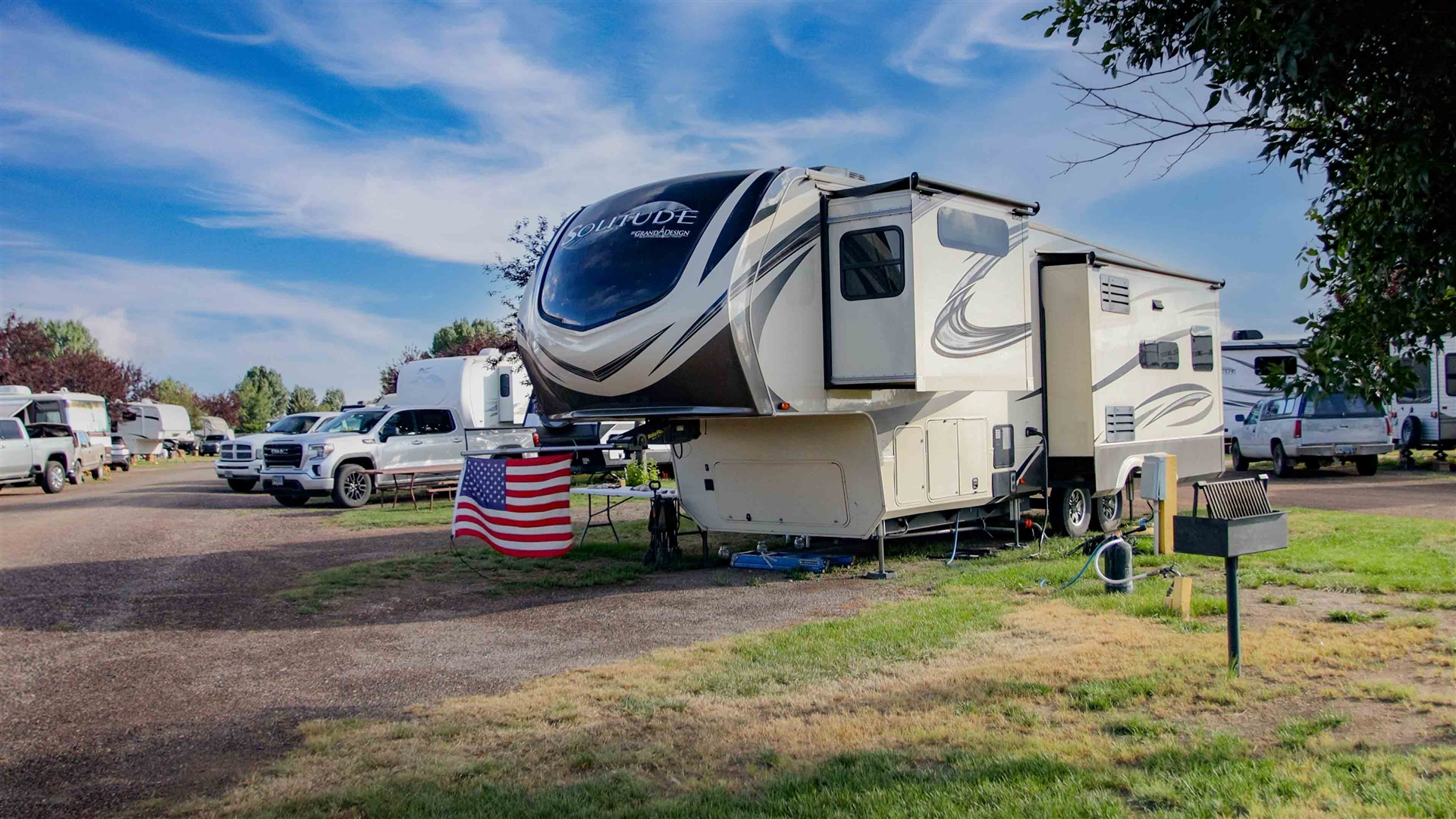
Laramie RV Resort sits right off I-80 in southeast Wyoming, an easy full-hookup night to reset before the long haul to the park. Cheyenne RV Resort does the same at the I-25 and I-80 junction, a natural stop if you’re driving in from Denver. Pine Bluffs RV Park covers the state line for anyone rolling in from Nebraska. None of these is a Yellowstone gateway, and we won’t pretend otherwise. They’re the closest RJourney properties, and they make honest sense as a rest leg on a bigger itinerary.
If you’re building that kind of trip, Yellowstone pairs naturally with the parks to the south. Our Grand Circle RV road trip and 14-day Mighty 5 Utah itinerary pick up where a Yellowstone leg leaves off, and the Zion camping guide rounds out the red-rock end of the loop. For more on the region itself, our guide to parks and forests in Wyoming maps the public land between here and there.
RV tips that are specific to Yellowstone
A few things this park asks of RVers that others don’t:
Grizzlies and black bears roam the whole park, which is why Fishing Bridge is hard-sided only and why every campground enforces strict food storage. Keep everything scented locked in your rig, not the picnic table.
Generator hours are limited and posted at each campground. Plan your power around quiet hours if you’re dry camping at Madison, Bridge Bay, Canyon, or Grant Village, since none of those has hookups.
Interior roads are slow, narrow in spots, and thick with wildlife and the traffic that stops for it. A drive that looks like 40 minutes on the map can take twice that behind a bison jam. Give yourself margin, and never approach wildlife: stay at least 100 yards from bears and wolves, 25 yards from everything else.
Fuel and dump stations exist inside the park but are spread out. Top off in a gateway town, and empty your tanks before you leave a campground that has a dump station, because the next one might be an hour of slow road away.
Plan the trip, then keep going
Yellowstone rewards the RVers who book early, measure honestly, and give the roads the time they demand. Lock your dates 6 months out, match your rig to the right campground, and keep a gateway town in your back pocket for the nights the park is full.
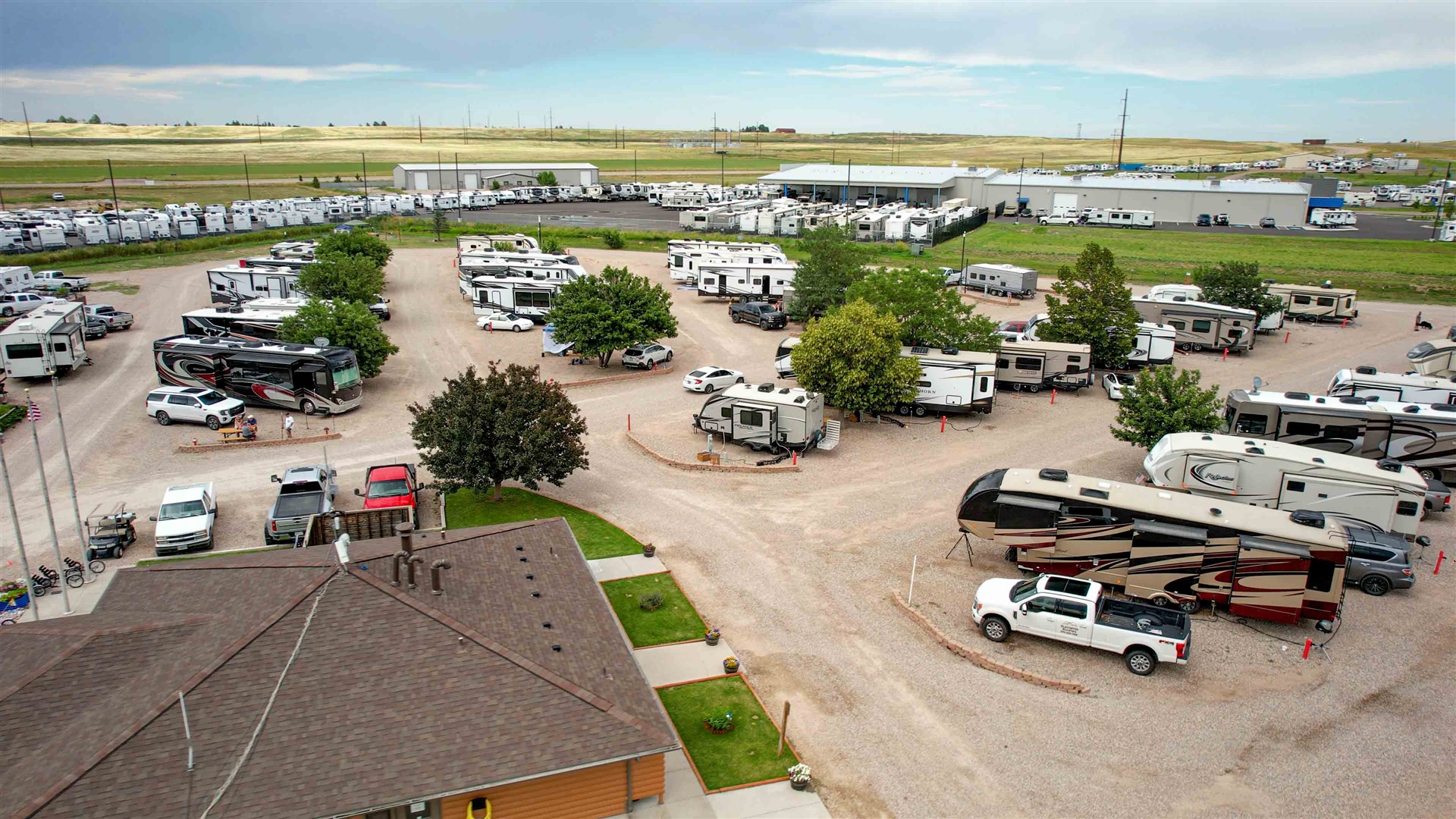
And when you’re mapping the miles that get you there, RJourney’s Wyoming parks are ready when you are. Check availability at Laramie RV Resort or Cheyenne RV Resort, or browse the full network of RJourney parks to build the rest of the route. The first park in the world is a fine place to start a trip. It’s an even better place to keep one going.