Last verified: November 19, 2026
Florida is 2 states for a camper. Up top, the Panhandle runs on Central Time, gets real winter mornings, and has sugar-white quartz beaches. Down the Gulf side, the Big Bend and the Nature Coast trade beaches for 72-degree springs, cypress, and manatees. The best camping in Florida depends on which one you want, and the good news is you can drive from one to the other in about 6 hours.
This guide covers that stretch: Pensacola to Inverness, with the state parks worth booking, the rules that trip people up, and 2 RJourney parks that work as basecamps when the state park calendar is full (it usually is).
When to Camp in Florida
October through April is the season. Humidity drops, bugs back off, and afternoon storms stop showing up on a schedule. That’s also when every snowbird in the eastern half of the country heads south, so state park sites go fast.
Summer camping works if you plan around it: shade, a pool or a spring for the afternoon, and a rig with good AC. Atlantic hurricane season runs June 1 through November 30, so keep an eye on forecasts and read your park’s evacuation and cancellation policy before you book a long stay.
One regional quirk: the Panhandle west of the Apalachicola River is on Central Time. Pensacola and Milton run an hour behind Inverness, which matters when you’re racing an office closing time. For a month-by-month look across the country, see our best times to go camping guide.
The Panhandle: White Sand and Tannic Rivers
The western Panhandle packs 2 very different camping trips into about an hour of driving: Gulf beaches to the south and blackwater rivers in the pine forest to the north.
Pensacola Beach and Fort Pickens
Pensacola Beach is the classic Panhandle postcard: white sand, green water, and a pier. At the west end of Santa Rosa Island, Gulf Islands National Seashore runs the Fort Pickens Campground, which books through Recreation.gov. Camping out there means waking up between the Gulf and Pensacola Bay with a brick fort from the 1830s down the road. It’s popular, and storms have closed the island road before, so check current status before you count on it.
Back on the mainland, the National Naval Aviation Museum is free and worth a full morning. The Pensacola Lighthouse and Historic Pensacola Village fill an afternoon.
Blackwater River State Park
Florida State Parks calls the Blackwater one of the most pristine rivers in the nation. The water is tea-colored from tannins, the bottom is white sand, and the bends are lined with sandbars wide enough to set up a chair. The park itself is 590 acres with a campground, nature trails, and a $4 per vehicle day fee. Blackwater Canoe Rental handles canoes, kayaks, tubes, and shuttles if you’d rather float than drive.
Santa Rosa County leans into the paddling and bills itself as the Canoe Capital of Florida. The Blackwater River and Coldwater Creek both run out of the state forest north of Milton.
Topsail Hill Preserve State Park
A little over an hour east toward Destin, Topsail Hill has 3 miles of white quartz beach and a namesake dune that rises 25 feet above sea level. The rare part is behind the dunes: coastal dune lakes, freshwater lakes that sit a few hundred yards from the Gulf. Campbell Lake is the one to paddle. The campground fills early in winter, so book as soon as your window opens.
Panhandle Basecamp: Sunburst RV Resort, Milton
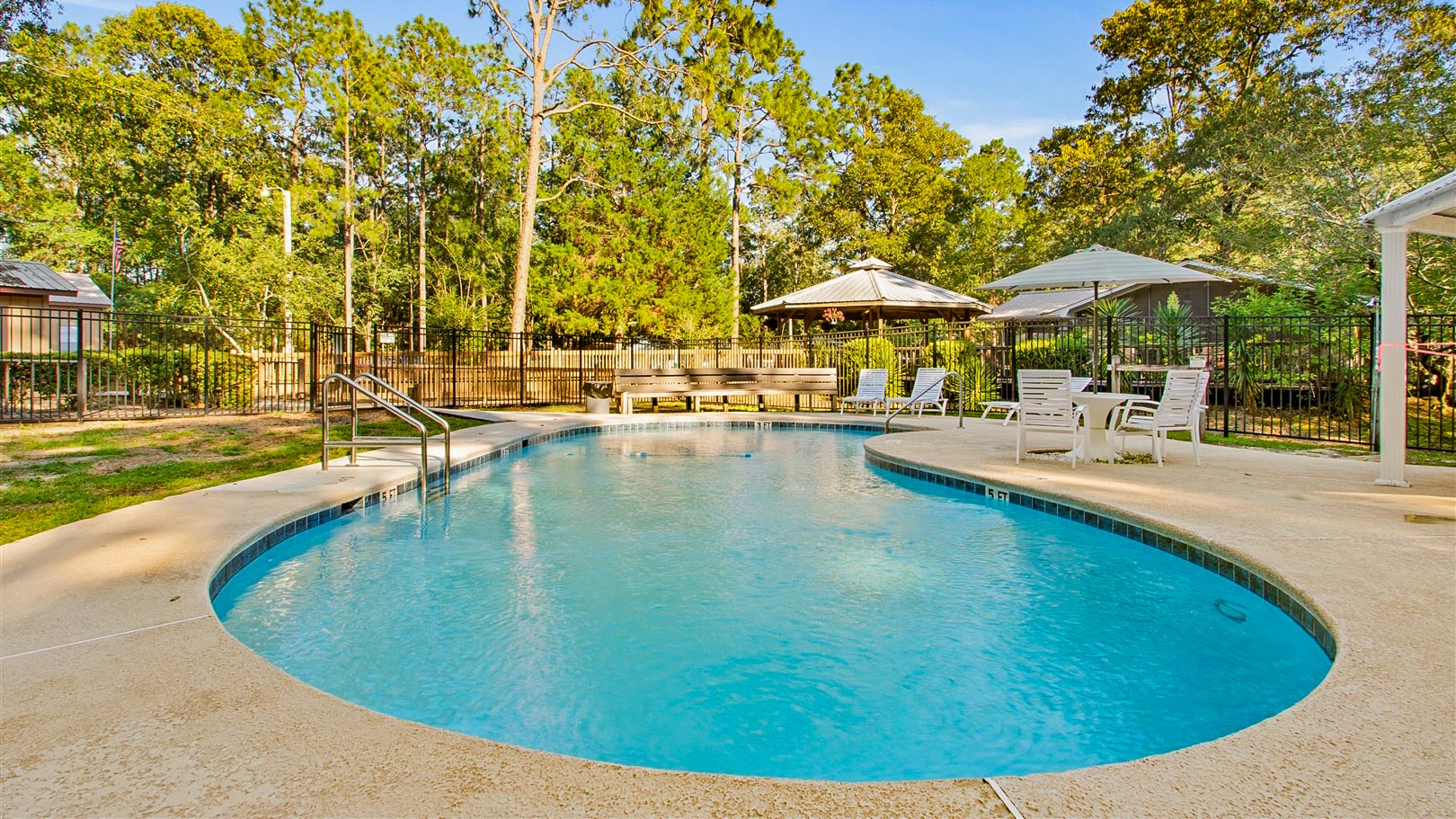
Sunburst RV Resort sits in the countryside outside Milton at 2375 Horn Road, off Highway 87 via County Road 178. Pensacola Beach is a short drive south, and the Blackwater sits in the forest to the north, so it covers both halves of the Panhandle trip from one site.
Every site is full hookup with 30 and 50-amp service, in pull-through and back-in layouts. On-site you get a pool that’s open year-round, a dog park, game room, tennis, volleyball, fire rings, laundry, and a small store. Cabins and glamping units cover the people in your group who’d rather not sleep in an RV. There’s no water access on the property, so paddlers trailer their boats to the river.
Winter is the long season here. Monthly guests get the full social calendar (potlucks, bingo, campfire nights), and our long-term RV parks near Milton page covers how extended stays work. For the rivers and swimming holes nearby, see swimming and water fun near Milton.
The Big Bend: Springs Country
East of Tallahassee, the coast curls south and the beaches give way to salt marsh. The draw here is underground. Florida has 33 first-magnitude springs, and a good number of them surface along the Suwannee and the rivers that feed the Gulf.
Manatee Springs State Park
Near Chiefland, Manatee Spring is the largest single spring flowing into the Suwannee River, averaging 50 to 150 million gallons a day. A boardwalk follows the spring run through cypress to the river, and more than 8.5 miles of trails loop through the uplands. The park has a campground, swimming in the spring, and in cooler months, manatees moving up the run from the river. It’s about an hour and a half north of Inverness, which makes it an easy stop on the drive down from the Panhandle.
The Nature Coast: Manatees, Rail-Trails, and Old Florida
Citrus County is the heart of Florida’s Nature Coast: Crystal River, Homosassa, and Inverness, with the Withlacoochee River and Lake Tsala Apopka in between. We wrote a full Nature Coast by RV guide, so here’s the short version.
- Three Sisters Springs, Crystal River. The best-known manatee refuge in the state. Manatees crowd into the warm springs through winter. See our guides to visiting Three Sisters Springs and the best time to see manatees in Crystal River.
- Withlacoochee State Trail. 46 paved miles of old rail line, running right through downtown Inverness. Our Withlacoochee State Trail guide covers trailheads and mileage.
- Fort Cooper State Park. Trails, a spring-fed lake, and Second Seminole War history. A good half day; see Fort Cooper State Park.
- Homosassa Springs Wildlife State Park. An underwater observatory over the spring, plus resident manatees you can see year-round.
- Downtown Inverness. The 1912 Old Courthouse (Elvis filmed Follow That Dream in the courtroom) and a walkable main street. See things to do in Inverness.
Nature Coast Basecamp: Preservation Point RV Resort, Inverness
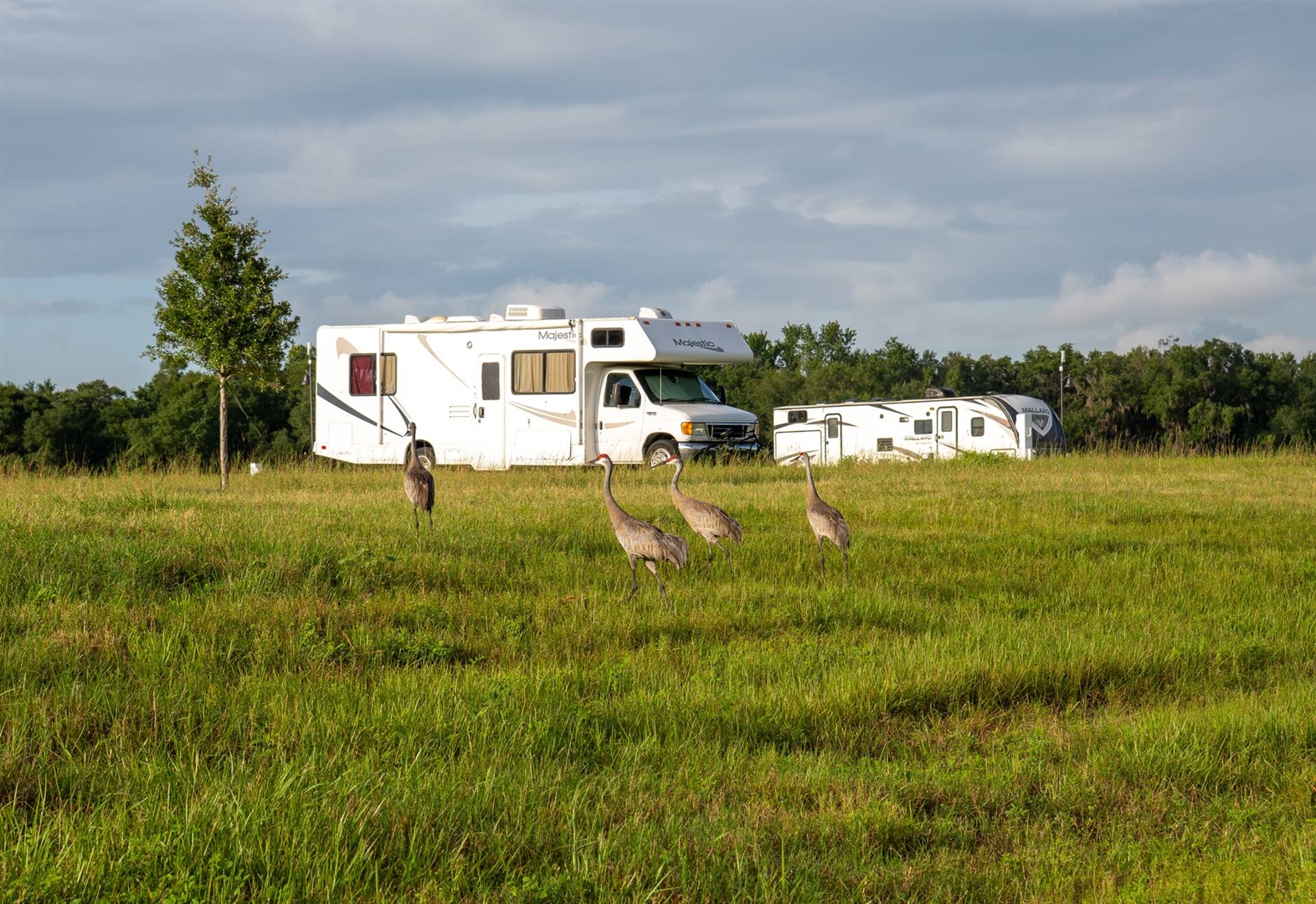
Preservation Point RV Resort covers 230 acres of oak and cypress at 8588 E. Gulf to Lake Hwy. in Inverness, 12 miles west of I-75 (Exit 329) on State Road 44. All 221 sites are concrete pads with full hookups: 50/30/20-amp power, water, dual sewer drops, and free Wi-Fi. Pull-throughs fit rigs up to 60 feet; back-ins and pull-ins fit up to 45.
There’s a catch-and-release pond, frontage on Lake Tsala Apopka for kayaks and canoes, walking trails, and 2 community fire pits with free firewood. The sandhill cranes treat the place like they own it (they were here first).
The park is new and still building. A pool, bathhouse, and laundry are on the way and aren’t open yet, so bring a self-contained rig; a laundromat is 7 minutes up the road. From the park, downtown Inverness and the Withlacoochee State Trail are 6 minutes, Fort Cooper is 12, and Three Sisters Springs is 25.
How to Book Florida State Park Campsites
Florida State Parks gives residents a head start. Florida residents can reserve campsites up to 11 months ahead; everyone else gets 10 months. Nightly rates run $16 to $42 depending on the park.
The rule that catches winter visitors is stay length. During high demand, state park stays cap at 14 nights, and then you have to leave for at least 3 nights before you can come back. The longest continuous stay in any one park is 28 nights, and that’s only at the manager’s discretion. If you’re planning a month or a whole winter, a private park with monthly rates is the realistic option. Our snowbird RV guide to the Gulf Coast walks through how that works.
Linking the Panhandle and the Nature Coast
Milton to Inverness is roughly 350 miles. The fast way is I-10 east toward Tallahassee, then south. The scenic way drops onto US-98 and US-19 through the Big Bend, where gas stations thin out and the Gulf shows up through the marsh. Either way, Manatee Springs makes a natural overnight halfway.
A good 2-week loop: 5 nights in the Panhandle splitting beach days and river days, 2 nights in springs country, then a week on the Nature Coast for manatees and the rail-trail. Add a night or 2 on either end for the drive.
Florida Camping Questions
What’s the best month to camp in Florida?
For most people, November through March. The Panhandle is cooler (pack layers for 40-degree mornings), and the Nature Coast hits peak manatee season in the same window.
Can I stay longer than 14 nights at a Florida state park?
Sometimes. The park manager can extend a stay up to an additional 14 nights if there’s availability, for a 28-night maximum. In peak season, plan on 14.
Do I need to worry about alligators?
Respect them and you’ll be fine: keep pets leashed and away from the water’s edge, and never feed wildlife. Our alligator safety guide has the details.
Plan Your Florida Trip
Pick your Florida: the Panhandle for beaches and blackwater, the Nature Coast for springs and manatees, or both in one winter. Check availability at Sunburst RV Resort in Milton or Preservation Point RV Resort in Inverness, or browse all of our Florida parks.