
Winter RV living means booking one park for the cold months and staying. You take a monthly or seasonal site, hook up to full utilities, and treat the park as an address instead of a stopover. It runs 2 ways: move south for the season, or stay north on a site built to handle a hard freeze.
This is the version of RV life that happens after the travel season ends. Trip planning stops mattering. Site selection, utility metering, and whether the laundry room stays open in January start mattering a lot.
Can you live in an RV through the winter?
Yes, and thousands of people do it every year. The equipment question is smaller than most first-timers expect. What actually decides whether a winter works is the rig, the site, and the park.
- The rig. A 4-season or arctic package trailer with enclosed, heated tanks handles sustained cold. A standard 3-season rig can still do it with heat tape on the water line, a skirt around the base, and a dehumidifier running against condensation.
- The site. Full hookups are non-negotiable below freezing. You want a spot where the water riser is protected, the sewer connection runs downhill, and 50-amp service can carry a space heater without tripping.
- The park. Some parks close their water system in November. Some run all winter with heated bathhouses and plowed roads. That single fact reshapes the whole experience, so ask before you book.
If your rig needs prep, our step-by-step RV winterizing guide covers the water system, tanks, and batteries, and the RV skirting breakdown covers what actually holds heat under the floor.
What winter RV living costs
Monthly site rent at an RV park is usually the smallest line on the page. The parts that surprise people are underneath it.
- Site rent, billed monthly. Nearly every park prices a 30-day stay well below the nightly rate. Seasonal rates, where offered, drop further.
- Electric, metered separately. Almost universal on monthly stays. In a cold climate with electric heat running, this is the line that moves the most, and it can rival the site rent in January.
- Propane. If you heat with the furnace instead of electric, budget for refills every 1 to 2 weeks in real cold.
- Laundry, storage, and the tow vehicle. Small individually, steady over 5 months.
Two structural notes. First, monthly rates almost always require you to ask, because parks quote them by phone rather than posting them on a booking calendar. Second, if you are parking a second rig or storing gear for the season, read the winter storage cost comparison before renting a lot in town.
Path 1: Move south for the season
The classic version. You break camp in October, drive to the Gulf Coast or Florida, and stay put until April. Warm-weather parks fill their monthly inventory early, so the booking window for a good site is roughly September through November.
A few RJourney parks that run this way:
- Rockport RV Resort in Rockport, TX. Oversized pull-through sites with 30/50-amp service, a heated saltwater pool, hot tub, and clubhouse. Winter Texans and anglers make up a real share of the winter population here, which matters more than the amenity list.
- Sunburst RV Resort in Milton, FL. Countryside setting in the Florida Panhandle, a short drive from Pensacola Beach, with spacious pull-throughs, a pool, dog park, and cabins if family visits.
- Lake Charles RV Resort in Iowa, LA. Right off Interstate 10, oversized premium sites, paved roads, on-site laundry. Easy to reach and easy to leave, which is the point when you are moving a 40-foot rig once a season.

For the full southern route and how to sequence it, see the Snowbird RV Guide.
Path 2: Winterize and stay north
Less common, and often the better call. People stay north for work contracts, family, school districts, or because they simply like winter. It works when the park runs a real winter operation and your rig is set up for it.
- Laramie RV Resort in Laramie, WY. A few miles west of the University of Wyoming, close to Interstate 80, on West Baker Street. High plains cold is dry cold, which is easier on a rig than the freeze-thaw cycles farther east.
- Elkhart RV Resort, physically located in Granger, IN. This is the RV manufacturing corridor, so parts, service, and mobile techs are unusually close by. That is a genuine advantage when a furnace quits in February.
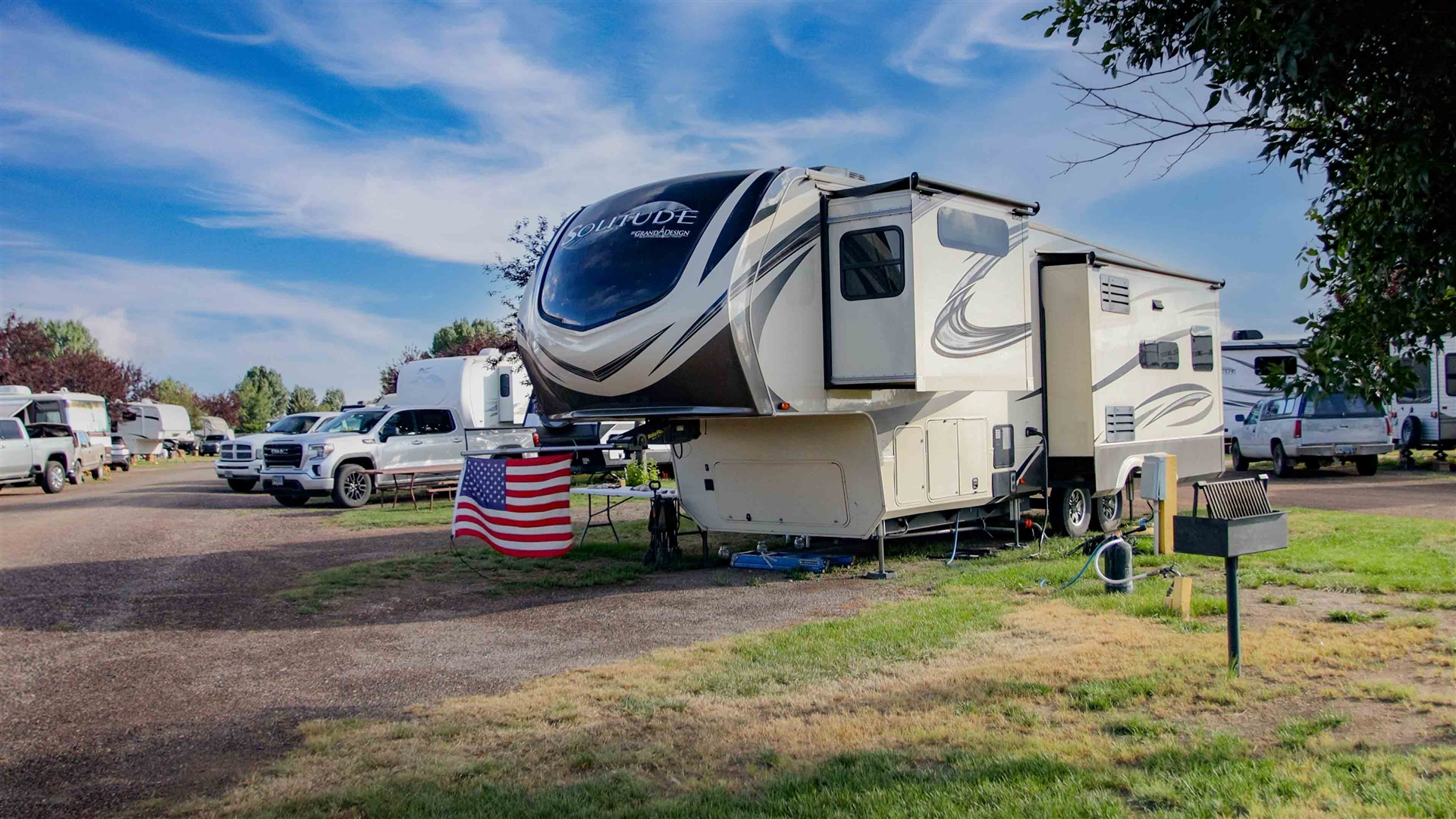
Winter operating status changes year to year at northern parks, and some close their water systems seasonally. Call the park directly and confirm before you commit to 5 months.
How to pick a park you can live in
A park that is pleasant for a long weekend can be miserable for 5 months. The questions that separate them:
- Is the water system on all winter, or does it shut off in November?
- Is the bathhouse heated, and does it stay open?
- Are roads plowed, and by whom?
- Is electric metered or included, and what was last January’s average bill on a site like mine?
- Is there a clubhouse or common room, or does everyone hibernate?
- Is mail and package delivery handled at the office?
- What is the policy on a second vehicle, and on guests staying over?
- Is there a waitlist for monthly sites, and when does it open?
That last one catches people. Monthly and seasonal inventory at good parks turns over slowly, and renewals get first call. Our long-term RV parks hub lists the properties that take extended stays, and how seasonal sites and waitlists work explains the renewal cycle.
Working from a park in January
Most people doing winter RV living are working, not retired. The setup that holds up: a cellular hotspot as primary connection with park WiFi as backup, a second data line on a different carrier, and a dedicated desk surface. A 5-month stay justifies furniture that a 3-night stay does not.
Cold adds 2 wrinkles. Batteries and laptops discharge faster in an unheated space, and short daylight makes the rig feel smaller than it is. Both are fixable with a decent lamp and a heated work corner. The remote work from an RV guide covers the connectivity stack in more detail.
Community is what makes or breaks the winter
In peak season, a park is a rotating cast. In winter, it is the same 30 rigs for months. Potlucks, card nights, and a group that notices when your furnace exhaust looks wrong. That last one is practical. Winter parks watch each other’s rigs.
When you tour a park, ask how many sites are occupied in January. A park with 8 winter residents feels very different from one with 60.
What to line up before November
- Book the site. Monthly winter inventory in the south is largely spoken for by early November.
- Skirt the rig and add heat tape to the water line if you are staying anywhere that freezes.
- Service the furnace before you need it, not after.
- Confirm mail forwarding and your domicile paperwork.
- Set up a propane delivery or a refill routine.
- Ask the park for a realistic January electric estimate so the first bill is not a shock.
Where to start
Pick the path first, south or north, because everything else follows from it. Then call 2 or 3 parks and ask the questions above. Monthly rates are quoted by phone, and the answers you get on that call tell you more about the park than any listing will.
Browse extended-stay properties on the long-term RV parks hub, or start with seasonal camping if you want the same site next winter too.