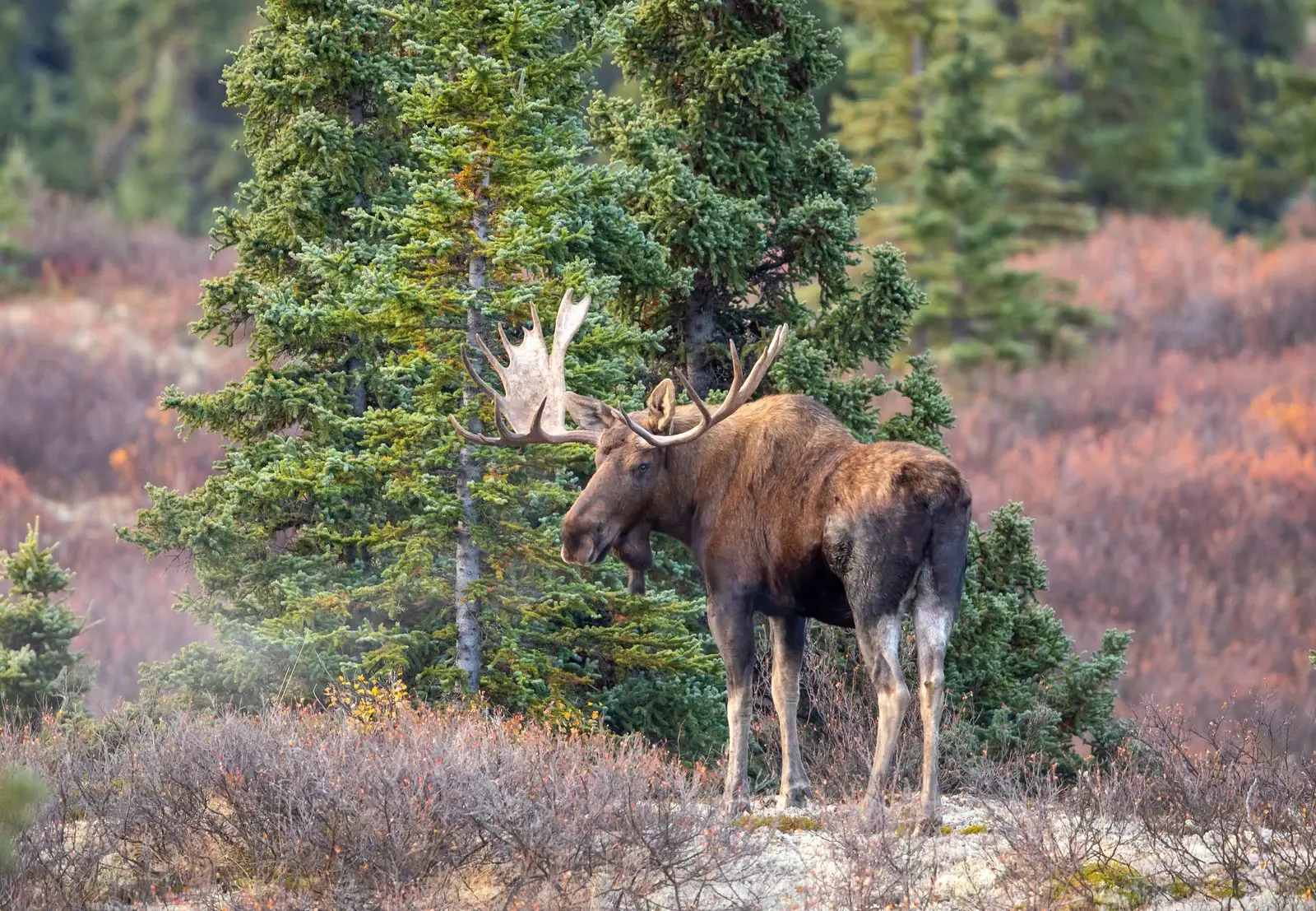
Yes, moose are dangerous, and in the places they live they injure more people each year than bears do. A bull moose stands 6 feet at the shoulder, weighs up to 1,200 pounds, and can run 35 mph. They don’t fear people the way deer do, which means they let you get close, and closeness is where the trouble starts. Most moose injuries come from 3 situations: a dog, a cow with a calf, or a bull in the fall rut. Give them 100 yards, leash the dog, and if one charges, run and put a tree between you. That’s the whole guide. The rest is detail.
Last verified: September 14, 2026.
Why moose hurt more people than bears
Bears get the headlines. Moose do the damage. The Alaska Department of Fish and Game has said for years that moose injure more people in the state than bears do, and Wyoming Game and Fish logs a handful of moose attacks with serious injuries most years. The reason is simple: moose have almost no natural predators as adults, so they never learned to run from anything, including you.
A moose won’t try to eat you. It will try to make you leave, and it does that with its front hooves. A moose stomp is what puts people in the hospital (broken ribs, head injuries, and worse). Colorado Parks and Wildlife reports that more than 80% of moose attacks that end in injury were triggered by a dog. Hold that number in your head every time you clip on a leash.
Fall rut: why September through November is the risky window
Moose breed in the fall, generally late September through November, with the peak in early October. Bulls spend those weeks flooded with testosterone, sparring with each other, and treating anything that moves as either a rival or a nuisance. They’re louder (a low grunt, repeated), they travel more, and they’re far more likely to stand their ground on a trail or a campground road.
The rut is also when moose show up in places they normally don’t: RV park perimeters, town parks, the willow bottoms along a river you were planning to fish. If you’re camped in moose country in October, assume one could walk through.
The other dangerous window is late May through July, when cows have calves at heel. A cow with a calf is arguably worse than a rutting bull, because she isn’t posturing. She’s defending.
How far away is far enough?
State agencies give a range rather than a single number. Colorado Parks and Wildlife suggests 25 to 100 yards depending on the situation. Our rule for campers is the top of that range: 100 yards, or roughly the length of a football field, and more during the rut or when a calf is present. If you can’t cover the moose with your thumb at arm’s length, you’re too close.
The better test is behavioral. CPW puts it plainly: if a moose reacts to your presence, you are too close. Back away the moment it lifts its head and looks at you.
Warning signs a moose is about to charge
Moose telegraph a charge. Learn the sequence and you’ll usually have 5 to 10 seconds to act.
- Ears laid back flat against the neck
- Hair standing up on the neck and shoulders (the hackles)
- Head lowered, sometimes swaying side to side
- Licking the snout or lips
- Stomping a front hoof or pawing the ground
- Walking straight toward you instead of away
Moose also do a “bluff charge,” a short rush that stops well short of you. Treat every charge as real. You can’t tell the difference until it’s over.
What to do if a moose charges (it’s the opposite of bear advice)
Everything you learned about bears goes out the window here. With a black bear you stand tall and hold your ground. With a moose, run. Moose rarely chase far; they want distance, and once they have it, they stop.
- Run, fast, and put something solid between you and the moose: a tree trunk, a boulder, your truck, a picnic table. A moose can’t get around a big tree quickly.
- If you can get behind your RV or inside a vehicle, do it. Doors close. Moose don’t open them.
- If it knocks you down, curl into a ball, cover your head with your arms, and stay still. The stomping usually stops when you stop moving. Wait until the moose has walked well away before you get up; they sometimes circle back.
- Do not play dead before you’re knocked down, and do not try to fight it. Bear spray can work on a moose at close range if you have it out, but running is still the first move.
Report any moose that acts aggressively toward people to the state wildlife agency. They track these animals and will sometimes relocate a repeat offender.
Dogs and moose: the rule that matters most
A moose sees your dog as a wolf. It doesn’t matter that it’s a 20-pound doodle. The instinct fires, the moose goes after the dog, the dog runs back to you, and now the moose is on you. That’s the script behind most moose injuries in Colorado, and it plays out at campgrounds, on trails, and in people’s driveways.
At the campsite: leash at all times in moose country, even for the walk to the bathhouse. A 6-foot leash, not a 25-foot retractable. Walk your dog in daylight in open areas and skip the willow thickets and creek bottoms at dawn and dusk. If you see a moose while walking the dog, turn around and go the other way before the dog notices. If the moose comes for the dog, drop the leash. The dog is faster than you, and you don’t want it leading the moose back to your legs.
Moose at the campground
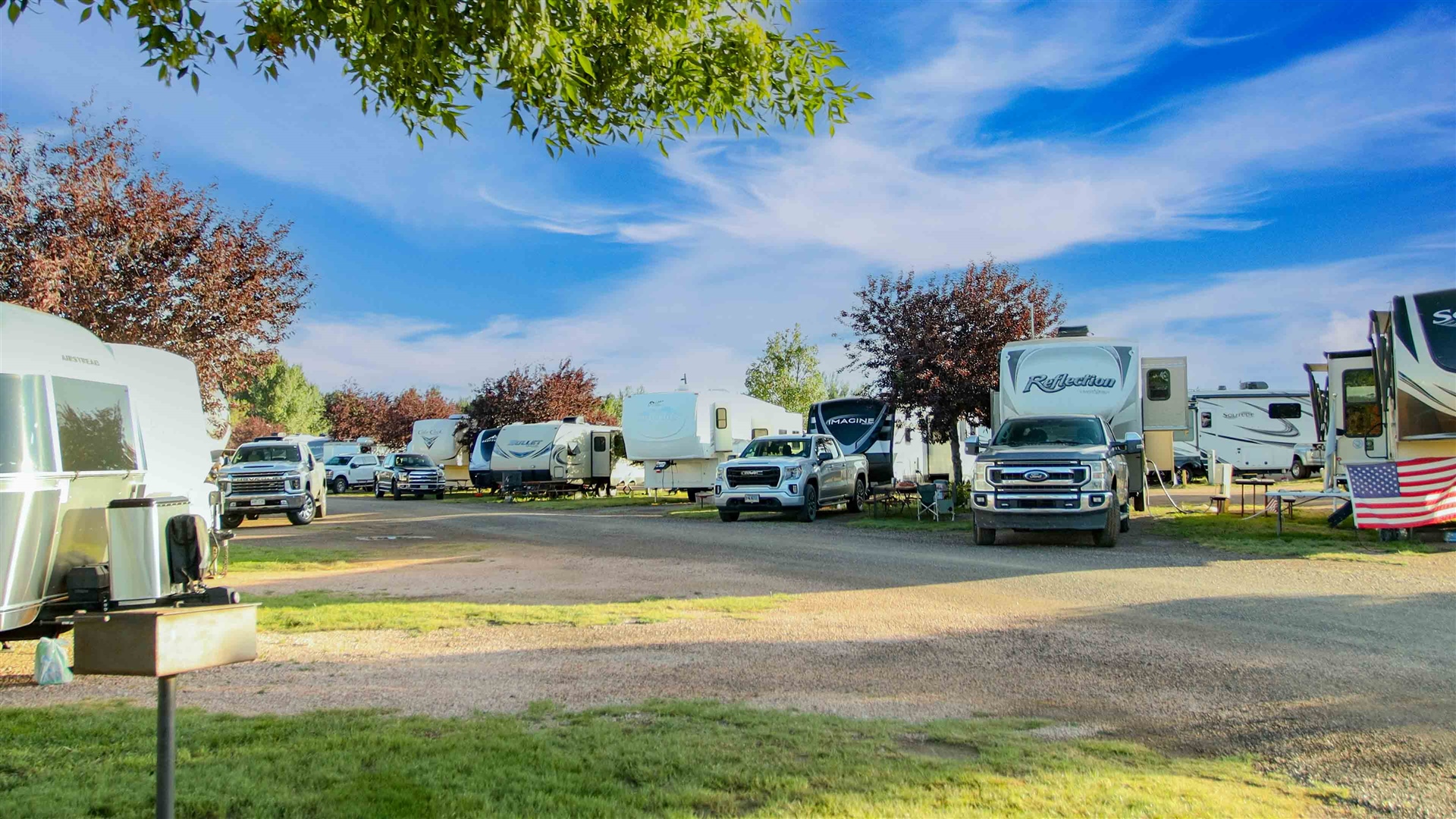
Moose don’t raid coolers. Your food storage matters for bears and raccoons, but a moose wanders into a campground for willows, water, and shade, and occasionally because it’s rutting and lost its judgment. A few habits keep everyone out of trouble:
- Never approach for a photo. The camera zoom is your distance. Every fall someone in a Wyoming or Colorado campground gets hurt walking up to a “calm” moose.
- If a moose is between you and your rig, wait. It’ll move. Go sit in a neighbor’s site or your truck.
- Keep kids inside or close when a moose is in the park. Kids run; running toward a moose is the one thing you don’t want.
- Don’t feed it. Feeding moose is illegal in most states and creates the exact habituation that gets a moose put down.
- Driving in the park at night: moose are dark, tall, and their eyes sit above headlight height, so they don’t reflect. Slow down to walking pace on campground roads after dark in moose country.
Moose on the trail
Moose use packed trails the way you do, especially in winter when the snow off-trail is deep. If you come around a bend and there’s a moose, stop, talk in a normal voice so it knows you’re human, and back up. Give it a wide detour or turn around. Don’t try to slip past. Trail runners and mountain bikers are overrepresented in moose incidents for the obvious reason: a fast-moving thing coming at a moose reads as an attack.
Where RJourney campers run into moose
Moose range across the northern Rockies, the Upper Midwest, and New England, and they’ve expanded south into Colorado since the state reintroduced them in 1978. A few of our parks sit squarely in moose country:
- Laramie RV Resort, Laramie, Wyoming. The Snowy Range and the Medicine Bow National Forest start about 30 miles west of town, and the willow flats along the Snowy Range Scenic Byway are one of the most dependable moose-viewing spots in the state. Fall color and the rut overlap in early October.
- Dolores River RV Resort, Dolores, Colorado, and Cortez RV Resort, Cortez, Colorado. Moose have pushed into the San Juan Mountains north of both parks. Sightings are still uncommon at the parks themselves, but the high country toward Lizard Head Pass and the Dolores River headwaters is moose habitat, so hike and fish there with the rules above in mind.
Our Wyoming parks and forests guide covers the Snowy Range drive if you want to build a moose-watching day around it.
Moose vs. bear vs. elk: quick comparison
| Animal | If it charges | Biggest trigger | Riskiest season |
|---|---|---|---|
| Moose | Run, get behind a tree or vehicle | Dogs; calves; rut | Late Sep to Nov (rut), late May to Jul (calving) |
| Black bear | Stand tall, make noise, fight back if attacked | Food; surprise at close range | Sep to Nov (hyperphagia) |
| Elk | Back away, get behind something solid | Rut bulls; cows with calves | Sep to Oct (rut), Jun (calving) |
For bears, read our black bear safety guide. For the smaller stuff that actually visits your site at night, we’ve covered coyotes and raccoons.
Common questions about moose safety
Are moose more dangerous than bears?
By injury count, yes, in the states where both live. Moose injure more people per year in Alaska than bears do. Bear attacks are more likely to be fatal, but moose encounters are far more common because moose don’t avoid people.
Will a moose attack an RV or a car?
Rutting bulls occasionally take a run at vehicles, and cows have charged cars parked near a calf. Damage is usually cosmetic. The real vehicle risk is a collision on the highway at night; a 1,000-pound animal at windshield height is one of the deadliest wildlife crashes there is. Slow down at dusk in moose country.
Does bear spray work on moose?
It can, at close range, and wildlife agencies in Alaska and Wyoming recommend carrying it in moose country for that reason. It’s a backup. Distance, a leash, and a tree to get behind are the primary tools.
What should I do if a moose is in my campsite?
Leave it alone and wait it out from inside your RV or a vehicle. Get your dog inside first. Don’t bang pots or try to shoo it; that’s how you turn a browsing moose into a charging one. Tell the office so they can warn other guests.
How fast can a moose run?
Up to 35 mph, per Colorado Parks and Wildlife. You won’t outrun one in the open, which is why the advice is to run to something, a tree or a truck, rather than just away.
Moose country is some of the best camping in the country in October: cold mornings, gold aspens, elk bugling in the distance. Camp there. Just keep the dog on the leash and the camera on zoom. If you’re heading toward the Snowy Range this fall, check availability at Laramie RV Resort.